cooking
Cooking Gas Merits

Cooking gas merits. Cooking gas (LPG) is a cost-effective and environmentally responsible substitute for conventional cooking techniques because it provides exceptional efficiency, speed, and accuracy. Instant heat control, compatibility with all types of cookware, a significant reduction in greenhouse gas emissions, and dependable operation during power outages are some of its main advantages, which guarantee constant, high-quality cooking.
COOKING GAS MERITS
The main benefit of a gas stove is the total control it offers over heat. Many cooks prefer this since it allows you to quickly adjust the temperature without having to wait for the element to warm up. Meanwhile, From the basic upright to the large-capacity professional models, gas ovens and cooktops are available in a wide range of sizes and designs. While electricity has made our lives easier in many ways, gas is still the most efficient and responsive way to cook on the stove. Cooking with gas has numerous advantages, including boiling or steaming and stir-frying.
1.The heat is immediately responsive;

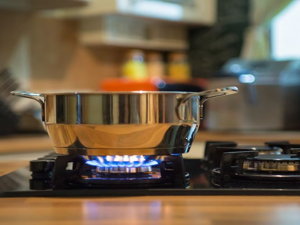
Also, Gas cooktops are used in most professional kitchens because they provide for easy heat control. With a single turn of the dial, the flame expands or contracts, providing an immediate and accurate change in heat. There is no need to wait for the pan to heat up or cool down, saving time and preventing dishes from being spoiled due to a slow response.
2. Even Heat Distribution;
Electric cooktops and pans must be completely flat or heat will not be uniformly dispersed throughout the cookware. A gas cooktop’s flames are centrally located, allowing them to heat pans uniformly, without cool spots or burning. Gas cooktops are safer since they are cooler when shut off, but electric cooktops heat up the entire surface.
3. Less Heat;


Electric cooktops produce more heat than gas cooktops, resulting in excessive heat in your home. Gas cooktops not only keep your home cooler when they’re on, but when you turn them off, the flame goes out and the heat source vanishes, unlike an electric cooktop, which continues to release heat even after it’s turned off.
4. Unaffected by power outages;


Cooking gas merits
However, If your electricity goes out due to inclement weather, you can normally still cook on a gas stovetop because gas lines are not affected by the same types of weather that cause power outages. Although energy is required to power the ignition, you can simply light the burner with a match.
5. Lower operational costs;
Meanwhile, Gas cooktops may be more expensive to purchase and install, but the long-term cost will be lower because the costs of operating electric ones are significantly higher.
6. Complete control;

Cooking gas merits
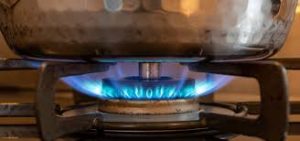
Also, Using a gas range allows you complete control over your cooking with the turn of a knob. Gas is sensitive to even the smallest temperature fluctuations, providing you perfect control over everything from a gentle simmer to a raging boil.
Summary
Cooking gas has had a significant impact on our homes and kitchens more than most other amenities in the wide fabric of modern life. This versatile and efficient energy source has not only transformed cooking but also enhanced our overall quality of life, health, and environment in many ways. In this article, we’ll look at the importance of gas and how it has become a crucial part of our daily cooking adventures.