personality
Types of personality traits

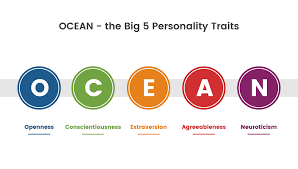
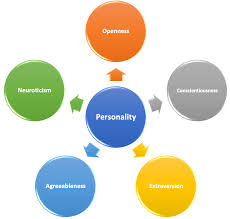
Types of personality traits. The persistent, distinctive thought, feeling, and behavior patterns that set one person apart from another are referred to as personality. These comparatively unchanging characteristics, which are influenced by both heredity and environment, affect how people perceive the world, engage with others, and control their emotions. These behaviors are classified into qualities like agreeableness, neuroticism, extraversion, conscientiousness, and openness using popular frameworks like the Big Five model.
TYPES OF PERSONALITY TRAITS
Many theories have been developed in an effort to characterize and quantify personality as a result of personality study. Among industrial organizational psychologists, the big five personality traits model, sometimes known as the five factor model of personality, is the most commonly recognized taxonomy of personality traits.
Five factors comprise the five factor model, which divides personality into five categories, stress tolerance, conscientiousness extraversion, openness and agreeableness. These basic aspects of personality are universal across culture and geographical locations, which makes them the perfect tool for personality evaluation.
What Does a Big 5 Personality Test measure?

Agreeableness
Is a gauge of a person’s propensities toward social peace. This characteristic shows how well mannered, cooperative, or skeptic the person is, as well they might work in a group.
Conscientiousness
is a gauge of a person’s attention to detail, planning, discipline, and organization. Employee productivity is frequently predicted by conscientiousness, especially in lower-level roles
Extraversion
Is a gauge of a person’s extroversion, sociability and energy. People with lower extraversion scores are regarded as more introverted, meaning they are more thoughtful, reserved, subdued, and self-sufficient. Some people fit better in some jobs than others depending on where they are on the spectrum.
Openness
determines the degree to which a person is innovative and creative versus practical and traditional.
Stress Tolerance
Assesses the response of people under stress.
How are Big Five Personality Traits used in hiring?

Types of personality traits
Think about working in sales. The kind of individual who would be most at ease performing the necessary tasks for the position would probably be more outgoing and goal-oriented. Hiring a candidate whose personality fits these key job characteristics will make them feel more at ease in the position, which will improve performance and lower turnover.
Summary
The “Big Five” model (OCEAN)—Openness, Conscientiousness, Extraversion, Agreeableness, and Neuroticism—is most frequently used to classify personality traits, which are stable qualities that impact actions, thoughts, and emotions. People with these characteristics fall anywhere along a continuum, which affects how they deal with stress, relationships, and day-to-day living.