Health
Nutritional facts of Limes

Nutritional facts of Limes. A popular citrus fruit, limes are distinguished by their vivid green hue and sharp, sour flavor. They give food and beverages a zesty punch and are used all over the world in a range of culinary and beverage applications. Although the common Persian lime is what most people are familiar with, there are a number of other varieties of limes, each having special qualities and applications. This is a summary of the various varieties of limes.
NUTRITIONAL FACTS OF LIMES
With a variety of flavors and applications, limes are a versatile and indispensable fruit in many culinary traditions. Every variety, from the common Persian lime to the exotic finger lime, has a distinct flavor and set of qualities. There is a type of lime that, with its unique zest and aroma, can improve your culinary creations whether you’re baking, cooking, or creating a drink.
Persian Lime;


Scientific Name: Citrus × latifolia
Characteristics:
– The most common type of lime found in grocery stores.
– Medium to large in size with a thick, green rind that turns yellow when fully ripe.
• Seedless and juicy with a slightly less acidic flavor compared to other limes.
Uses:
– Widely used in cooking, baking, and cocktails.
– Common in marinades, salad dressings, and as a garnish for drinks.
Key Lime;


Scientific Name: Citrus × aurantiifolia
Characteristics:
– Smaller and rounder than Persian limes.
– Thin, smooth skin that turns from green to yellow as it ripens.
– More aromatic, with a strong, tart flavor and higher acidity.
Uses:
– Essential for making Key lime pie.
– Popular in cocktails, especially margaritas and mojitos.
– Used in marinades and as a seasoning for seafood dishes.
Kaffir Lime;
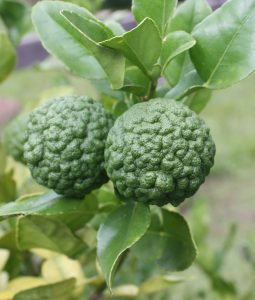

Scientific Name: Citrus hystrix
Characteristics:
– Small and bumpy with a thick, green rind.
– Known for its intensely aromatic leaves rather than the fruit itself.
– The fruit is very sour and less commonly used compared to the leaves.
Uses:
– Kaffir lime leaves are a staple in Southeast Asian cuisine, used in soups, curries, and stir-fries.
– The zest and juice can be used in some traditional dishes and beverages.
Finger Lime;


Nutritional facts of Limes
Scientific Name: Citrus australasica
Characteristics:
– Small and elongated, resembling a finger.
– Thin, green to reddish-brown skin with caviar-like vesicles inside.
– The vesicles burst with a tart, lemon-lime flavor.
Uses:
– Popular as a garnish for dishes, adding a unique texture and flavor.
– Used in seafood dishes, salads, and desserts.
– Often featured in gourmet cuisine and cocktails.
Sweet Lime;

Nutritional facts of Limes
Scientific Name: Citrus limettioides
Characteristics:
– Larger and rounder with a yellowish-green rind.
– Sweeter and less acidic than other limes, with a mild, floral flavor.
– Often seedless or with few seeds.
Uses:
– Consumed fresh or juiced.
– Used in beverages and desserts where a less tart flavor is desired.
– Popular in Middle Eastern and Indian cuisines.
Calamansi;

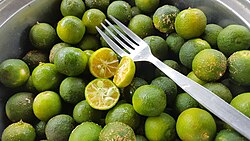
Nutritional facts of Limes
Scientific Name: Citrus × microcarpa
Characteristics:
– Small and round, similar in size to a golf ball.
– Thin, smooth skin that turns orange when ripe.
– Extremely tart, with a flavor profile that combines lime and mandarin orange.
Uses:
– Common in Filipino cuisine for marinades, sauces, and beverages.
– Used to add acidity to dishes and as a flavoring for drinks.
Summary
Limes are a citrus fruit that is high in nutrients and low in calories. About 20 calories, 2 grams of fiber, and about 22% of your daily required amount of vitamin C can be found in one medium lime. Additionally, they are abundant in plant chemicals and antioxidants that strengthen your immune system and lessen inflammation.