Exercise
Tips for Pushups

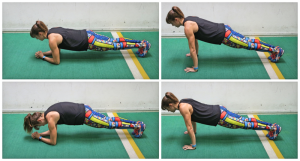

Tips for pushups. Simply put, push-ups are bodyweight exercises. But believe us, being able to rep out five, ten, fifteen, or more is the most humble thing there is. Unfortunately, it’s not as simple as it seems, and if the name “push ups” makes you think of gym class in high school, you’re not alone. However, it’s time to change your perspective.
There is more to this bodyweight classic than meets the eye. While learning the push-up has numerous health advantages, they are also the best pec builder, even surpassing the bench press in this regard.
TIPS FOR PUSHUPS
Hold your hands slightly wider than shoulder-width, keep your elbows at a 45-degree angle, and maintain a straight line from head to toe with a strong core and engaged glutes to improve your push-ups. Push yourself back up to the beginning position after lowering your chest toward the floor without lowering your head. Before advancing to full push-ups, beginners should first develop strength with appropriate form using variations like knee push-ups or slope push-ups.
Preparation and Setup
1. Find a Suitable Surface:

TIPS FOR PUSHUPS
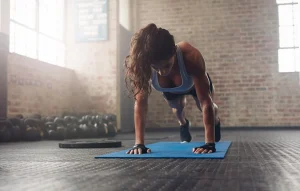
• Choose a flat, stable surface, such as a mat or floor, to perform your pushups.
2. Warm Up:
• Perform a light warm-up to prepare your muscles and joints. Consider doing dynamic stretches or light cardio for 5-10 minutes.
Starting Position
1. Hands and Feet Placement:
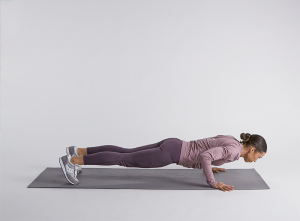

– Place your hands slightly wider than shoulder-width apart on the floor.
– Your fingers should be pointing forward, and your wrists aligned under your shoulders.
– Extend your legs straight back, with your feet together or slightly apart for stability.
– Your body should form a straight line from your head to your heels, avoiding any sagging or arching of the back.
2. Engage Core Muscles:

TIPS FOR PUSHUPS
– Tighten your core muscles to keep your body rigid.
– Maintain a neutral neck position by looking slightly ahead of you, not down.
Performing the Pushups
1. Lowering Phase:
– Inhale as you begin to lower your body.
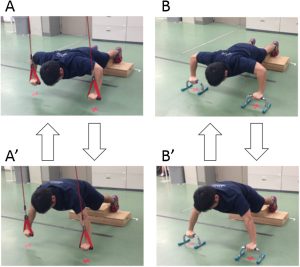
– Bend your elbows and keep them at a 45-degree angle to your body, not flaring out to the sides.
– Lower your chest towards the floor, keeping your body in a straight line.
– Aim to bring your chest just above the floor, with your elbows at about a 90-degree angle.
2. Pushing Up Phase:

TIPS FOR PUSHUPS
– Exhale as you push through your hands to straighten your arms and return to the starting position.
– Keep your core engaged and maintain the straight line from head to heels throughout the movement.
– Avoid locking your elbows at the top of the movement.
Tips for Proper Form
– Breathing: Inhale on the way down and exhale on the way up to ensure proper oxygen flow and core engagement.
– Controlled Movement: Perform the movement slowly and with control to maximize muscle engagement and prevent injury.
– Body Alignment: Keep your body in a straight line, avoiding any sagging of the hips or arching of the back.
– Elbow Position: Keep your elbows at a 45-degree angle to your body to protect your shoulder joints.
Modifications and Variations of pushups
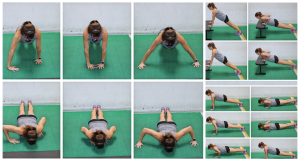
– If standard pushups are too challenging, start with knee pushups.
– Begin in the same position but lower your knees to the ground while keeping your body straight from head to knees.
– Perform the pushup movement as described.
2. Incline Pushups:
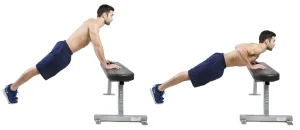

– Perform pushups with your hands on an elevated surface, such as a bench or step.
– This reduces the amount of body weight you need to lift, making it easier.
Summary
A bodyweight exercise that targets your triceps and pectoral muscles is the pushup. Wall pushups, seated pushups, kneeling pushups, and incline pushups are some versions of the pushup that are suitable for beginners.