personality
Traits of an Introvert

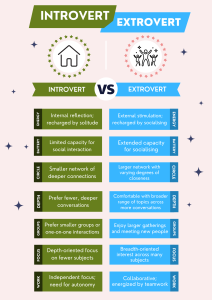
Traits of an Introvert. People who are introverted typically find social engagement exhausting and derive their energy from solitude and introspection. Important characteristics include the need for solitude to focus, the preference for intimate, one-on-one relationships over large gatherings, the ability to reflect before speaking, and the qualities of self-awareness, introspection, and thoughtfulness. Although they tend to be reserved, they are not inherently shy.
TRAITS OF AN INTROVERT
An introvert is someone who finds lengthy social engagement exhausting and finds energy in isolation or low-stimulation settings. They are typically thoughtful, analytical, and prefer in-depth discussions than casual banter. Not to be confused with shyness or social anxiety, introversion is a personality attribute that emphasizes introspection.
What Does Introvert Mean?


People who naturally withdraw inside themselves and find greater solace in their own thoughts and emotions than in outside stimuli are referred to as introverted. Although the English publication Psychological Types, published in 1923, is sometimes touted as the idea of introversion’s original appearance, the concept was first introduced by Swiss psychologist Carl Jung in the early 1900s. Jung employed the concepts of introversion and extraversion to characterize people’s personalities and worldviews.
Personality Traits of an Introvert;

Traits of an Introvert
“We tend to gravitate toward the area that frightens us the least not always the one that draws us in,” adds Piccolo. Thus, introvert are recognized for using their own thought processes to communicate with individuals and their environment. Their sentiments and ideas serve as a navigational aid for them as they make sense of and navigate the world.
Common Strengths;
Introverts can be highly empathic and excellent listeners because they are conscious of—and curious about—feelings. Because of this relationship, research indicates that introverts may perform well in collaborative environments where ideas must be exchanged, since they are more open to hearing and taking into account the opinions of others while introverts can be reticent, their empathy often leads to genuine relationships. They also tend to disclose their sentiments with people they deeply trust.
Common Challenges;

Traits of an Introvert
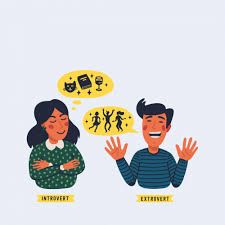
According to a study on classroom dynamics, introverts may come seem as secretive to peers who aren’t in their own inner circle. Furthermore, the study observes that introverts may withdraw in times of confrontation, failing to put their own emotions or views first. Introverts may be talked over, especially around extroverts, and may need to come up with original ideas to get their points of view heard.
Types of Introverts;

Traits of an Introvert
Researcher Arnold Henjum, Ph.D., separated introversion into two kinds in a work he published in the 1980s: Type A and Type B. He identified Type A introverts as independent and self-assured whereas Type B introverts seem reserved and reclusive based on his studies with students in classroom environments. While Type B introverts require direction, Type A introverts are able to accomplish their goals with ease. The confidence that Type A introverts radiate is frequently in line with impressions of extraversion, according to our conventional understanding of the introversion-extraversion spectrum.
Summary
The four primary categories of introverts—social, thinking, anxious, and restrained—are frequently used by psychologists, such as Jonathan Cheek, to illustrate the variety of ways people experience introversion. Different social preferences and energy management styles are represented by these kinds, which frequently overlap.