
Eyes health
Treatment of Lazy Eye

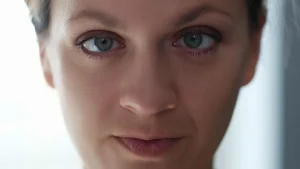
TREATMENT OF LAZY EYE
Treatment of lazy eye. When something interferes with a child’s eye development, it can result in amblyopia, which is blurry vision in one eye. The weaker eye moves out of position as their brain ignores it. The most prevalent vision condition affecting children is amblyopia. Rarely, amblyopia can simultaneously affect both eyes. Lazy eye or lazy vision are other terms that people use to describe amblyopia. Despite being widely used, these names are inaccurate. Both the child and their eyes are not lazy if they have amblyopia.
TREATMENT OF LAZY EYE
They did nothing to cause their blurred vision, and they are not choosing to have it. A condition known as amblyopia, or lazy eye, occurs when the brain gradually favors one eye over the other because it is unable to fully process information from the other eye. In an eye that otherwise seems normal, it causes a reduction in vision. It occurs when there is a poor alignment of the eyes
Symptoms

Determining whether your child has amblyopia is not always simple. Most children don’t receive a diagnosis until they have an eye exam from a medical professional or eye care specialist. Your child’s interactions with objects and their environment will likely change if you do observe symptoms of amblyopia. Amblyopia can cause a child to: • Run into things, particularly on one side of their body. • Give preference to one side of their body. Squint a lot or close one eye. Their head is frequently cocked to one side. • Have drooping eyelids; • Have crossed eyes.
Causes
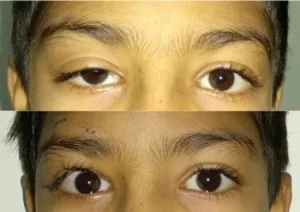
Errors in reflection Something about your eyes’ natural shape or ability to focus that causes blurry vision is called a refractive error. Your child may develop amblyopia if their refractive error is not treated promptly. Strabismus When your eyes are not in alignment with one another, you have strabismus, also known as crossed eyes. Typically, your eyes move simultaneously. Your child’s brain may begin to prioritize one eye over the other if one of their eyes moves independently of the other. Conditions affecting the structure of the eyes Blurred vision and amblyopia can result from any condition that affects how your child’s eyes work.
Treatment
Medicated eye drops: Your child’s strong eye may receive medicated eye drops from your eye care specialist, typically atropine. Their brain uses the weaker eye to see because the medication temporarily blurs that eye. The eye drops are safe and won’t impair your child’s strong eye’s vision in the long run. • Surgery for amblyopia (lazy eye): Surgery to treat amblyopia is rarely necessary. If your child has cataracts or another structural problem with their eyes that cannot be resolved with nonsurgical means, they may require surgery. What to anticipate and the type of surgery your child will require will be discussed with you by your eye care specialist.
More Treatment;
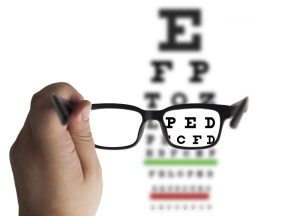
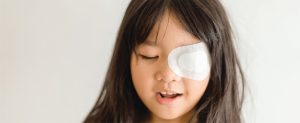
Applying eye patches: It’s a common misconception that children with amblyopia benefit from wearing eye patches because they cover the injured eye and encourage healing. In actuality, the opposite is true. Your child will wear a patch over their stronger eye for a few hours every day at the very least. Your child’s brain must use the images from the weaker eye to see when the vision from the stronger eye is blocked. It also strengthens the weaker eye. • Eyewear: Glasses can correct refraction errors that cause amblyopia. When your child’s vision improves, their brain might return to using both eyes to see. You may need to get glasses for your child in addition to other treatments.
Summary
Regular vision tests are the most effective way to detect amblyopia early. During each of your child’s examinations, ask your doctor to check their eyes. Treatments that correct amblyopia and restore as much of your child’s sight as possible will be recommended by your healthcare provider or eye care specialist.
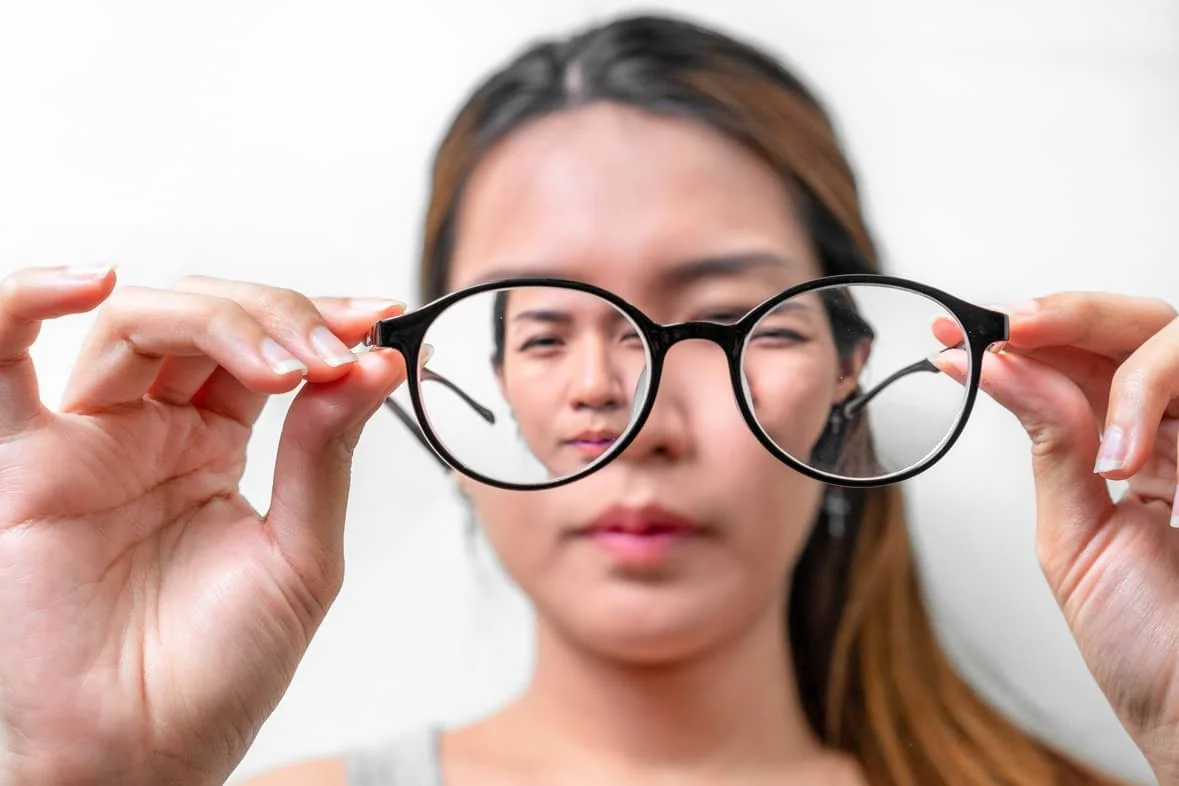
Myopia or shortsightedness. Developing preventative and management methods for shortsightedness might be aided by an understanding of its complex causes. Myopia is caused by a combination of environmental variables, lifestyle choices, genetics, and eye strain. The dangers of shortsightedness can be reduced by promoting outdoor activities, taking frequent breaks from close-up work, and keeping an eye on eye health. To identify and treat myopia early, routine eye exams are also crucial.
MYOPIA OR SHORTSIGHTEDNESS
However, myopia, often known as shortsightedness, is a common vision problem in which close items are plainly visible while distant objects appear hazy. Myopia can be prevented and managed with an understanding of its possible causes. The following five factors could contribute to the development of shortsightedness:
1. Genetic Factors;
Description:
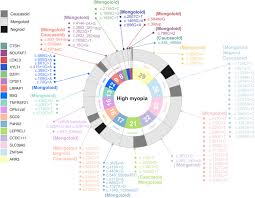
Genetics play a significant role in the development of myopia. If one or both parents are shortsighted, there is a higher likelihood that their children will also develop myopia.
Evidence:
Studies have shown that the risk of myopia increases significantly if there is a family history of the condition. Research indicates that specific genes related to eye growth and development can influence the onset of myopia .
2. Environmental Factors and Lifestyle;
Description:
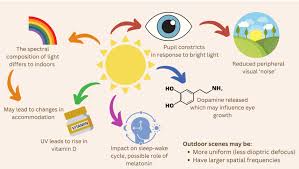
Prolonged near work activities, such as reading, writing, and using digital devices, can contribute to the development of myopia. Limited exposure to outdoor activities and natural light is also a factor.
Evidence:
Research has demonstrated a correlation between increased screen time and close-up work with higher rates of myopia, especially in children and adolescents. Outdoor activities, on the other hand, expose the eyes to natural light and help reduce the risk of myopia progression .
3. Excessive Eye Strain;
Myopia or shortsightedness
Description:
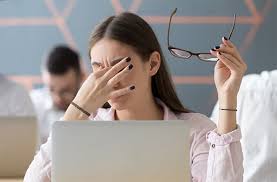
Constantly straining the eyes to focus on nearby objects for extended periods can lead to myopia. This is particularly common in individuals who spend a lot of time reading or working on computers without taking breaks.
Evidence:
Eye strain can cause temporary myopia, which may become permanent if the strain is chronic and continuous. The “20-20-20 rule” (looking at something 20 feet away for 20 seconds every 20 minutes) is often recommended to reduce eye strain .
4. Lack of Adequate Outdoor Time;
Description:
Spending insufficient time outdoors has been linked to an increased risk of developing myopia. Natural light exposure is crucial for eye health.
Evidence:
Also, several studies suggest that children who spend more time outdoors have a lower incidence of myopia compared to those who spend more time indoors. Natural light is believed to help regulate eye growth and prevent excessive elongation of the eyeball, which causes myopia .
5. Abnormal Eye Growth;
Myopia or shortsightedness
Description:
Myopia occurs when the eyeball grows too long, or the cornea is too curved, causing light entering the eye to focus incorrectly on the retina.
Evidence:
There are two possible causes of this aberrant growth: genetic and environmental. Although the precise processes are still being investigated, it is known that blurred distance vision results from images being focused in front of the retina rather than directly on it due to eyeball elongation.
Summary
Myopia, also referred to as shortsightedness, is a common refractive problem of the eyes that causes you to view close objects clearly but distant items poorly. Light focuses in front of the retina rather than directly on it when the cornea is overly curved or the eyeball is slightly too long.
Hyperopia or longsightedness. Genetics, the size and structure of the eyeball, age-related changes, developmental variables, and irregularities in corneal shape are some of the factors that contribute to longsightedness, also known as hyperopia. Effective management and treatment of hyperopia can be facilitated by an understanding of these reasons. To ensure the best possible visual health, routine eye exams are crucial for identifying and treating this disease early.
HYPEROPIA OR LONGSIGHTEDNESS
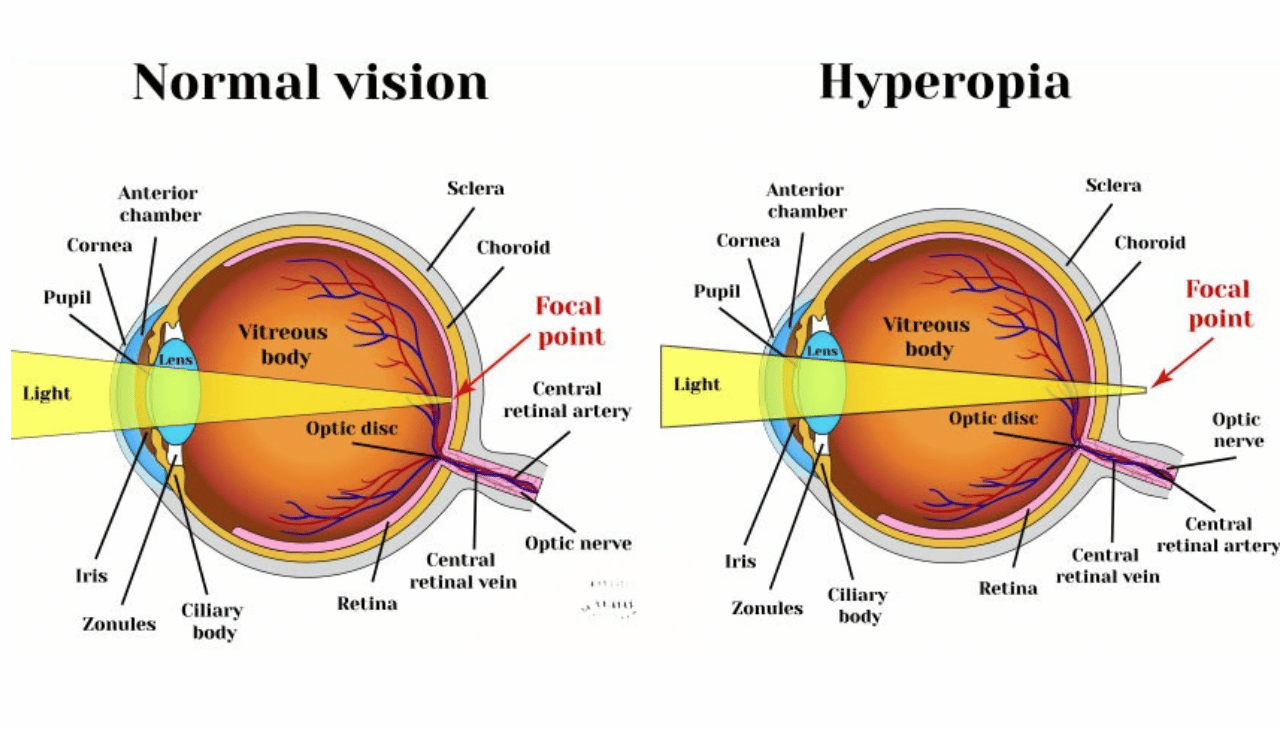
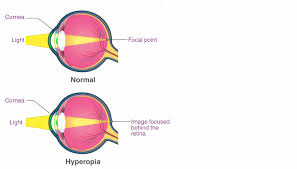
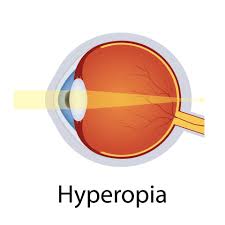
A common visual disorder known as longsightedness, or hyperopia, causes one to view distant things more clearly than close ones. Images focus behind the retina as a result of improper light refraction in the eye. The following five factors could contribute to the development of longsightedness:
1. Genetic Factors;
Description:
Genetics play a significant role in the development of hyperopia. If one or both parents are longsighted, their children are more likely to inherit the condition.
Evidence:
Studies indicate that hyperopia tends to run in families, suggesting a hereditary component. Specific genes associated with eye growth and development may influence the likelihood of developing hyperopia .
2. Eyeball Shape and Size;
Description:
Hyperopia occurs when the eyeball is too short from front to back, or the cornea has too little curvature. This causes light entering the eye to focus behind the retina instead of directly on it.
Evidence:
The shape and size of the eyeball are critical in determining how light is refracted. A shorter axial length of the eye can lead to hyperopia because it affects the eye’s ability to focus light correctly .
3. Age-Related Changes;
Description:
As people age, the lens of the eye can become less flexible, leading to presbyopia, a form of age-related hyperopia.
Evidence:
Presbyopia typically starts to affect individuals in their 40s and progresses with age. The loss of flexibility in the lens makes it harder to focus on close objects, contributing to farsightedness .
4. Developmental Factors;
Hyperopia or long sightedness
Description:
Hyperopia can be present at birth due to developmental anomalies in the eye. Many children are born with slight hyperopia, which often corrects itself as the eye grows.
Evidence:
Infants and young children commonly have mild hyperopia that usually diminishes as they grow. However, if the eye does not develop properly, the condition can persist into adulthood .
5. Corneal Shape Abnormalities;
Hyperopia or long sightedness
Description:
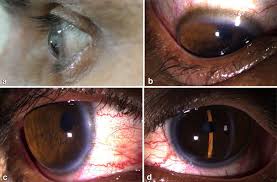
Abnormalities in the shape of the cornea can also cause hyperopia. If the cornea is flatter than normal, it can lead to improper focusing of light.
Evidence:
A flatter cornea has less refractive power, causing light rays to converge behind the retina. This corneal abnormality can be due to genetic factors or developmental issues .
Summary
Hyperopia, also referred to as farsightedness or longsightedness, is a refractive defect in which your cornea is too flat or your eye is too short. As a result, light beams focus behind the retina rather than directly on it, making distant objects appear crisper while nearby items appear hazy.
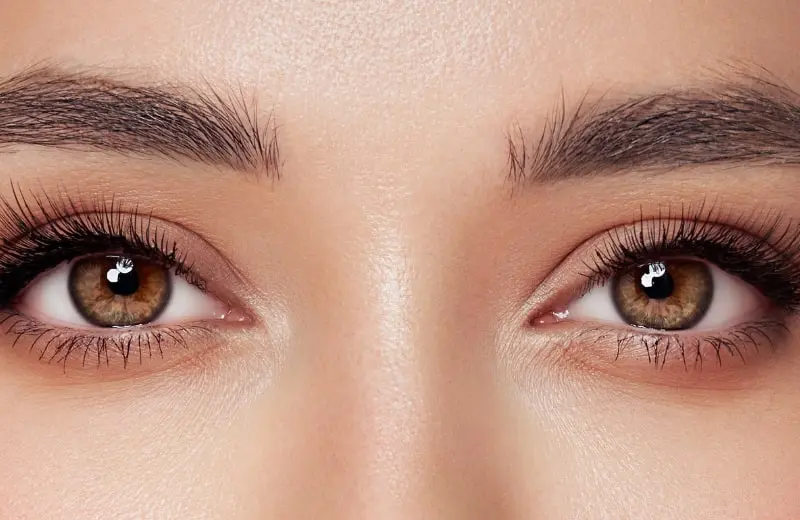
Healthy eyes. A nutrient-rich diet, preventive practices, and routine, thorough eye exams are all necessary to maintain healthy eyes. Wearing sunglasses to filter UV rays, following the 20-20-20 rule to lessen the strain of digital screens, giving up smoking, and being aware of your family history to prevent conditions like glaucoma or macular degeneration are all important steps.
HEALTHY EYES
By supplying vital nutrients like lutein, zeaxanthin, omega-3s, and vitamins C and E, a diet high in leafy greens, fatty fish, citrus fruits, and vibrant vegetables promotes eye health. These foods protect the retina and enhance night vision by preventing cataracts, dry eyes, and age-related macular degeneration (AMD).
1. Eat Well;

What’s on your plate is the first step toward good eye health. Omega 3 fatty acids, zinc, lutein, and vitamins C and E are among the nutrients that may help prevent age related vision issues like cataracts and macular degeneration. Once you have them, top your platter with :
- Salmon, tuna, and other oily fish
- Eggs, nuts, beans, and other nonmeat protein sources
- Oranges and other citrus fruits or juices
- Oysters and pork
- Green leafy vegetables like spinach, kale, and collards
2. Wear Sunglasses;
Your eyes can be shielded from the sun’s ultraviolet (UV) rays by wearing the appropriate sunglasses. An excessive amount of UV exposure increases the risk of macular degeneration and cataracts. Select a pair that provides 99% to 100% UVA and UVB ray blocking. Your eyes are better shielded from the side by wraparound lenses. While driving, polarized glasses lessen glare, but they may not provide any additional protection.
3. Quit Smoking;

Healthy eyes
Among many other health issues, it increases the risk of cataracts, visual nerve damage, and macular degeneration. If you’ve already attempted to break the habit but gave up, persevere. Your chances of success increase with the number of attempts you make to give up. Consult your physician for assistance.
4. Use Safety Eyewear;
Wear safety glasses or protective eyewear if you work with or are around dangerous or airborne items. Ocular injuries can also result from sports including lacrosse, racquetball, and ice hockey. Put on safety goggles. Your eyes will be protected by sports goggles with polycarbonate lenses or helmets with face masks.
5. Look Away From the Computer Screen;

Healthy eyes
Too much time spent staring at a phone or computer screen might lead to:
Eyestrain Blurry vision, Trouble focusing at a distance , Dry eyes Headaches Neck, back, and shoulder pain
To protect your eyes:
- Make sure your glasses or contacts prescription is up to date and good for looking at a computer screen.
- If your eye strain won’t go away, talk to your doctor about computer glasses.
Summary
The intricate sensory organs in your eyes are responsible for producing vision by absorbing light and sending electrical impulses to your brain. They work similarly to a camera in that the iris modifies the pupil to control incoming light, and the cornea and lens focus images onto the retina.
Foods Rich in Zinc

Appetite Enhancement Tips

Nutritional Value of Rolled Oats

A Step-by-Step Guide to Deleting Reels on Instagram

A Comprehensive Guide to Setting Up a YouTube Premiere

How to Create a WhatsApp Group
-
 Health4 weeks ago
Harmful side effects of earphones
-
 Self esteem4 weeks ago
Tips for self esteem improvement
-

 Exercise4 weeks ago
Regular physical activities importance
-

 Business3 weeks ago
Local business promotion
-

 Health4 weeks ago
Headphones safety tips
-

 Entertainment3 weeks ago
Women and British dance music