Breast health
Tips for Self Breast Examination

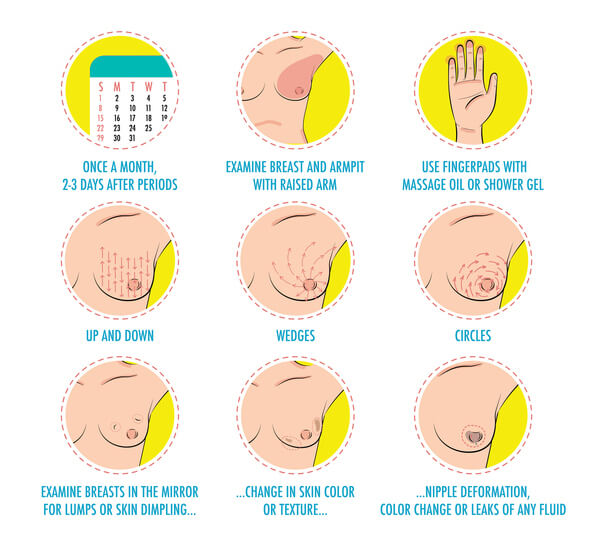
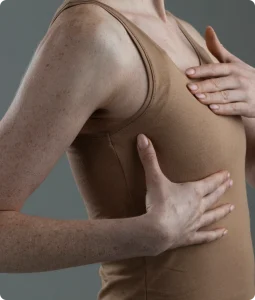
Tips for self breast examination. A proactive approach to maintaining awareness of your breast health is to perform routine self-examinations. It’s important to report any abnormalities to your healthcare physician for additional assessment, even though the majority of changes you may notice or feel during a self-examination are not malignant. Recall that self-breast examination should be a component of a more comprehensive approach to breast health, which should also include routine screenings such as mammograms
and professional examinations as advised by your physician. Self-awareness is a crucial skill for preserving your general health since early detection is essential for the successful treatment of breast cancer.
TIPS FOR SELF BREAST EXAMINATION
Effective self-breast exams involve using your finger pads (light, medium, firm pressure) in systematic patterns (circular, vertical strips) to cover the entire breast and armpit area, both manually (lying down and in the shower) and visually (in the mirror with arms up or down). You should also learn your normal to spot changes like lumps, skin dimpling, or nipple changes, and you should notify your doctor right away if you notice anything out of the ordinary.
1. Start with a Visual self-breast Examination;
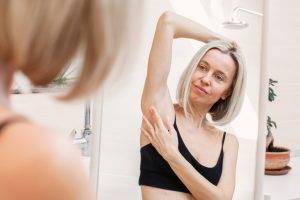
– Stand in front of a mirror with your shoulders straight and your arms on your hips.
– Look at your breasts for any visible changes, such as differences in size or shape, dimpling of the skin, or changes in the nipple (like inversion or discharge).
– Raise your arms and look for the same changes, paying attention to both breasts.
2. Examine your breast while lying down;
TIPS FOR SELF BREAST EXAMINATION
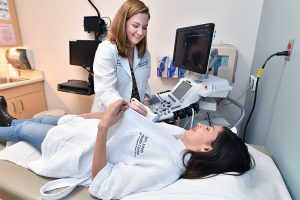
– Lie down on your back, which helps spread the breast tissue evenly over your chest, making it easier to feel for lumps.
– Use your right hand to examine your left breast and your left hand to examine your right breast.
– With the pads of your fingers, use a circular motion to feel the entire breast from top to bottom, side to side—from your collarbone to the top of your abdomen, and from your armpit to your cleavage.
– Follow a pattern to ensure you cover the entire breast. You can use vertical lines (up and down), circular motions (starting at the nipple and moving outward), or wedge patterns (from the nipple outward).
3. Feel for Changes While Standing or Sitting;

TIPS FOR SELF BREAST EXAMINATION
– Some women find it easier to feel changes in their breasts when their skin is wet, so this step can be done in the shower.
– Using the same hand movements described above, examine your breasts while standing or sitting.
4. Know What to Look out for;
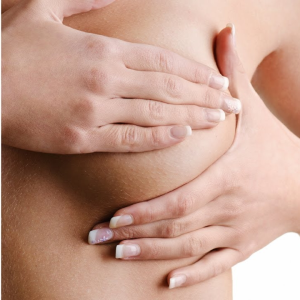
TIPS FOR SELF BREAST EXAMINATION
– Lumps or thickened areas that feel different from the rest of the breast tissue.
– Changes in the size, shape, or appearance of the breast.
– Nipple discharge that occurs without squeezing.
– Any new, persistent pain in one spot that doesn’t go away.
– Redness, scaliness, or thickening of the nipple or breast skin.
5. Report Any Changes to a Healthcare Provider;
– If you notice any changes or unusual findings during your self-examination, it’s important to contact your healthcare provider promptly. Early detection of breast cancer can significantly improve treatment outcomes.
Summary
An essential procedure for early breast cancer screening is doing a natural or self-breast inspection. It can help you become comfortable with how your breasts typically feel and appear, making it easier to spot any changes, but it shouldn’t be used in place of routine screenings by a medical professional. Above are detailed tutorial on how to conduct a self-breast examination:




Nivea body wash for men

Business maintenance

Athlete conviction of murder

A Step-by-Step Guide to Deleting Reels on Instagram

A Comprehensive Guide to Setting Up a YouTube Premiere

How to Create a WhatsApp Group
-

 Health4 weeks ago
Carbonated drinks side effects
-

 Business4 weeks ago
Smart ideas for business startups
-
 Deodorants4 weeks ago
Reasons for wearing deodorants
-
 Deodorants3 weeks ago
Reviewing tom ford oud
-
 Deodorants4 weeks ago
Review for saint laurent black
-

 Deodorants3 weeks ago
Varieties of perfumes for men