
Business
Business Plan Writing Tips


Business plan writing tips. A great business plan should be written with clarity, audience, and research in mind. It should begin with a compelling Executive Summary, then go on to describe your Company Overview, Market Analysis, Marketing Plan, Operations, and Financial Projections. SMART goals should be used, and it should always be succinct, professional, and updated. Don’t forget to highlight your unique selling points (USPs), provide evidence to support your claims, and customize the document for its intended use (e.g., fundraising, internal instruction).
BUSINESS PLAN WRITING TIPS
A business is any organization or activity that aims to provide goods or services for profit. It can take many different forms, from corporations to sole proprietorships, with the goals of economic activity, growth, and frequently social impact. It involves activities ranging from production to sales and necessitates strategy, risk, and resource management. A business plan is a roadmap that guides you through each stage of starting and growing a business. Here’s a quick guide to writing an effective business plan:
1. Executive Summary;

This is a brief overview of your business plan, summarizing your mission statement, product or service, and basic information about your team, location, and what you hope to accomplish.
2. Business Description;
Describe your business in more detail, outlining the problems it solves, your industry, target market, and what sets you apart from competitors.
3. Market Research;

Analyze your market by identifying your target customers, understanding their needs, and examining the competitive landscape. Highlight key insights that support your business’s potential for success.
4. Organization & Management;
Outline your business’s organizational structure and introduce the people involved. Explain their roles, experience, and how they contribute to achieving your goals.
5. Product Line or Services;

Business plan writing tips
Detail what you’re offering and how it benefits your customers. If applicable, include information on your product lifecycle, intellectual property, or research and development efforts.
6. Marketing & Sales Strategy;
Describe how you’ll attract and retain customers. Discuss your sales process, marketing channels, and how you plan to build customer relationships.
7. Funding Request;

Business plan writing tips
If you’re seeking funding, outline your financial needs. Specify how much funding you require, how you’ll use it, and how it will benefit your business.
8. Financial Projections of your business plan;
Provide financial forecasts that show your business’s potential for profitability. Include income statements, cash flow projections, and a break-even analysis for the next few years.
9. Appendix in a business plan;

Business plan writing tips
Use this section for supporting documents, like resumes, permits, leases, and other key paperwork. A well-structured business plan not only helps in securing funding but also keeps your business strategy clear, focused, and achievable.
Summary
A business plan, which covers important topics like market analysis, marketing, and management, is a formal, written road map that outlines a company’s objectives, strategies, operations, and financial projections. It serves as a blueprint for success, attracting investors and directing decisions for both startups and established businesses. It is essential for obtaining funds, coordinating teams, and tracking advancement; based on requirements, it frequently uses traditional or leaner formats.








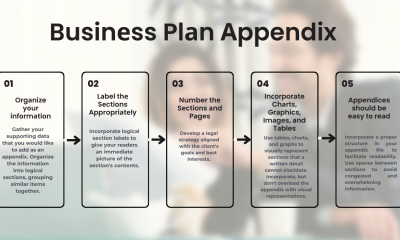








Business plan advantages. An organization or entity that engages in commercial, industrial, or professional activities with the goal of making money by meeting market demand with goods or services is called a business. To guarantee financial success, formalizing assets, strategic planning, and customer acquisition are crucial components. Web development, digital marketing, and content creation are popular fields in 2026.
BUSINESS PLAN ADVANTAGES
A successful business plan must be succinct, realistic, and audience-specific, emphasizing precise market research, SMART goals (specific, measurable, achievable, relevant, time-bound), and reliable financial predictions. Executive summaries, market analyses, management structures, and concise product/service descriptions are important elements.
If you’re asking yourself, ‘Do I really need to write a business plan?’ b consider this fact:
Companies that commit to planning grow 30% faster than those that don’t.
Creating a business plan is crucial for businesses of any size or stage.
If you plan to raise funds for your business through a traditional bank loan or SBA loan, none of them will want to move forward without seeing your b usiness plan. Venture capital firms may or may not ask for one, but you’ll still need to do thorough planning to create a pitch that makes them want to invest.
But it’s more than just a means of getting your business funded. The plan is also your roadmap to identify and address potential risks.

Business plan advantages
It’s not a one-time document. Your business plan is a living guide to ensure your business stays on course.
Reasons for writing a business plan;
If you’re asking yourself, ‘Do I really need to write a business plan?’ consider this fact:
If you plan to raise funds for your business through a traditional bank loan or SBA loan, none of them will want to move forward without seeing your business plan. Venture capital firms may or may not ask for one, but you’ll still need to do thorough planning to create a pitch that makes them want to invest
Companies that commit to planning grow 30% faster than those that don’t.

Business plan advantages
A business plan is a strategic document that outlines a company’s goals, strategies for achieving them, and the time frame for their achievement. It covers aspects like market analysis, financial projections, and organizational structure, serving as a roadmap for business growth and a tool to secure funding
Summary
A business plan is a fundamental document that outlines a company’s objectives, operational strategy, market analysis, and financial projections. It can be used as a tool to draw in investors and as a growth roadmap. An executive summary, firm description, market analysis, management structure, and financial statistics are important elements.
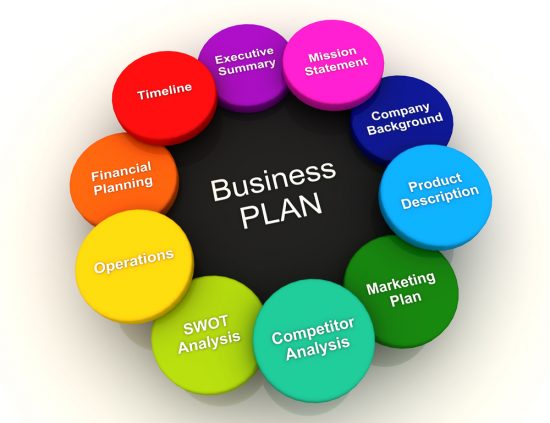
Business plans. An organization or entity that engages in commercial, industrial, or professional activities with the goal of making money by meeting market demand with goods or services is called a business. To guarantee financial success, formalizing assets, strategic planning, and customer acquisition are crucial components. Web development, digital marketing, and content creation are popular fields in 2026.
BUSINESS PLANS
A successful business plan must be succinct, realistic, and audience-specific, emphasizing precise market research, SMART goals (specific, measurable, achievable, relevant, time-bound), and reliable financial predictions. Executive summaries, market analyses, management structures, and concise product/service descriptions are important elements.
Any entrepreneur with a great idea for a business needs to conduct market research, analyze their competitors, validate their idea by talking to potential customers, and define their unique value proposition.
The business plan captures that opportunity you see for your company: it describes your product or service and business model, and the target market you’ll serve.
It also includes details on how you’ll execute your plan: how you’ll price and market your solution and your financial projections.
Reasons for writing a business plan;
Business plans
If you’re asking yourself, ‘Do I really need to write a business plan?’ consider this fact:
Companies that commit to planning grow 30% faster than those that don’t.
Creating a business plan is crucial for businesses of any size or stage.
If you plan to raise funds for your business through a traditional bank loan or SBA loan, none of them will want to move forward without seeing your business plan. Venture capital firms may or may not ask for one, but you’ll still need to do thorough planning to create a pitch that makes them want to invest.
But it’s more than just a means of getting your business funded. The plan is also your roadmap to identify and address potential risks.

Business plans
It’s not a one-time document. Your business plan is a living guide to ensure your business stays on course.
What research shows about business plans
Numerous studies have established that planning improves business performance:
- 71% of fast-growing companies have business plans that include budgets, sales goals, and marketing and sales strategies.
- Companies that clearly define their value proposition are more successful than those that can’t.
- Companies or startups with a business plan are more likely to get funding than those without one.
- Starting the business planning process before investing in marketing reduces the likelihood of business failure. Bu
Summary
A business plan is a fundamental document that outlines a company’s objectives, operational strategy, market analysis, and financial projections. It can be used as a tool to draw in investors and as a growth roadmap. An executive summary, firm description, market analysis, management structure, and financial statistics are important elements.

Tips for online businesses. Successful online companies concentrate on specialized markets, design polished websites, and use digital marketing tools like social media and SEO to cultivate enduring client connections. Early product idea validation, obtaining a distinctive brand name, automating logistics, and using analytics to monitor performance and enhance user experience are important tactics.
TIPS FOR ONLINE BUSINESSES
From modest local single proprietorships to massive international companies, businesses are structured organizations that offer goods or services in order to turn a profit. LLCs, corporations, partnerships, and sole proprietorships are important forms. Software development, e-commerce, and digital marketing are profitable, low-capital possibilities.
Vend your photography;

Turn your photos into cash via spots like Fine Art America, which lets you upload your images to vend as prints, T- shirts, phone cases and further. Other commerce for shutterbugs include SmugMug, 500px and PhotoShelter. Some spots bear a subscription but may give features ranging from pall storehouse to word– defended galleries and a customized website.
Test websites and apps;

Another way to make plutocrat from home is on spots likeUserTesting.com. You get paid for your studies on how well — or not so well — certain websites and apps work. You ’ll have to complete a short test to be accepted, also you ’ll be paid depending on the test type.
Graphic designer:

TIPS FOR ONLINE BUSINESSES
ever, consider getting a freelance graphic developer, If you’re passionate about art. Casting stunning illustrations for ensigns, bills, and announcements is among the stylish ways to make plutocrat online for creatives.
Web inventor.

TIPS FOR ONLINE BUSINESSES
Building websites for guests is a economic option if you ’re professed in web development. To achieve success, make websites that are both functional and visually appealing.Virtual adjunct. give executive support to businesses by carrying out tasks like dispatch operation, scheduling, and document medication.
Social media director;

TIPS FOR ONLINE BUSINESSES
Freelance as a social media director to help businesses and individualities grow their online presence. liabilities may include content creation, strategy development, followership engagement, and performance analysis.
Data entry specialist. Attention to detail and delicacy are essential for data entry places. This freelancing job substantially requires you to input data into spreadsheets, databases, or other online platforms.
Summary
Online companies provide flexible, affordable ways to make money through e-commerce, digital content, or services. Freelance services (writing, social media management, virtual support), content production (blogging, podcasting), and e-commerce methods like dropshipping, print-on-demand, and selling digital goods on sites like Etsy are all popular choices in 2026.

Tips for Emotional stress

Anxiety and stress reduction

Face cleansing tips

A Step-by-Step Guide to Deleting Reels on Instagram

A Comprehensive Guide to Setting Up a YouTube Premiere

How to Create a WhatsApp Group
-

 Social media4 weeks ago
How to Delete Reels on IG
-

 Photography3 weeks ago
Photography and Outdoors
-

 Music3 weeks ago
Lyrics for Iké Nilé
-

 Social media3 weeks ago
Tips for likes and Followers on Facebook
-

 Social media4 weeks ago
Guidelines for Uploading Videos on Youtube
-
 Social media3 weeks ago
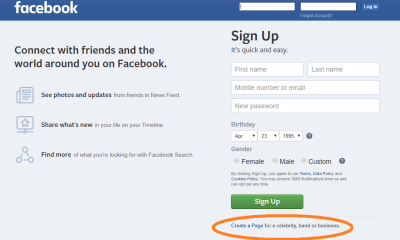
Guidelines for Creating a Facebook Page