WRITING
Academic Writing and Mistakes

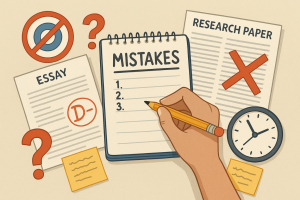

Academic writing and mistakes. Research-based arguments and evidence are the main focus of academic writing, a formal, objective writing style utilized in academic institutions and publications. It frequently uses technical vocabulary unique to a subject of study and is well-structured, precise, and easy to understand. Important features include a formal tone, the use of the third person, and an emphasis on concepts and facts rather than feelings or personal judgments.
ACADEMIC WRITING AND MISTAKES
Poor thesis statements, informal language, a lack of grasp of the assignment, and a weak framework are all common errors in academic writing. Citations, plagiarism, ambiguous and wordy sentences, excessive use of passive voice, and improper editing and proofreading are other frequent mistakes. Academic writing requires clarity, precision, and adherence to specific conventions. Avoiding common mistakes can significantly improve the quality of your work. Here are key pitfalls and how to avoid them:
1. Lack of Clarity and Precision;


The Common Mistakes: Using vague language and complex sentences.
Solution: Use specific terms and clear, concise language. Break down complex ideas into simpler parts.
2. Poor Structure and Organization;
Mistake: Disorganized content that lacks logical flow.
Solution: Outline your paper before writing. Follow a clear structure with an introduction, body, and conclusion. Use headings and subheadings to guide the reader.
3. Weak Thesis Statement;


The Common Mistakes: An unclear or unfocused thesis statement.
Solution: Develop a strong, clear thesis statement. Ensure all content supports and relates to your thesis.
4. Insufficient Evidence and Analysis;


The Common Mistakes: Making claims without adequate support.
Solution: Back up claims with robust evidence from credible sources. Analyze the evidence and explain its relevance.
5. Overuse of Passive Voice;
Mistake: Excessive use of passive voice, making the writing indirect.
Solution: Use active voice to make sentences more dynamic and clear. For example, use “The researchers conducted the experiment” instead of “The experiment was conducted by the researchers.”
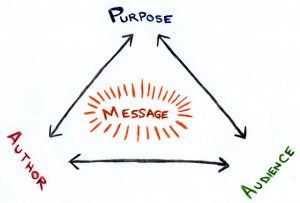
6. Ignoring Audience and Purpose;

Academic writing and mistakes
Mistake: Not considering the audience’s knowledge level.
Solution: Tailor your writing to your audience. Use a formal tone and avoid colloquial language unless appropriate.
7. Poor Citation Practices;
Mistake: Failing to properly cite sources.
Solution: Always cite sources according to the required style (APA, MLA, Chicago). Use plagiarism detection tools to ensure originality.
8. Inadequate Editing and Proofreading;


Academic writing and mistakes
Mistake: Submitting work with grammatical errors and typos.
Solution: Edit and proofread meticulously. Check for grammar, spelling, and punctuation errors. Have someone else review your work.
9. Overloading with Jargon;
Mistake: Using excessive jargon and technical terms.
Solution: Use jargon sparingly. Provide definitions for terms that may not be widely known.
10. Lack of Critical Thinking and Originality;


Academic writing and mistakes
Mistake: Merely summarizing existing literature without original insights.
Solution: Engage critically with sources. Offer original insights and suggest areas for further research.
Summary
Your academic work will be of higher quality and have greater impact if you avoid these typical errors. Focus on clarity, structure, evidence, and critical analysis to produce captivating, well-organized works. Keep in mind that academic writing is a skill that gets better with practice and criticism.