Educational
Education Systems in Nigeria

Education Systems in Nigeria. Formal, non-formal, and informal learning are the three categories of education, which is the process of obtaining or providing systematic teaching, usually at a school or university. It develops critical thinking abilities, propels societal advancement, and molds human potential.
EDUCATION SYSTEMS IN NIGERIA
The Federal Ministry of Education is in charge of Nigeria’s official 9-3-4 educational system, which is divided into basic, secondary, and tertiary levels. The framework includes three years of senior secondary education, four years of university education, and nine years of free, mandatory basic education (six years of primary and three years of junior secondary).
What is Education?

Education Systems in Nigeria
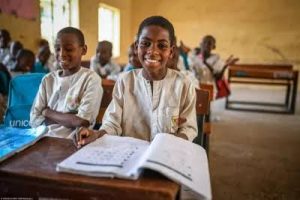
Education in simple terms, refers to both the act of teaching knowledge to others and the act of receiving knowledge from someone else.
There are various levels of the educational system in Nigeria. these include;
Primary Education System
For most Nigerians, primary education starts around age 5. After completing six years of primary school, students receive their first certificate of school leaving.
Subjects Offered in Primary Education:

Education Systems in Nigeria
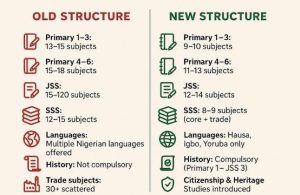
Mathematics, English, Christian and Islamic religious knowledge, agricultural science, home economics, and one of the three major indigenous languages and cultures Hausa-Fulani, Yoruba, and Igbo are among the subjects taught at the primary school level. Private schools also offer
French, Fine Arts, and Computer Science. To be eligible for admission to private, state, and federal government secondary schools, primary school students must take the Common Entrance Examination.
Secondary Education System in Nigeria:
The second official level of education, secondary school, commonly referred to as high school, typically lasts from the ages of 11 to 13 to the ages of 15 to 18. However, It is the formal education provided before college and after primary school. Although classes 6–8 may also be included in middle school, secondary school normally consists of grades 9–12.
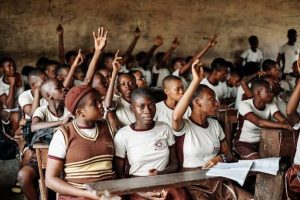
In Nigeria, education is vital and has a big impact on both individual growth and the country’s advancement.
Education in Nigeria has voluminous benefits and these include the below;
Importance of Education;

1. Investment in Human Capital: The foundation for building human capital is embedded in education.
2. Mitigating Poverty: One effective strategy for reducing poverty is the education system.
3. Economic revamp: An educated public is a beneficial force for economic growth.
4. It exposes individuals to life realities.
Summary
Nigerian education is governed by the Federal Ministry of Education. State-mandated rules regarding public education and state schools are implemented by local governments. The education system is divided into four categories: kindergarten, primary, secondary, and tertiary.