Health
Graves Diseases

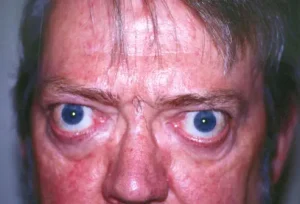

Graves diseases. There are several efficient ways to treat Graves’ disease, which is a controllable autoimmune condition. In order to avoid complications and guarantee a high quality of life, early diagnosis and treatment are essential.
Most Graves’ patients may control their symptoms and lead normal lives with the right care. However, because the disease can reoccur or create complications including heart difficulties, brittle bones, or thyroid storm—a potentially fatal condition brought on by excessive hyperthyroidism—lifelong care is frequently required.
GRAVES DISEASES
Graves’ disease is an autoimmune disorder that leads to overactivity of the thyroid gland, a condition known as hyperthyroidism. It is the most common cause of hyperthyroidism, particularly affecting women under the age of 40. The disease is named after Sir Robert Graves, who first described it in the 19th century.
Causes and Risk Factors;
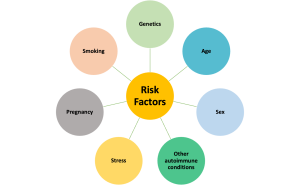

Graves’ disease occurs when the immune system mistakenly attacks the thyroid gland, causing it to produce excessive amounts of thyroid hormones. These hormones play a critical role in regulating metabolism, heart rate, and body temperature. The exact cause of Graves’ disease remains unclear, but genetic factors, stress, infections, and other autoimmune disorders are believed to play a role. It’s more common in women, and those with a family history of thyroid or autoimmune diseases are at higher risk.
Symptoms;

The symptoms of Graves’ disease are primarily related to the excess thyroid hormones in the body. Common symptoms include:
– Weight loss despite an increased appetite
– Rapid or irregular heartbeat (palpitations)
– Nervousness or irritability
– Tremors (shaking hands or fingers)
– Sweating and heat intolerance
– Fatigue and muscle weakness
– Difficulty sleeping
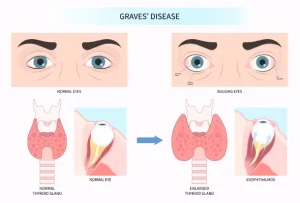
– Enlarged thyroid gland (goiter)
One of the distinguishing features of Graves’ disease is Graves’ ophthalmopathy or Graves’ orbitopathy, where the immune system attacks the tissues around the eyes, leading to bulging eyes, redness, and discomfort. In severe cases, it can impair vision.
Diagnosis;


Graves diseases
Graves’ disease is diagnosed based on a combination of symptoms, blood tests, and imaging. Blood tests will typically show elevated levels of thyroid hormones (T3 and T4) and a low level of thyroid-stimulating hormone (TSH). Additionally, the presence of thyroid-stimulating immunoglobulins (TSI) in the blood can confirm the diagnosis. An ultrasound or radioactive iodine uptake scan may also be used to assess the activity of the thyroid gland.
Treatment Options;


Graves diseases
The treatment of Graves’ disease aims to reduce the production of thyroid hormones and alleviate symptoms. Treatment options include:
1. Antithyroid Medications:
These drugs, such as methimazole or propylthiouracil, help block the thyroid’s ability to produce hormones.
2. Radioactive Iodine Therapy:
This treatment involves taking radioactive iodine orally, which selectively destroys overactive thyroid cells, reducing hormone production. This is a common and effective treatment but often leads to hypothyroidism, requiring lifelong thyroid hormone replacement.
3. Surgery:


Graves diseases
In cases where medications and radioactive iodine are not suitable, surgery to remove part or all of the thyroid gland (thyroidectomy) may be recommended.
4. Beta-blockers:
While they do not affect hormone levels, beta-blockers can help control symptoms like rapid heartbeat and tremors until other treatments take effect.
Summary
Graves’ disease is an autoimmune condition in which the thyroid is attacked by the immune system, causing it to produce excessive amounts of hormone (hyperthyroidism), which accelerates metabolism and affects many bodily functions. Symptoms include tremors, anxiety, rapid heartbeat, weight loss, heat sensitivity, and an enlarged thyroid (goiter). Treatment options include medication, radioactive iodine, or surgery. It is the most prevalent cause of hyperthyroidism, more common in women, and can also affect the skin and eyes (Graves’ ophthalmopathy).