Health
Indoor and ventilation quality

Indoor and ventilation quality. The cleanliness, temperature, and humidity of the air inside buildings are referred to as indoor air quality (IAQ) and ventilation, and they are greatly impacted by the introduction of outside air to reduce indoor pollutants. In addition to preventing health problems like asthma and lower productivity, good ventilation lowers pollutants like CO2 and airborne viruses. Source management, appropriate ventilation (natural or mechanical), and filtering must be combined for optimal IAQ.
INDOOR AND VENTILATION QUALITY
While inadequate ventilation can result in “sick building syndrome” and elevated CO2 levels, adequate ventilation lowers allergens, virus particles, and volatile organic compounds. Natural (windows) or mechanical (HVAC/fans) systems are used to maintain it.
In order to increase the quality of the indoor air, ventilation is the process of bringing outside air into a building and circulating it around the space while expelling stagnant air. Either mechanical or natural methods, or both, can be used to accomplish this.
Types of Ventilation;
Natural Ventilation
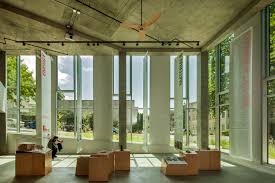

is a method of bringing outside air into a structure without the use of fans or other mechanical devices. This involves ventilation through the building’s windows, doors, roof turrets, and other openings.
Mechanical ventilation
defines the process of using powered devices, such as fans, to transport air into or out of a structure. The outside air may require filtering or cleaning before it reaches the building, depending on where it comes from. The supply and extraction theory states that while a second set of ducts takes the stale air and exhausts it outside, the first set of ducts and inlet grilles bring outside air into a space. Diffusers for incoming air can be found on the floor, on the wall, or in the ceiling.
Local exhaust ventilation (LEV)

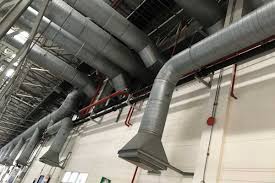
Indoor and ventilation quality
is an engineering system intended to transfer pollutants to a safe emission point or a filter/scrubber from the source of the contaminants ( dust, mist, fume, vapour,gas). There isn’t any general ventilation for it.
How to improve ventilation;
While it is difficult to reduce the needs for ventilation to a single, easy to follow method. The kind of ventilation, the duration of exposure, the nature of the building and its user, and the occupational activities being carried out must all be taken into consideration when designing specialized safety measures. Nonetheless, there are useful methods to enhance your ventilation
Natural ventilation can be improved by;

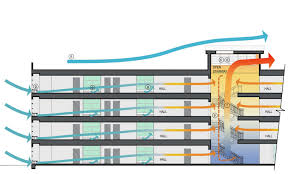
Indoor and ventilation quality
1) Whenever feasible, open doors, windows, and vents, especially in between tasks or users, to enhance the quantity of fresh air without compromising the comfort employees.
2) Avoid closing doors or windows completely when people are in a naturally ventilated area
3) “air rooms” as much as you can. It might be ideal to do this at breaks, at the start and end of the day, or while the room is empty.
Summary
The efficiency of replacing indoor air with fresh outdoor air to eliminate contaminants, regulate humidity (preferably between 30 and 60 percent), and maintain optimum oxygen levels is referred to as ventilation quality.