History
Kanuri Language History

Kanuri Language History. This belongs to the Nilo-Saharan family of Central Saharan languages. The Kanem-Bornu Empires, which ruled over Lake Chad throughout the Middle Ages, used it as their main language. It has a long history connected to Islamic learning and trans-Saharan trade and is spoken by millions of people in Nigeria, Niger, Chad, and Cameroon.
KANURI LANGUAGE HISTORY
However, the Kanuris in the northeastern region of Nigeria, especially in Borno State, are the main speakers of Kanuri, a language with a long history. The language, which belongs to the Nilo-Saharan family, has been important to the political and cultural development of the area.
Origins and Early Influence;

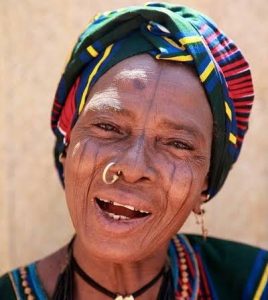
Kanuri Language History
Meanwhile, the Kanuri’s language dates back centuries, closely tied to the rise of the Kanem-Bornu Empire, which existed from the 9th to the 19th century. As the empire expanded across present-day Chad, Niger, Cameroon, and northeastern Nigeria, Kanuri became a dominant language in trade, governance, and religious scholarship.
However, the spread of Islam in the region during the empire’s height further solidified Kanuri as a key language, especially in Islamic education.
Colonial and Post-Colonial Era;
Although, during the colonial period, the influence of English and Hausa grew, which led to a gradual decline in the dominance of Kanuri in official and educational settings. However, it remained a strong cultural marker among the Kanuri people, preserving its importance in local communities, traditional courts, and religious institutions.
Modern Day;

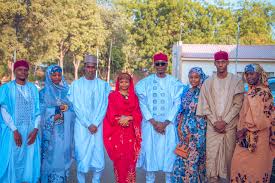
Kanuri Language History
Also, today, Kanuri is spoken by over 4 million people in Nigeria, though it faces challenges from more widely spoken languages like Hausa and English. Efforts have been made to preserve and promote the language, including its use in radio broadcasts, local schools, and religious contexts. The Kanuri language remains an important part of the cultural identity of the Kanuris continues to hold significance in the northeastern region of Nigeria.
Summary
Also, the people’s tenacity and their unwavering ties to a language that has influenced their culture and history for millennia are reflected in Kanuri’s rich history.