Career
Major Nurse Requirements



Major nurse requirements. A solid intellectual background in science and arithmetic is a prerequisite for major nursing programs; biology, chemistry, physics, English, and mathematics are frequently required in high school or as preparatory courses. After that, in order to be licensed, candidates usually need to complete a degree program, such as an Associate’s Degree in Nursing (ADN) or a Bachelor of Science in Nursing (BSN), and pass the NCLEX-RN exam. Additional graduate study is required for advanced positions.
MAJOR NURSE REQUIREMENTS
Starting a nursing career is an honorable and fulfilling path, but it has prerequisites to guarantee skill and higg quality patient care. This in depth blog post will walk you through all of the prerequisites for becoming a nurse, including training, certification, and personal qualities that are essential for success in this fast-paced field of healthcare.
Educational Requirements;
1. High school Diploma or Equivalent:

Getting a high school diploma or its equivalent, such as a general Educational Development (GED) certificate, is the first requirement for becoming a nurse. It can help to have solid background in biology, chemistry and mathematics.
2. Prerequisite College Courses:
Completing prerequisite course in anatomy, physiology, microbiology, and psychology is mandatory for many nursing programs. The fundamental knowledge required for nursing education is covered in these courses.
Nursing Degree Programs:

To become a nurse, one can follow one of several different educational pathways, each with specific requirements:
Nursing diploma:
A few hopital provide two to three year nursing diploma programs. These days, though this path is less typical.
Bachelor of Science in Nursing:

University based BSN programs normally last four years. BSN holders are more in demand in the nursing field and frequently have wider job options.
Clinical Experience And Training;
Clinical Rotations:
As part of the nursing curriculum, students participate in practical clinical rotations that enable them to apply their theoretical knowledge in actual healthcare settings. These rotations include a wide range of disciplines, including pediatrics, obstetrics, and medical-surgical nursing.
Simulation Labs:

Major nurse requirements
A lot of nursing programs include simulation labs where students can hone their abilities in a safe setting. This offers a secure environment for honing clinical skills prior to working with real patients.
Professional Attributes And Skills:
Effective Communication:
Being able to communicate well is essential for nurses. To guarantee coordinated and thorough care, nurses must communicate openly and effectively with patients, families, and other medical professionals.
Empathy & Compassion:

Major nurse requirements
As a compassionate vocation, nursing requires the capacity to sympathize with patients during difficult situations. In addition to fostering trust, compassion improves patient outcomes.
Critical Thinking:

Major nurse requirements
In order to evaluate situations, make wise judgments, and efficiently prioritize treatment, nurses need to be very proficient in critical thinking. Rapid thinking is frequently needed in fast-paced healthcare settings
Summary
You will be taught how to study patients and determine their needs from the beginning of your course until your first employment. You’ll learn how to prepare and provide the best treatment possible for them, as well as assess the outcomes. It’s crucial to establish a connection of trust with every patient. Regardless of their circumstances, you want to help them live better lives. To attain the best outcomes for your patients, you will need to balance a number of priorities and consider a lot of factors.


Tips for setting up freelance rates. Are you trying to figure out how much to charge as a freelancer? Everyone knows that time is money. However, what is the value of your time? What elements affect your ability to charge, including industry, value, location, expertise, and abilities? In actuality, there isn’t a perfect freelancer pricing formula. After deciding on a rate, you may monitor how prospective customers are responding to it and adjust it to suit your needs.
TIPS FOR SETTING UP FREELANCE RATES
Use hourly, project, or value-based models, offer packages, be confident when negotiating, and keep in mind to cover overheads and build profit for growth. To set freelance rates, determine your minimum needed income (covering expenses, taxes, and desired salary) and research industry standards. Then, price based on your experience, project complexity, and the value you deliver, not just hours. Freelancing entails performing specific tasks for clients without committing to full-time employment. Many freelancers work on many projects for different clients at the same time.
How to Set up Freelance Rates;

TIPS FOR SETTING UP FREELANCE RATES
1. Hourly pricing:
Hourly pricing is the most typical way for new freelancers to set their rates because it is a simple model. This method involves calculating an hourly rate for your labor and multiplying it by the number of hours worked.
2. Set up freelance rates;

TIPS FOR SETTING UP FREELANCE RATES
Project-based (fixed) pricing With this arrangement, the freelancer charges a flat fee for the entire project. Your salary is based on the results you give rather than the number of hours you labor. A value-based pricing approach allows the freelancer to charge a rate based on the perceived worth of their service to clients. Examples of projects well suited for fixed-price contracts include web design and mobile app development. This method demands a thorough understanding of clients’ needs, budgets, and expectations.
How to Set up Freelancing Rates;

TIPS FOR SETTING UP FREELANCE RATES
3 Set your annual salary goal. Understanding how much you need and want to make will help you work backward to determine the freelancer rate. Choose a yearly wage, and then use it to determine how many working hours you’ll need to get that salary.
4 Consider how many billable hours you need to work. While every scenario is unique, freelancers’ average hours.
5 When calculating your freelancer rate, you can modify this ratio to fit your needs.
Summary
Establishing your freelance rates entails figuring out your costs (expenses, taxes, desired salary), researching market rates, assessing your skills and demand, and selecting a pricing model (hourly, project, value-based) that is flexible and self-assured while reflecting the value you bring rather than just time spent. Important actions include unde

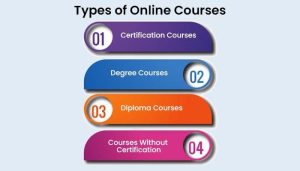 Types of online courses. Tech (AI, Data Science, IT), Business (Marketing, Finance, Management), Creative Skills (Design, Digital Art), and Personal Development (Leadership, Wellness) are just a few of the many topics covered by online courses that provide flexible learning from any location. These platforms include Coursera, edX, and Udemy for skills, certificates, or even degrees, with many free options available from universities and organizations.
TYPES OF ONLINE COURSES
Take online classes to get quick money. Success is not certain, even if there are more ways than ever to earn money online. To thrive, earn money, and progress in this dynamic environment, you must acquire the skills you need. We have assessed some of the most popular and reputable online courses now available to help you make money this year without wasting your time or money.
Tips for Making Money Online;

1. Although, Complete Digital Marketing Course. Among the most thorough online courses on digital marketing is perhaps The Digital Marketing Complete Course.
2. Meanwhile, Professional Certificate in Google Data Analytics. the Google Data Analytics Professional Certificate, created by Google specialists, provides a thorough overview of your abilities to succeed as a data analyst.
3. Also, In addition to a wealth of templates, tools, checklists, and standard operating procedures (SOPs) to help you optimize your affiliate marketing profits, the Affiliate Lab course provides access to over forty-five hours of instruction covering topics ranging from subject selection to keyword research.
More Tips;

TYPES OF ONLINE COURSES
4. Also, certification for Google UX Designer The Google UX Designer Certification is an excellent course to begin your career in UX design, even if you have no prior design expertise.
5. However, Professional Meta Front-End Developer Certificate The accredited program offers all the assistance required to begin a career as a front-end web developer on a contract or as a freelancer, and it is tailored for professionals at the entry level.

TYPES OF ONLINE COURSES
6. Meanwhile, Certification for IBM Full Stack Software Developer You can learn how to become a full-stack developer by taking the IBM Full Stack Developer course.
7. Courses on Google Ads Training This might be the right course for you if you’re searching for ways to make money online without having to invest a large sum of money upfront.
Summary
Online courses offer flexibility through video, live sessions, or blended formats to suit different learning styles and goals, from quick skills to deep expertise. They differ in terms of delivery (synchronous/live vs. asynchronous/self-paced), structure (bootcamps, micro-courses, full degrees, masterclasses), and content (tech, business, creative skills).


Career selection tips. Finding your talents, interests, and values through self-assessment is the first step in choosing a job. Next, look into career alternatives that fit your results. Once your options have been reduced, think about your long-term objectives, the schooling you will need, and the state of the labor market. Finally, try to obtain experience through internships or informative interviews.
CAREER SELECTION TIPS
Throughout your working life, you’ll continually devise a strategy to manage your learning and advancement: a career plan. This four stages are designed to assist you in visualizing the steps you need to take and the methods by which you need implement these steps in order to reach your career goals
The four stages of a career plan are:
- identify your skills and interests
- explore career ideas
- make a decision
- set achievable goals.
1. Identify your skills and interests;

Making a career decision is important. You’ll spend a large portion of your life at work, so you should make good choices if you want to like what you do, stay motivated, and reach your full potential. You must first understand who you are. This entails evaluating your interests and values as well as your skill set. To determine whether your knowledge and skill set are a suitable fit for the position you’d like to have, it’s critical to recognize your range of abilities. Knowing what abilities you possess also makes it easier to identify any gaps that might need to be filled in order to reach your professional objectives.
Enumerate all of your specialized and transferable talents, along with instances of when you’ve used them. As you reduce of alternatives available to you in the next stage, and honest evaluation of your abilities, values, and interest will be helpful.
2. Explore career ideas;

This is all about focusing your possibilities by doing study on the employment market and career paths that pique your interest. Investigate the local, national, and international employment markets to learn about the major trends in the industry you have in mind for your dream career. This will assist you in learning about additional job options and identifying roles that are growing or shrinking.
3. Make a decision;

Also, you can now begin making decisions. Integrate your knowledge of yourself with what you’ve learned about the graduate employment market and your possibilities. Choose the role that most interests you from your list of job ideas, and then choose one or two backup options in case you are unable to pursue your initial choice.
4. Set achievable goals;

CAREER SELECTION TIPS
Although, your career plan should include a breakdown of your short-, medium-, and long-term goals as wela as how you’ll get there and what steps you need to take when. Review your progress often, particularly following the accomplishment of each short-term objective. In case your circumstances alter, you should also create a backup plan for your professional development. Draw a number of different routes to your long-term objective, taking into account how you’ll get past potential obstacles at each stage, such as training requirements.
Summary
Selecting a career is more than just looking for work; it’s about selecting a path that fits your particular set of abilities, passions, and beliefs. Many professionals now begin in one field of work and subsequently transition into another, so that journey no longer has to be linear.

Tips for Skin Breakage
Lip Breakage Causes and Treatments

Can Tremor be Cured?

A Step-by-Step Guide to Deleting Reels on Instagram

How to Create a WhatsApp Group