Family
Strategies to Cope with Family Crisis


Strategies to cope with family crisis. Sometimes it can be difficult to get away from stress brought on by people close to you. However, it is possible to learn how to control its effects. But stress brought on by loved ones can be difficult. Children, aging parents, and visiting relatives can leave us feeling frazzled, despite our love for them.When family members are dealing with more stressors than they can manage, family stress can result.
STRATEGIES TO COPE WITH FAMILY CRISIS
A single Stress affects everyone or a series of stressful events that compound one another can lead to family stress. It can be very difficult to balance the demands of work and family life, take care of an elderly parent, or deal with financial difficulties, even in the absence of other burdens. It takes time to find stress-reduction strategies that work for you. Although there isn’t a single, universally applicable solution, the following eight useful suggestions might help you and your family:
1. Recognize stress signs

Stress signs alert us when something is amiss, much like an automobile’s check engine light does. stress can lead to high blood pressures. Maintaining a journal can assist in monitoring stressors and their effects. The first step in stress management is becoming aware of our stress indicators.
2. Take part in relaxing activities

It’s important to make time for enjoyable activities, like reading or spending time outside with family, even when life is hectic. Plan family vacations or regular breaks throughout the day to keep your mind clear and prepared for obstacles. Stress management can also be aided by Physical exercise and healthy eating
3. Be mindful

We frequently let our thoughts linger on concerns from the past or the future. Being mindful keeps us calm and in the moment. You can improve your focus and lower your anxiety by incorporating mindfulness into your daily routine, even for just a short period of time.
4. Make getting enough sleep a priority

The health and well-being of you and your family depend on getting enough sleep every night. The quality of your sleep can be enhanced by creating a calming bedtime ritual and a regular sleep schedule.
5. Acknowledge and respect feelings

Feeling anxious or stressed is common. It’s critical to acknowledge these emotions in both yourself and other people, including children. Additionally, self-compassion and Laughter can aid in emotional regulation.
6. Support family needs
Provide both practical and emotional support to your family during difficult times. Bonds can be strengthened and a sense of security can be created by providing assistance with household tasks or taking care of family members on a regular basis.
7. Concentrate on controllable actions

Pay more attention to what you can influence rather than what you cannot. Divide large tasks into smaller ones, then rank them according to importance and urgency.
8. Create a network of support

When necessary, ask friends, family, or experts for advice and emotional support. It takes courage to ask for assistance when dealing with stress. Numerous online communities and support groups exist that have comparable experiences.
Summary
By putting these techniques into practice, you can improve your capacity to manage family stress. You can promote resilience and fortify family ties during trying times by identifying symptoms early, taking regular breaks, practicing mindfulness, prioritizing sleep, accepting emotions, supporting one another, concentrating on what you can control, and creating a support system. By taking these actions, you can better manage stressors and foster harmony and general well-being in your family.








Family duties. obligations of the family are the duties, responsibilities, and expectations people have for their relatives. They include practical, financial, and emotional support, such as helping with household chores, providing care for children or elderly parents, and more. These obligations vary widely by culture but are an essential component of identity and relationships and occasionally even have moral or legal significance. These responsibilities, which can range from daily chores to long-term commitments and frequently entail striking a balance between personal and family requirements, direct behavior and have an impact on important life decisions (job, living arrangements).
FAMILY DUTIES
A family, which comes from the Latin familia, is a group of individuals who are connected either by affinity (via marriage or other relationships) or consanguinity (by acknowledged birth). Social order is based on it. Families should ideally provide safety, stability, and predictability as their members grow up and learn how to engage with the community. The majority of human societies have historically relied on families for socialization, bonding, and nurturing.
Orientation;

Making sure kids are ready to contribute to society is one of a family’s main responsibilities. Children are taught society standards, beliefs, skills, behaviors, and duties as part of this process, which is called socialization. Families shape future generations by imparting customs, cultures, moral principles, and beliefs. The financial help that family members require is given by them.
Emotional Support and Nurturing;

The warmth, affection, and understanding that families provide is a vital component of the emotional and psychological growth of their members. The emotional stability that a family provides helps people develop self worth and confidence, which makes them resilient and able to face the hardships of life. Upkeep of Health Families are normally in charge of their members’ health and welfare. This covers both medical and nutritional physical treatment as well as mental health support.
Assignment of Roles;

FAMILY DUTIES
Every person in society has particular duties and responsibilities. Families are vital in preparing members for their society tasks by allocating these responsibilities according to age, gender, and ability.
Defense;
Families give their members a safety net, a shield against both personal struggles and societal problems. The efficient operation of societies is largely due to this support system.
Personality and Self-Regard;

FAMILY DUTIES
Families are where people develop their identities. Social roles, familial values, and cultural background all influence how one views and feels about oneself. A healthy home environment fosters the development of a strong sense of self in people, which they then apply to their interactions with others in larger society.
Sustaining Social Order;

FAMILY DUTIES
Also, Families provide stability to society by imparting morality, ethics, and societal standards. Families instill morals and discipline in their children, which reflects in their behavior within society and upholds social order. Families are essentially the core units that make up society.
Summary
Family roles, which vary by culture, personality, and structure, are the expected behaviors and responsibilities assigned to members (such as parent, child, caregiver, breadwinner, nurturer, and peacemaker) that maintain family function. Although they are frequently positive, they can also become rigid or dysfunctional (such as scapegoat, hero, or lost child) under stress or trauma, affecting relationships and individual well-being.
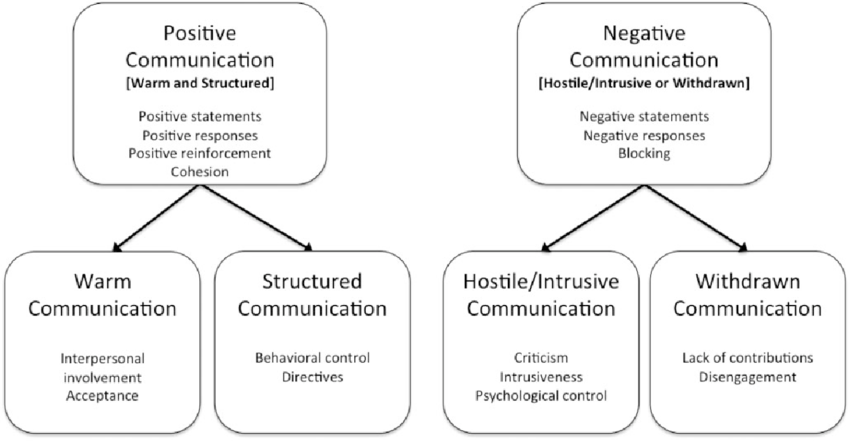

Family communication processes. This frequently follows patterns influenced by upbringing and affects both individual relationships and overall family function, is the exchange of ideas, information, and feelings within a family. It is essential for fostering bonds, trust, and managing conflict through verbal, nonverbal, and behavioral interactions. While patterns can vary based on conversational (openness) and conformity (values) orientations, creating distinct styles like Pluralistic, Consensual, Protective, or Laissez-faire, healthy family communication emphasizes open, honest, empathetic listening, respect, and consistent engagement, fostering emotional safety and understanding.
FAMILY COMMUNICATION PROCESSES
Family communication processes, which include patterns like Consensual, Protective, Pluralistic, and Laissez-Faire (based on conversation & conformity) and functions like managing closeness/distance, establishing rituals, and constructing identity through stories and roles, are the verbal (words) and nonverbal (body language, tone) exchanges that shape relationships. While patterns affect how families deal with reality and difficulties, effective processes foster trust, manage conflict, and assist members via open listening, empathy, and straightforward expression.
1. Dialogue Frameworks;

Include family meeting times on your calendar and establish ground rules for the sessions. Everyone should be encouraged to join; do not coerce them. Every family member will have a chance to be heard if they speak in turns. Family members’ self-esteem will rise when a structured listening atmosphere is established.
Avoid interruptions and turn off distracting things;

FAMILY COMMUNICATION PROCESSES
Family members need to be able to concentrate on the supplied information. Turning off devices like TVs, laptops, phones, gaming consoles, and other items that can disrupt the discourse is necessary. Select the ideal moment. There are moments when bringing up particular topics is appropriate. it is not a good idea to discuss your child’s academic difficulties. If you want your message to be heard, timing is crucial.
Be mindful and engage in active listening;

FAMILY COMMUNICATION PROCESSES
Pay attention to what the other person is saying instead of planning your reply. If the answer is being prepared before hearing the complete message, information may be overlooked. Be succinct and have a plan. Consider the message you wish to convey. When communicating, use words and body language to be direct and unambiguous. When a request is made, decide what you want and make a straight request for it. You will usually end up disappointed if you wish or hope that the other person would understand what you desire.
Listen with empathy;

FAMILY COMMUNICATION PROCESSES
However, For the individual who is feeling them, emotions are real. Respecting and acknowledging others’ feelings, even if they differ from your own, is crucial. You can resolve the issue by coming to an agreement to disagree. Dismissing emotions has the potential to stifle dialogue and foster mistrust. Adhere to the facts and speak the truth. Discussions frequently include emotions, and people usually take great care to avoid offending others. In fact, telling the truth will improve family relations and foster trust. Effective communication
Summary
A family, which can take many different forms, such as nuclear (parents and children), extended (many generations/relatives), blended (step-family), or chosen connections, is a basic social group linked by blood, marriage, or adoption that frequently lives together and offers mutual support, love, and belonging. It serves as a primary unit for socialization and care. In addition to humans, “family” also refers to biological groups (such as Felidae), languages, and even things that share characteristics.


Work and family. In order to purposefully combine work and family obligations, you must set clear boundaries, prioritize tasks according to your values, communicate your needs to both your employer and your family, use time management tools like calendars and routines, and maintain a focused presence in your role. To prevent burnout, important tactics include making a timetable, being adaptable, taking pauses, communicating honestly, limiting after-hours work, and placing a high priority on self-care. This involves understanding when to devote oneself to work and when to spend time with hobbies or loved ones. Understanding this equilibrium can assist you in reaching it and potentially make your weeks more proactive and joyful.
WORK AND FAMILY
The term “work and family” refers to the vital, frequently difficult relationship between professional obligations and personal/family life. Finding a healthy balance is essential for wellbeing and involves techniques like establishing boundaries, communicating clearly with employers and family, setting priorities, and utilizing workplace flexibility to manage conflicting demands and avoid conflict. Finding balance between work and family. In order to succeed professionally and maintain a high standard of living, professionals must strike a balance between work and family.
1. Limit unnecessary activities;

Even though you may not be aware of it, it can be tempting to spend more time on less productive activities, such checking your personal email, social media, and the internet. Examine your daily routine to identify the least productive activities so that you can better allocate your work time.
2. Develop your ability to say “no”;
Having to say “no,” particularly to your employer or supervisor, can be difficult. Your work-life balance, however, may depend on knowing when to say it. When you consistently say “yes” to tasks or projects, you can begin to feel overburdened by your growing workload, which could lead to stress and decreased productivity.
3. Draw lines and disconnect;

Modern technology has made it possible for workers to stay in touch with their job via computers and mobile devices. Although this enables businesses to provide flexible work schedules.
4. Examine your timetable;

Work and family
Having adequate time in your calendar for both work and life is essential to enhancing your work-life balance. Review your schedule and ensure that you have adequate time to fulfill your work commitments and recover.
5. Express what you require The secret to striking a work-life balance is to communicate openly with your manager. Communicate your demands to your manager if you’re having trouble juggling work and personal obligations.

Work and family
6. Identify the fundamental values Finding your life’s priorities is the first step in establishing your fundamental values. Finding a balance between your career and family life may be simpler if you know what you want and enjoy the most.
Summary
A family, which comes from the Latin Familia, is a collection of individuals who are either connected by affinity (marriage or other link) or consanguinity (recognized birth). It is the cornerstone of social order. Families should ideally provide security, consistency, and structure as their members grow up and learn how to engage with the community. The majority of human societies have historically relied on families for socialization, bonding, and nurturing.

Mangoes Healthy Impacts

The Elements of News Reports

Skills for Editing News

A Step-by-Step Guide to Deleting Reels on Instagram

How to Create a WhatsApp Group