Entertainment
On your first date: Avoid talking too much about yourself.


On your first date, One most important thing to do is to remember that whatever you do on that day determines whether or not you’re have a second date. So, make sure both of you enjoy the moments together.
Before going on a first date, consider the following tips:
1. Personal Hygiene:
Ensure you are clean and well-groomed. Pay attention to oral hygiene, wear clean clothes, and use a subtle fragrance. 
2. Choose Appropriate Attire:
Dress in a way that is suitable for the venue and occasion, and make sure you feel comfortable and confident in what you’re wearing.
3. Plan Ahead:
Confirm details such as the time and location of the date. Arrive on time and be considerate of the other person’s schedule.
4. Be Yourself: Be genuine and authentic. Trying to be someone you’re not can create discomfort and hinder a potential connection.
5. Relax and Stay Positive:
Take a few deep breaths to ease nerves. Approach the date with a positive mindset, and focus on getting to know the other person.
6. Listen and Engage:
Pay attention to what your date is saying and engage in the conversation. This demonstrates interest and helps build a connection. 
7. Put Away Your Phone:
Minimize distractions by silencing or putting away your phone. This shows respect and allows you to be fully present during the date.
8. Have Conversation Starters in Mind: Think of a few topics or questions to keep the conversation flowing smoothly. Avoid controversial or overly personal subjects initially.
9. Respect Boundaries:
Be respectful of personal boundaries and avoid discussing sensitive topics unless your date brings them up willingly.
10. Stay Open-Minded:
Keep an open mind and don’t make quick judgments. Everyone is different, and first impressions may not always reflect the full picture.
Remember, the goal is to enjoy the experience, get to know each other, and determine if there’s potential for a second date.
Here are some things to avoid on a first date:
1. Talking Too Much About Yourself: Balance the conversation and avoid dominating it with your own stories or achievements.
2. Using Your Phone Excessively: Constantly checking your phone can be distracting and send the message that you’re not fully present.
3. Discussing Controversial Topics: Steer clear of sensitive subjects like politics, religion, or personal issues unless the other person brings them up willingly.
4. Being Late:
Punctuality is important and shows respect for the other person’s time. 
5. Overindulging in Alcohol:
Drinking excessively on a first date can lead to awkward situations and a negative impression. 
6. Getting Too Personal Too Soon:
Avoid prying into extremely personal matters early on. Let the conversation naturally unfold.
7. Being Negative or Complaining: Maintain a positive attitude and focus on enjoyable topics. Constant complaining can be off-putting.
8. Talking About Exes:
Avoid discussing past relationships in detail. Keep the conversation focused on the present and future.
9. Overanalyzing or Pressuring:
Don’t pressure the other person about future plans or overanalyze every aspect of the date. Keep it light and enjoyable.
10. Forgetting Basic Manners:
Show good manners by being polite, considerate, and respectful throughout the date.
Remember, everyone is different, so these are general guidelines. Gauge the situation and adjust your behavior accordingly to ensure a positive and enjoyable experience for both parties.












Television Merits. It is an essential part of modern civilization. Television acts as a bridge to the outside world, providing news, culture, education, entertainment, sports, weather, and even music. Television has been an integral part of our daily lives since its inception. It is a powerful medium that provides information and entertainment and has a variety of effects on our lives. These days, everyone utilizes smart TVs for a number of things, like watching sports, the news, or binge-watching their preferred web series.
TELEVISION MERITS
Every television viewer is aware of the uses, benefits, and drawbacks. However, the trend has become so pervasive that many, especially adults and children, are unable to avoid watching television and have become seriously addicted to it. We go over the advantages of television below.
1. Amusement

Television Merits
Selecting plays, movies, and serials in addition to a calendar of athletic events and games can result in a quality program. There are many different forms of entertainment available on television, such as movies, television series, and music.
2. Acquiring knowledge of novel concepts
Knowledge and information concerning education and technology can be found in abundance through educational events, artistic performances, and competitive programs.
3. A news outlet
A variety of news items, such as those about politics, business, sports, and the economy, can be readily and swiftly accompanied by images and videos. From the comfort of their homes, anyone can examine the current state of any issues, accidents, or disasters.
4. Harmony among relatives
Watching television is the one time when a whole family can spend quality time together and have an open conversation. They can address several issues if they talk about them.
5. The most enjoyable time

Television Merits
Watching television is beneficial for people, especially elderly people or those with a lot of idle time. It can be hard for some retirees to volunteer their time since they feel bored and lonely after leaving their parents or their job.
6. The development of personality
Many programs, athletic events, and thought-provoking conversations are presented to students and children, all of which contribute to their development. The only way for people to learn new skills is through television.
7. Knowledge and awareness of many languages
The modern styles of numerous states, regions, and countries can also be learned from television. We gain a better understanding of this field as a result. Before the television revolution, there were only local languages and regional channels available.
8. Knowledge of diverse civilizations

Many channels that highlight the cultural customs of various places, languages, and faiths around the world are currently on the market.
Summary
Recent technological advancements have made televisions highly captivating. There are also great TVs with curved borders, TVs with large display targets, and TVs that can be used as PCs. These TV innovations are still important as a source of entertainment in our homes.

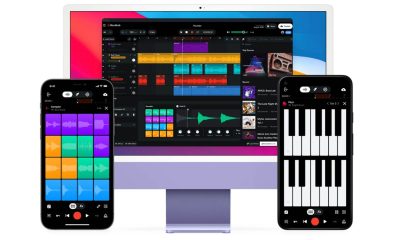
Women and British dance music. According to Grace, social media sites like TikTok have played a significant role in removing obstacles related to dance music, particularly its intricate technology. “It makes me pleased that so many people have messaged me to say they bought a beat pad because of me,” she says. By utilizing reasonably priced equipment, like that seen in Grace’s movies, and a clever web presence, bedroom producers can now establish the groundwork for a career, diminishing the influence of industry gatekeepers.
WOMEN AND BRITISH DANCE MUSIC
As seen on the guardian website Last year, Kenya Grace began documenting her music production on TikTok. Her pairing of pop songwriting with dance instrumentals, performed from her bedroom with a simple mic and Midi-controller setup, soon attracted thousands of followers, and the comment sections were inundated with requests for covers, collaborations and official releases.

But some – generally male – viewers were unconvinced, littering her posts with variously sexist, patronising and mansplaining comments. “I’ve had people ask if someone else made the tracks for me,” she says, sighing. “I’m like: you can seeme doing it.” It’s just one in a collection of microaggressions Grace can recall from her relatively new career, from paternalistic peers in early studio sessions to passive aggressive comments at live shows. “There’s a lot of stigma that women can’t produce.”
But a new vanguard of female producers is beginning to redefine what dance music looks and sounds like.

With their snappy, pop-informed takes on drum’n’bass, garage and EDM, Grace, PinkPantheress and Becky Hill are all chart mainstays; Ireland’s Jazzyreached No 3 and spent 31 weeks in the chart with Giving Me, a euphoric but steely house track she co-wrote; Scotland’s Hannah Laingis getting tens of millions of streams for her self-produced, old-school-leaning rave tracks. Pursuing dance music – and crucially, on their own terms – is now a viable career path.
Venbee;
Women and British dance music
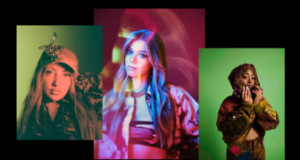
“Us girlies are taking over!” says Venbee, who claims to have written a song a day since she was 10 – one of them, Messy in Heaven, became a Top 10 hit last year, prompting collaborations with chart regulars Rudimental and Chase & Status. “Women are putting their foot down,” she says. “They’re able to film themselves and [show] what they can do.”
As representation grows on stage and on the airwaves, Piri is also pushing for more diversity behind the scenes, hiring a crew made up exclusively of women, non-binary and LGBTQ+ people, and urging other artists to do the same. “It’s a boys club. The reason more men get these jobs is because a man has the opportunity to hire people and then will just automatically pick their friends. So we’ve gotta push outwards. You are the artist, you [have] the power to choose who’s on your team – make the most of that.”
Still on that;

Women and British dance music
Aside from visibility, the changing demographics in dance music are down to the wider availability of resources democratising production, from YouTube and TikTok tutorials to cheaper software, and grants such as the PRS Foundation Women Make Music fund. Collectives such as Loud LDN use group chats and events to build support networks for early-career women and gender-nonconforming artists. Among its members are Piri, Venbee and fellow pop-dance rising stars Issey Cross and Charlotte Plank.
Summary
From unrecognized vocalists to formidable DJs and producers, women have changed the DNA of British dance music. Although female creators have historically been marginalized by the business, a new generation is taking control of radio waves, festivals, and charts on their own terms.

Afro music, often referred to as African music, is a broad term that encompasses a rich variety of musical styles and traditions rooted in the African continent. With its deep cultural and historical significance. Afro music has influenced and shaped the global music landscape. Gaining popularity for its distinct rhythms, powerful beats, and infectious energy.
A Fusion of Cultures and Sounds
Africa is home to over 3,000 ethnic groups, each contributing to its musical diversity. Afro music is not just one sound but a fusion of different styles like Afrobeat, Afropop, Highlife, Soukous, and Kwaito. These genres blend African rhythms with Western influences like jazz, funk, and hip-hop, creating a unique sound that appeals to a global audience.
The Rise of Afrobeat
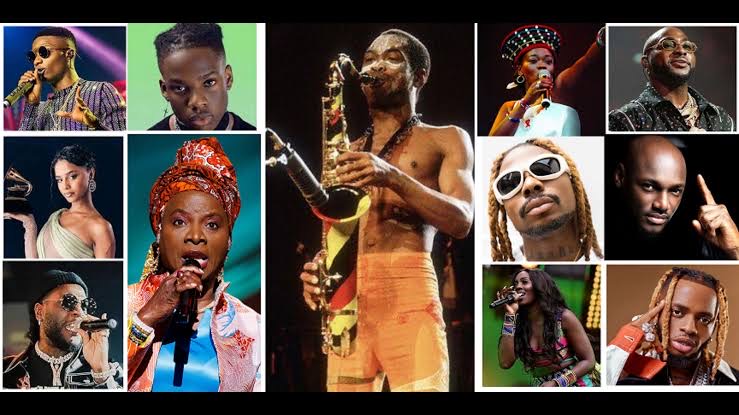
One of the most recognized Afro musics genres is Afrobeat, a style pioneered by Nigerian musician Fela Kuti in the 1970s. Afrobeat combines traditional African instruments and rhythms with jazz, funk, and soul, often delivering politically charged messages. Today, artists like Burna Boy, Wizkid, and Davido continue to push the genre to new heights, fusing it with modern pop and hip-hop elements.
Afropop and Its Global Impact
Afropop is another genre that has taken the world by storm. It’s a more modern take on African music, blending catchy hooks, electronic production, and a danceable rhythm. Artists from Nigeria, Ghana, and South Africa are leading the Afropop wave, breaking into international charts and collaborating with global stars like Drake, Beyoncé, and Ed Sheeran.
A Celebration of Rhythm and Dance
What makes Afro musics so captivating is its rhythm. African music places a strong emphasis on drums and percussive instruments, creating energetic, pulsating beats that compel people to dance. Whether it’s the vibrant beats of the djembe drum or the syncopated rhythms in Afrobeat, the music celebrates life, culture, and community.
Afro Music in the Global Spotlight
The global popularity of Afro music is growing exponentially. Festivals dedicated to African music, like Afro Nation, are now held worldwide, celebrating the continent’s rich musical heritage. As streaming platforms and social media continue to bridge cultural gaps, Afro music is becoming a mainstay in the global music industry.
Conclusion
Afro music is not just a genre but a powerful movement that celebrates African identity, resilience, and creativity. From its traditional roots to its modern-day evolution, Afro music continues to inspire, entertain, and connect people across the world. Whether you’re grooving to Afrobeat, vibing to Afropop, or discovering the rich sounds of traditional African music, you’re tapping into a vibrant musical heritage that transcends borders.

Torchlight Selection

Best Practices for Face Exfoliation

Chemical Face Exfoliation

A Step-by-Step Guide to Deleting Reels on Instagram

A Comprehensive Guide to Setting Up a YouTube Premiere