
TECHNOLOGY
Advantages of Cooking with Gas

ADVANTAGES OF COOKING WITH GAS

Advantages of cooking gas. Few comforts in the vast fabric of contemporary life have had such a profound impact on our homes and kitchens as cooking gas. In addition to revolutionizing cooking, this adaptable and effective energy source has improved our environment, health, and general quality of life in a number of ways. We will examine the significance of gas and how it has evolved into an essential component of our everyday culinary explorations in this piece.
Advantages of Cooking Gas
Meanwhile, From the basic upright to the large-capacity professional models, gas ovens and cooktops are available in a wide range of sizes and designs. While electricity has made our lives easier in many ways, gas is still the most efficient and responsive way to cook on the stove. Cooking with gas has numerous advantages, including boiling or steaming and stir-frying.
1.The heat is immediately responsive

Advantages of Cooking Gas
Also, Gas cooktops are used in most professional kitchens because they provide for easy heat control. With a single turn of the dial, the flame expands or contracts, providing an immediate and accurate change in heat. There is no need to wait for the pan to heat up or cool down, saving time and preventing dishes from being spoiled due to a slow response.
2.Even Heat Distribution
Electric cooktops and pans must be completely flat or heat will not be uniformly dispersed throughout the cookware. A gas cooktop’s flames are centrally located, allowing them to heat pans uniformly, without cool spots or burning. Gas cooktops are safer since they are cooler when shut off, but electric cooktops heat up the entire surface.
3. Less Heat

Electric cooktops produce more heat than gas cooktops, resulting in excessive heat in your home. Gas cooktops not only keep your home cooler when they’re on, but when you turn them off, the flame goes out and the heat source vanishes, unlike an electric cooktop, which continues to release heat even after it’s turned off.
4. Unaffected by power outages
However, If your electricity goes out due to inclement weather, you can normally still cook on a gas stovetop because gas lines are not affected by the same types of weather that cause power outages. Although energy is required to power the ignition, you can simply light the burner with a match.
5. Lower operational costs
Meanwhile, Gas cooktops may be more expensive to purchase and install, but the long-term cost will be lower because the costs of operating electric ones are significantly higher.
6. Complete control

Also, Using a gas range allows you complete control over your cooking with the turn of a knob. Gas is sensitive to even the smallest temperature fluctuations, providing you perfect control over everything from a gentle simmer to a raging boil.
Summary
Having complete control over heat is the primary advantage of a gas cooktop. As a result, you may rapidly change the temperature without waiting for the element to warm up, which is something that many cooks like.


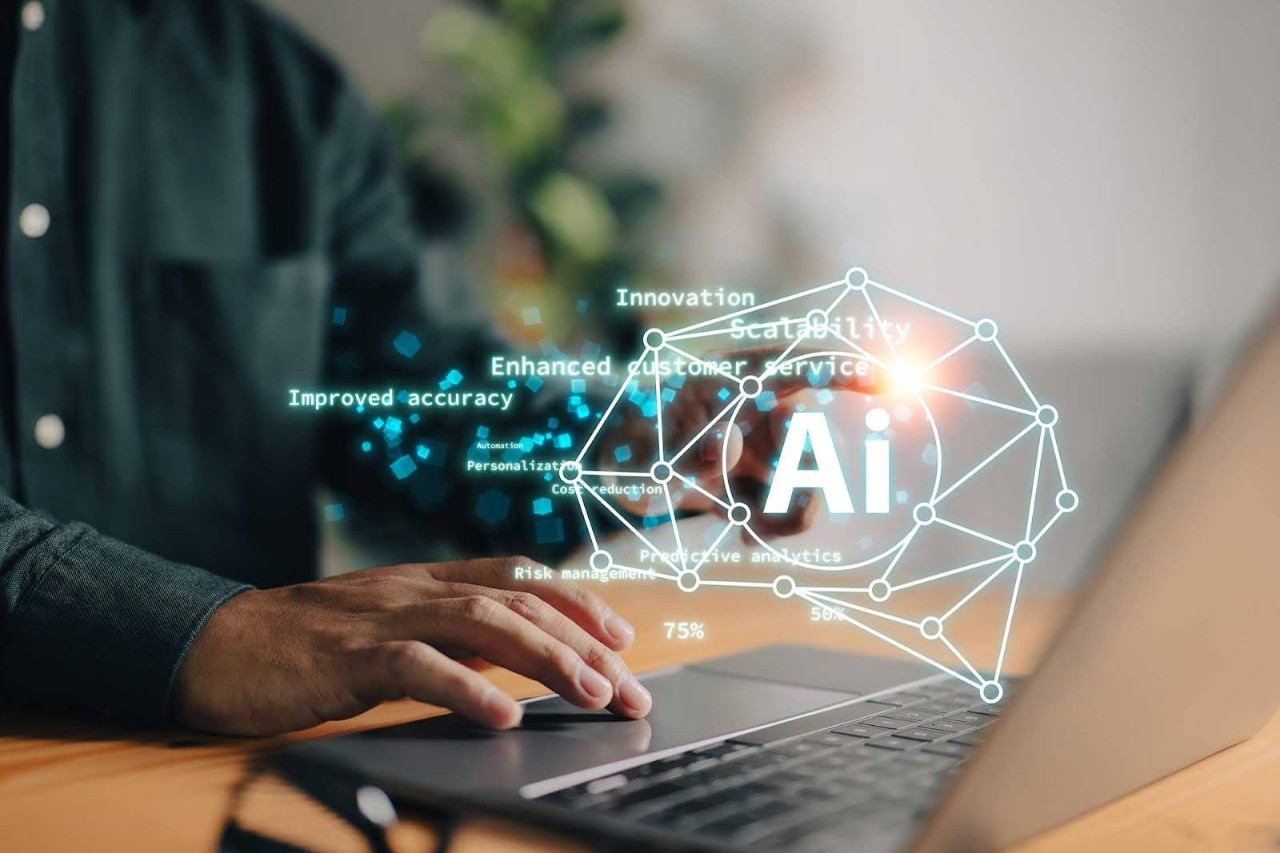
AI Benefits. By incorporating a variety of artificial intelligence (AI) skills that enable computers to understand, reason, learn, and behave similarly to people, this technological marvel transcends basic automation.By automating tedious operations, reducing errors, and analyzing vast volumes of data to make quick judgments, artificial intelligence (AI) offers significant advantages. It facilitates quicker work, cost savings, and the resolution of challenging issues in fields including daily work and health.
AI BENEFITS
Before discussing the advantages of artificial intelligence (AI), let’s first look at its definition. When viewed broadly, artificial intelligence (AI) allows a computer program to think and learn on its own. It mimics human intelligence in machines to carry out activities for which we frequently depend on humans.
1. Decrease in Human Error;

Reducing errors and improving accuracy and precision are two of artificial intelligence’s most important advantages. Every decision made by AI is based on a specific set of algorithms and previously collected data. Correct programming can decrease these errors to zero.
2. Making Decisions;
Making decisions is one of AI’s well-known advantages. AI improves decision-making by using massive data to spot trends and patterns that are frequently missed by humans. Businesses and people may make well-informed decisions fast and precisely by using machine learning algorithms, which can evaluate past data and forecast future events.
3. No Hazards;

AI Benefits
By allowing AI robots handle numerous dangers for us, humans can overcome them, which is another important advantage of AI. Machines having metal bodies can withstand hostile atmospheres and endure missions such as bomb defusing, space travel, and underwater exploration.
4. Online Support;
In order to reduce the need for human labor, some of the most modern organizations deploy digital assistants to engage with users. Conversational searches are made possible by the usage of digital assistants by many websites, which provide content in response to user inquiries. Sometimes chatbots are so intelligent that it’s hard to know if we’re speaking to a human or a machine.
5. Novelty;
AI Benefits
AI is the driving force behind many advances in almost every industry that enable people to solve the most difficult problems. For instance, new developments in AI-based technology have made it possible for medical professionals to identify breast cancer in women early.
Summary
The ability of a computer system or machine to carry out tasks that typically require human intelligence is known as artificial intelligence, or AI. Learning, reasoning, problem-solving, language comprehension, and image recognition are some of these tasks. On sites like Google AI, you may learn more about useful tools and developer initiatives.

Tech Trends to Look out for. Trends in technology to be aware of. The rate of change is accelerating due to the rapid advancement and change made possible by the rapid evolution of technology. IT workers are realizing that their careers won’t be the same in the contactless world of the future because not only are developing technologies and technology trends evolving, but much more has changed.
TECH TRENDS TO LOOK OUT FOR
Additionally, an IT worker in 2024 will be continuously learning, unlearning, and relearning—whether out of need or want. It means staying current with emerging technologies and their latest advancements. And it means anticipating what skills you’ll need to acquire in order to find a safe job tomorrow, as well as knowing how to get there.
What is a Technological Trend?

Technology trends refer to the prevailing developments, innovations, and advancements in the world of technology. These trends often shape the direction of industries, businesses, and society as a whole, influencing how we interact, work, and live.
Why is it Important?
Following technological trends is critical for both individuals and businesses because it keeps them competitive and relevant in a continuously changing digital market. Keeping up with changing technology allows you to make informed decisions about implementing new tools, enhancing processes, and capitalizing on growth prospects. Technology trends refer to current advances, inventions, and improvements in the field of technology.
Technological Trends to Watch out for;

Tech Trends to Look out for
1. AI-generated content. Artificial intelligence can create high-quality, creative content such as writing, photos, videos, and music. This technology uses algorithms like GPT (Generative Pre-trained Transformer) and DALL-E to comprehend and generate material that is relevant to human tastes.
2. Quantum Computing. Quantum computers use quantum mechanics to process information tenfold faster than conventional computers for specific tasks. which skills
Summary
Agentic AI systems that carry out multi-step activities on their own are important technological trends to keep an eye on. Advanced robotics and physical AI that combine vision and mechanics, Post-quantum cryptography, domain-specific language models, and IT infrastructure that is sustainable by design
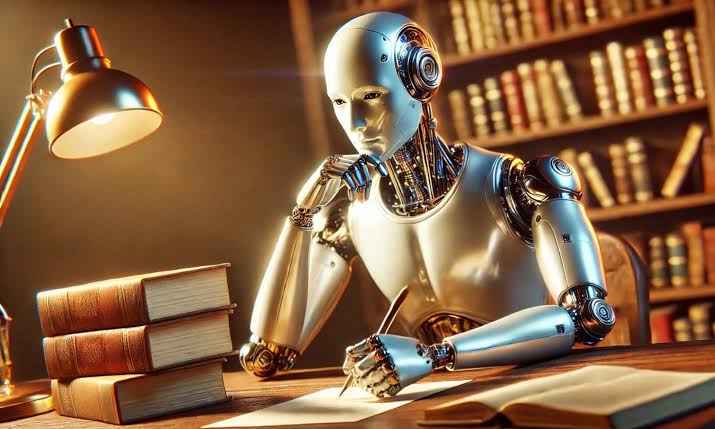
Artificial Intelligence and the Future. Owing to constraints, this new field is now called “weak I.” But in the future, artificial intelligence will take the form of “creating powerful I.” I can currently only outperform humans in certain tasks, but it is expected that in the future I will be able to outperform humans in all cognitive tasks. The benefits and drawbacks of this development demonstrate how crucial it is to develop AI capabilities in order to carefully control and mold the future.
ARTIFICIAL INTELLIGENCE AND THE FUTURE
Precision healthcare, automated work forces, and embedded smart systems are all part of the future of AI. Global safety laws, customized compact models, and clever software agents are some of the major advancements.
What is intelligence?
Artificial Intelligence and the Future
Even the most complex insect activity is typically not interpreted as a sign of intelligence, whereas all human behavior but the most basic. What makes the difference? Examine the actions of Sphex ichneumonids, the digger wasp. When the female wasp comes back to her burrow with food, she puts it on the threshold, looks inside to see if there are any intruders, and only then, if all is well, brings her food inside. If the wasp moves the food a few inches away from her burrow entrance while she is inside, it reveals the true nature of her instinctive behavior: whenever she emerges, she will repeat the entire process as many times as the food is displaced. The notable lack of intelligence in the instance.
Growth of AI;
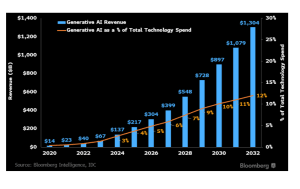
Artificial Intelligence and the Future
It is crucial to understand the definition and current state of artificial intelligence before exploring its future. AI is the capacity of computers or computer controlled robots to carry out tasks related to intelligence.” Thus, I am a branch of computer science whose goal is to develop intelligent machines that can mimic human behavior.
AI classification;
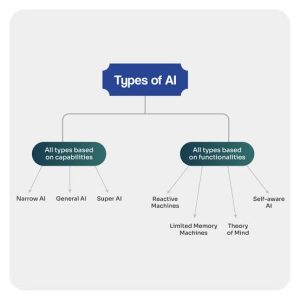
Based on its capabilities, artificial intelligence can be classified into three categories: Row I: Row II: Generic Row I:… Sub-I: computer
The Future;
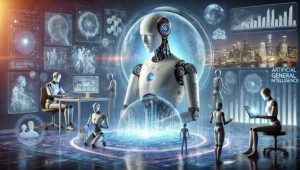
While artificial intelligence (AI) has a bright future, there are several challenges it must overcome. As technology advances, artificial intelligence (AI) is expected to become more and more commonplace, revolutionizing industries including finance, transportation, and healthcare. AI-driven automation will transform the labor sector and require new roles and competencies.
Summary
The capacity of computers and other devices to mimic human learning, thinking, and problem-solving is known as AI. Narrow AI, machine learning, and generative AI are important categories.

The Causes of Political Apathy

Child Neglect and Causes

Environment Care Tips

A Step-by-Step Guide to Deleting Reels on Instagram

A Comprehensive Guide to Setting Up a YouTube Premiere

How to Create a WhatsApp Group
-

 Business3 weeks ago
How to Promote your Business
-

 Fashion3 weeks ago
Fashion Guide for Beginners
-

 Business1 week ago
Customers Satisfaction
-

 Business3 weeks ago
Tips for Running Online Business
-

 Business2 weeks ago
Business Name Selection Tips
-

 TECHNOLOGY3 weeks ago
Artificial Intelligence and the Future