Hearing abilities
Deaf and Hearing Culture Differences

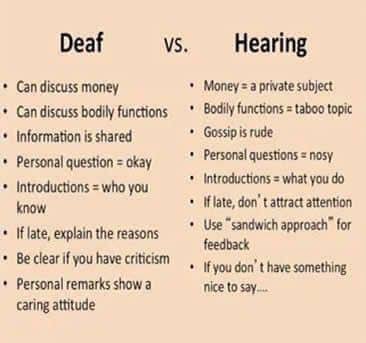
Deaf and Hearing Culture Differences. Culture has a big impact on our identities and experiences. It has an impact on our communication, interpersonal interactions, and worldview. Our global world is home to many different civilizations, each with unique customs, values, beliefs, and rituals. In Deaf culture, being deaf is seen as a distinctive experience rather than a disability. This group’s Deaf members have a strong sense of pride and community.
DEAF AND HEARING CULTURE DIFFERENCES
The main distinction between hearing and deaf cultures is that the former emphasize spoken language and auditory experiences, while the latter focus on visual-gestural communication and a unique social identity. These distinctions influence community ideals, communication norms, and everyday routines.
Differences;
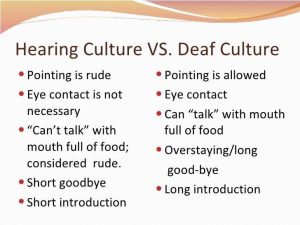
Understanding the distinctive qualities, set apart different groups is crucial when examining the complex fabric of human variation.
Language
British Sign Language and other visual-gestural languages are vital to the Deaf community. BSL conveys message through hand gestures, facial expressions. Hearing culture, on the other hand, relies mostly on auditory signals for communication and speaks and writes in written language.
Community and identity
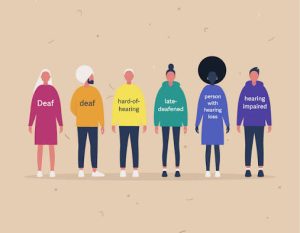
Because Deafness is celebrated as a distinct identity rather than a handicap, Deaf culture strengthens the sense of community among Deaf people. Support and shared experiences are offered by this community. Hearing people’s identities are less directly associated with their hearing state, even though they may belong to different communities based on shared interests or connections.
Technology and accessibility
Although, Leading the way in technology advancements to improve accessibility has been the Deaf culture. Our very own cutting-edge Interpreters Live! platform attests to that. Technology advancements including text-based messaging, videophones, and captioned media have improved communication accessibility. Telephones, radios, and audio-visual media have long been essential components of daily life in hearing cultures.
Education

However, the Deaf community supports bilingual education that acknowledges the importance of linguistic diversity by integrating both spoken and sign language. This approach supports the cognitive and social development of Deaf children. On the other hand, spoken language is given priority in educational settings by many hearing cultures, who occasionally consider sign language to be secondary.
Perceptions of disability
Meanwhile, deaf culture challenges standard views of impairment, stressing the skills and characteristics of Deaf individuals. The community celebrates a range of abilities rather than concentrating only on perceived limits. Deafness may be viewed from a medical or deficit-based viewpoint in hearing culture, which tragically breeds prejudice and misconceptions.
The importance of Deaf culture

Deaf and Hearing Culture Differences
Also, the importance of Deaf culture lies in its ability to close the communication gap between the hearing and the deaf. In addition, it fosters understanding and acceptance among all societal members, hearing loss or not, and mutual respect between the two sides. Deaf awareness training programme
Summary
Deaf culture is centered on close-knit communal values, shared sign languages, and visual communication. Spoken language and sound are essential to hearing culture. Different social standards, communication styles, and identification orientations are how both groups perceive the world.


The Causes of Political Apathy

Child Neglect and Causes

Environment Care Tips

A Step-by-Step Guide to Deleting Reels on Instagram

A Comprehensive Guide to Setting Up a YouTube Premiere

How to Create a WhatsApp Group
-

 Business3 weeks ago
How to Promote your Business
-

 Fashion3 weeks ago
Fashion Guide for Beginners
-
 Business2 weeks ago
Business Name Selection Tips
-

 Business3 weeks ago
Tips for Running Online Business
-

 TECHNOLOGY3 weeks ago
Artificial Intelligence and the Future
-

 Business1 week ago
Customers Satisfaction