Uncategorized
Early Pregnancy and Headaches



Early pregnancy and headaches. Pregnancy is often accompanied by headaches. During the first trimester (0 to 13 weeks) or third trimester (27 to 40 weeks), they are more prevalent. Although they can be uncomfortable for you, headaches are typically not harmful to your unborn child. They may indicate that you should see your obstetrician, midwife, or general practitioner.
EARLY PREGNANCY AND HEADACHES
While headaches are a common occurrence for women, they can be bothersome during pregnancy. Since you shouldn’t take many drugs during the first trimester, managing headaches can be very difficult. There are a few things you should be aware of, whether it’s a stress headache or a full-blown migraine.
What causes headaches in pregnancy?

early pregnancy and headaches
Sometimes it’s unclear what causes a headache specifically. Variations in blood volume and hormone levels may be important throughout the first trimester. An overall dull headache may be brought on by weariness, eyestrain, or tension. The frequent symptoms of runny nose and nasal congestion in the early stages of pregnancy may make sinus headaches more likely. Headaches can also result from hunger and low blood sugar. Headaches associated with caffeine withdrawal may occur in women who abruptly cease drinking coffee and soda in the morning. Dehydration can occur in those who have nausea and vomiting in the early stages of pregnancy. Additionally, this may cause a headache.
It is a typical time for migraine headaches. These excruciating, throbbing headaches, which usually affect one side of the head, are caused by the brain’s blood arteries expanding. Sometimes the suffering is accompanied by light sensitivity, nausea, and vomiting. A tiny proportion of female migraineurs also have an aura. They experience tingling in their arms and legs or witness light flashes.
When should I be concerned?

early pregnancy and headaches
You should get in touch with your healthcare practitioner if you experience a terrible one that just won’t go away, dizziness, blurred vision, or changes in your field of vision. There are occasions when high blood pressure during pregnancy is linked to headaches. Inform your healthcare practitioner if they occur after 20 weeks of pregnancy and are severe or persistent. Although they are uncommon, migraines can raise a pregnant woman’s risk of stroke. Inform your healthcare practitioner if you experience migraines.
What can I do about headaches?

early pregnancy and headaches
Here are some actions to do in order to manage headaches:
Steer clear of any recognized causes, such as allergies and specific foods like strong cheeses, cured meats, and monosodium glutamate.
It’s never a good idea to smoke when expecting. Secondhand smoke should also be avoided. Click here for updates.
Summary
Missed periods, breast discomfort, exhaustion, nausea, and frequent urination are some signs of it. Mood fluctuations, food aversions or cravings, and mild spotting or cramps during implantation are other symptoms. Early pregnancy can be verified at home or by visiting a doctor.








Heaven on earth lyrics. Stampley performed in Rev. Earl Johnson’s Pasadena, California, church from 1994 to 1997. After that, he returned to Louisiana and worked in the music department of his father’s church. Heidi Jones, a fellow gospel singer and nursing student, was his wife in 1998. Heidi wrote multiple songs for her husband’s debut album, contributing significantly to his career. The pair moved to New Orleans in 1999 after Stampley took a job at Bishop Paul Morton’s Greater St. Stephen’s Church as a co-choir director and pianist.
HEAVEN ON EARTH LYRICS
Stampley was appointed assistant minister of music at Houston’s St. Agnes Baptist Church in 2003. Bishop T. D. Jakes’s companion, organist Marcus Dawson, heard Stampley’s voice. Stampley was listed among the Top 10 Gospel Music Artists by Billboard magazine and among the Top 11 Gospel Geniuses by AOL Black Voices in 2005. When his debut album, The Songbook of Micah, debuted at number three on the Billboard chart in March 2005, he became the second male gospel singer to have a high debut.

Lyrics- Heaven On Earth
Heaven, Heaven on Earth!
Oh, oh, oh,oh!
Heaven, Heaven on Earth!
The spirit of the Lord is upon me,
His anointing is empowering,
The kingdom of the Lord is within me,
And He’s calling me to the Heavenlies.
Chorus:
To be seated in heavenly Places,
Just like Heaven,
Just like Heaven on Earth!
To be walking in His favor and grace is
Just like Heaven,
Just like Heaven on Earth!
Oh, oh, oh,oh!
Heaven, Heaven on Earth!
Oh, oh, oh,oh!
Heaven!

More lyrics;
Marching in the spirit of unity,
To our community show His ability,
The will of the Lord for His children
Is to demonstrate, perpetuate
Chorus:
To be seated in heavenly Places,
Just like Heaven,
Just like Heaven on Earth!
To be walking in His favor and grace is
Just like Heaven,
Just like Heaven on Earth!

HEAVEN ON EARTH LYRICS
Adonai By Nosa ft Nathaniel Bassey
To be seated in heavenly Places,
Just like Heaven,
Just like Heaven on Earth!
To be walking in His favor and grace is
Just like Heaven,
Just like Heaven on Earth!
Oh, oh, oh,oh!
Heaven on Earth!
Oh, oh, oh,oh!
Heaven on Earth!
Listen!
Something’s moving,
Something Changing,
See His glory feels like Heaven on Earth.
Something’s moving,
Something’s Changing,
See His glory feels like Heaven on Earth
Something’s moving,
Something’s Changing,
See His glory feels like Heaven on Earth.
Something’s moving,
Something’s Changing,
See His glory feels like Heaven on Earth

HEAVEN ON EARTH LYRICS
Bridge
There is lightning and thunder,
Miracles and wonder,
Sound of many waters,
Heaven on Earth!
There is lightning and thunder,
Miracles and wonder,
Sound of many waters,
Heaven on Earth!
Summary
He was on stage alongside Donnie McClurkin and other well-known gospel preachers at the Experience, a yearly event in Nigeria, in 2014. More than 600,000 people showed up.
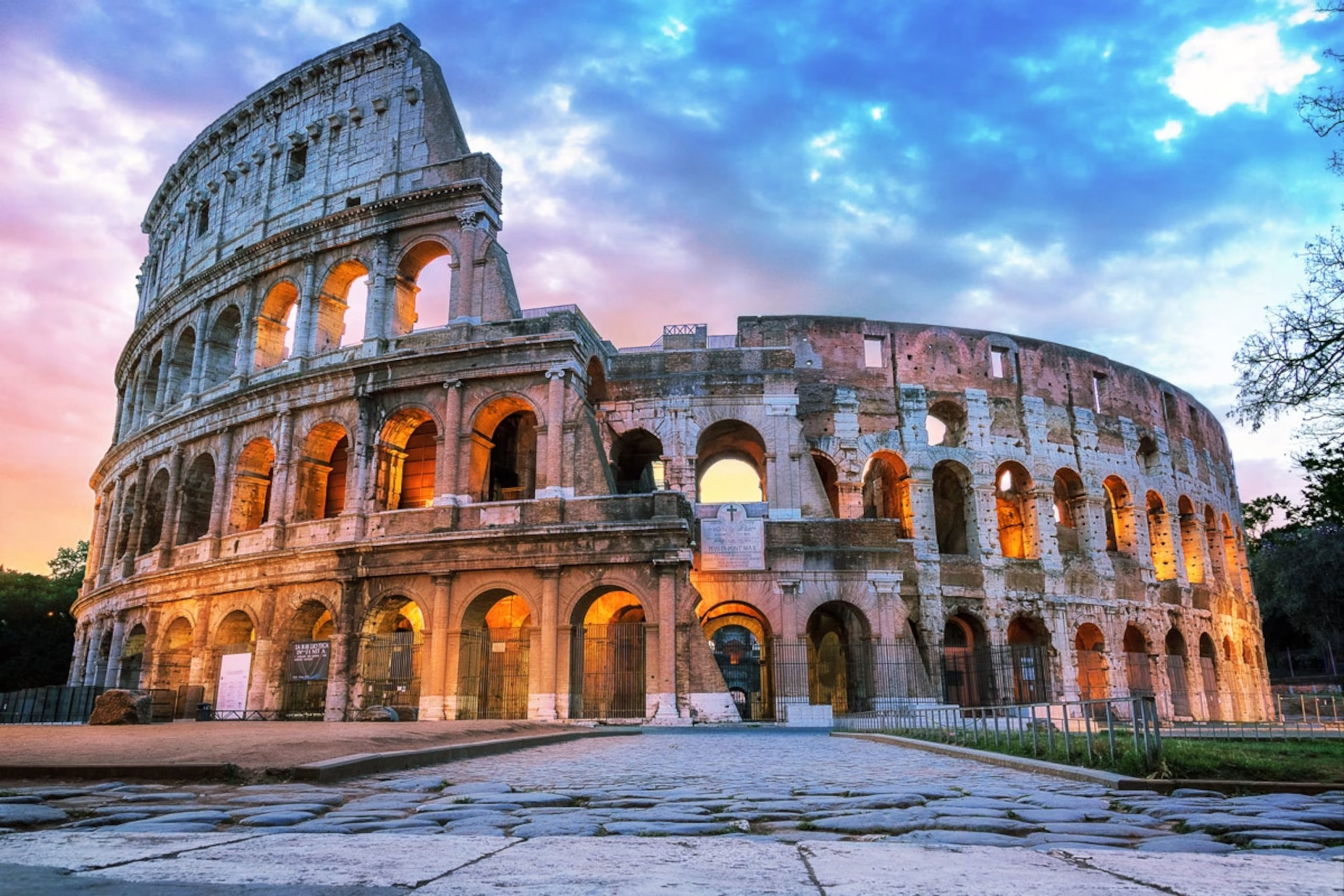
Facts about roman empire. In the eighth century BCE, the city-state of Rome gave rise to the Roman Empire, which changed from a monarchy to a republic in 509 BCE. Through military conquests, it grew and eventually became an empire. Internal strife within the Roman Republic gave rise to Julius Caesar, who in 49 BCE crossed the Rubicon River and started a civil war. Caesar’s successor, Augustus, became the first Roman Emperor in 27 BCE, marking the beginning of the Roman Empire. The empire persisted for centuries, encountering different difficulties, until its demise in 476 CE.
FACTS ABOUT ROMAN EMPIRE
With up to 20% of the world’s population at its height, the Roman Empire (27 BC–476 AD) was a powerful, expansive civilization that spanned Europe, North Africa, and Western Asia. Augustus founded it, and it developed the military, law, and engineering (roads, aqueducts). Later, it split into Western and Eastern (Byzantine) portions, the latter of which persisted until 1453.
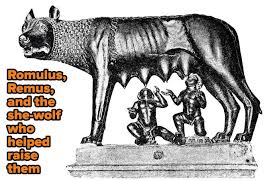
The Roman Empire, at its height, spanned three continents—Europe, Africa, and Asia. It was the largest empire in ancient history, covering around 2.2 million square miles.
The Empire had a significant impact on governance, law, architecture, engineering, and culture. It established a vast network of roads, such as the famous Appian Way, and aqueducts for water supply. Roman law, exemplified by the Justinian Code, has influenced modern legal systems. The empire embraced diverse cultures, incorporating Greek philosophy, art, and mythology.
More facts;
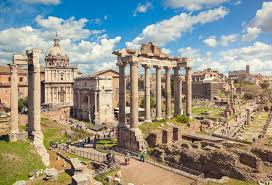
Facts about roman empire
Notable emperors include Augustus, known for consolidating power; Trajan, who expanded the empire to its greatest territorial extent; and Marcus Aurelius, a philosopher-emperor. Their decline was influenced by internal strife, economic challenges, invasions, and the eventual split into the Western Roman Empire and the Eastern Roman Empire (Byzantine Empire). The Western Roman Empire fell in 476 CE, while the Byzantine Empire endured until 1453 CE.

Facts about roman empire
Fun fact about the Roman Empires;
Did you know that Romans used urine as a cleaning agent? They believed the ammonia in urine could help whiten their clothes, and some even used it as a mouthwash.
Summary
At its height, the Roman Empire covered 5 million square kilometers and was home to 20% of the world’s population. It was a huge, technologically sophisticated, and frequently strange culture. In addition to using urine to wash clothes, eating unusual foods like dormice, and viewing left-handedness as “sinister,” the Romans are renowned for inventing concrete, building the enormous Colosseum, which could be flooded for naval conflicts, and developing a 365-day calendar.


The value of tiger eye. As a talisman for bravery, protection, and personal strength, tiger’s eye has been used historically by warriors to fend off evil, bring good fortune, and ground energy. It is also prized for improving focus, increasing confidence, and encouraging emotional balance and wealth. Its significance stems from its symbolic power, which mirrors the tiger’s eye and provides self-control, resiliency, and clarity in a variety of spheres of life, from financial choices to physical well-being.
THE VALUE OF TIGER EYE
Meanwhile, tiger’s Eye, known for its striking golden-brown bands, is a powerful stone revered for its ability to promote strength, focus, and protection. Its name is inspired by the watchful eye of a tiger, symbolizing courage, clarity, and vigilance.

The value of tiger eye
Although, historically, Tiger’s Eye has been used as a talisman for protection. Believed to ward off negative energies and provide a grounding influence. This stone is often sought by those facing challenges, as it is said to help sharpen focus and maintain a balanced, clear mind. People use it to boost confidence, remain steady during tough decisions, and stay determined in the face of adversity.
Tiger’s Eye importance;

The value of tiger eye
Also, named for the feline-like flash (chatoyancy) it exhibits, which resembles a tiger’s eye, Tiger’s Eye is an alluring quartz gemstone with golden to reddish-brown tones and a dazzling, silky gloss. It is a metamorphic rock that was created by replacing fibrous crocidolite (blue asbestos) with silica. It is linked to the Sacral and Solar Plexus chakras and represents courage, strength, protection, and clarity. Historically, warriors and pharaohs used it for vigor and attention.
More importance;

The value of tiger eye
However, in addition to its protective qualities, Tiger’s Eyes are also associated with enhancing personal power. Its energy encourages resilience, helping individuals overcome fear and take bold steps toward their goals. Whether used in meditation or worn as jewelry, Tiger’s Eyes offers a reminder of inner strength, protection, and unwavering focus. It’s the perfect stone for anyone seeking courage and clarity in life’s challenging moments.
Summary
Also, with prices ranging from low for tumbled stones to high for rare types like Marra Mamba, depending on color, clarity, size, and cut, Tiger’s Eye is an inexpensive yet highly valued gemstone that offers advantages like protection, confidence, and grounding due to its captivating chatoyancy (the “cat’s eye” effect) and rich golden-brown colors.

Airline Travellers and Baggage Allowances

First Time Travellers and Airline Policies

Plane Tickets Relevance

A Step-by-Step Guide to Deleting Reels on Instagram

How to Create a WhatsApp Group