
Music
How to Write a Song: A Step-by-Step Guide for Beginners


Songwriting can be an incredibly rewarding creative outlet, allowing you to express emotions, tell stories, and connect with others through music. Whether you’re just starting or looking to improve your skills, writing a song involves a blend of creativity, structure, and practice. Here’s a step-by-step guide to help you get started.
1. Start with an Idea
Every song begins with an idea or inspiration. This can come from personal experiences, emotions, stories, or even random thoughts. Before you start writing, ask yourself:
• What message or story do you want to convey?
• What mood or feeling do you want to evoke?
Your idea could be a theme like love, heartbreak, or empowerment, or it could be based on a specific event or person in your life. Jot down any ideas or phrases that come to mind.
2. Choose Your Song Structure
Most popular songs follow a familiar structure, which helps listeners engage with the music. A typical song structure looks like this:
– Verse: Sets the scene or tells a part of the story.
– Chorus: The central part of the song, usually more melodic and repetitive, containing the main message or hook.
– Bridge: Offers contrast or adds depth by introducing a new perspective or musical element.
A common structure is:Verse – Chorus – Verse – Chorus – Bridge – Chorus.Feel free to experiment with other structures, but keeping things simple when you’re starting out can help.
3. Write the Lyrics
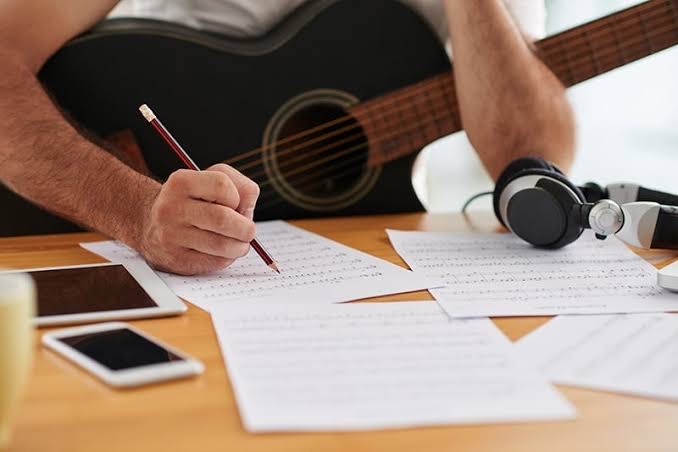
Once you have your idea and structure in mind, it’s time to write the lyrics. Focus on creating verses that build your story and a catchy chorus that summarizes your message. Some tips for writing lyrics:
– Be authentic: Write about things that resonate with you.
– Use imagery: Paint vivid pictures with your words to make the song more relatable.
– Keep it simple: Aim for clarity. Don’t overload the song with too many ideas or complex vocabulary.
If you get stuck, try free-writing or brainstorming for a set amount of time, then refine your lyrics later.
4. Create the Melody
The melody is what makes your song memorable. It’s the sequence of notes and rhythms that carry the lyrics. If you’re unsure where to start, you can:
– Hum or sing freely to see what naturally comes out.
– Experiment with different notes or scales on an instrument like a piano or guitar.
– Start with your chorus melody, as this is the most important part of your song.
Once you have a melody that you like, match it to your lyrics, adjusting words and phrases to fit the tune.
5. Add Chords and Harmonies
If you play an instrument like the guitar or piano, start experimenting with basic chords that complement your melody. Use chord progressions like C-G-Am-F (a popular choice in many genres) or create your own. The chords will form the harmonic structure of your song, giving it depth and emotion.
Even if you don’t play an instrument, you can use software or online tools to generate chord progressions and harmonies to fit your melody.
6. Work on the Rhythm
Every song needs a rhythm or beat to keep it moving. Your rhythm will depend on the genre and style of your song. For example, a ballad might have a slower, more deliberate rhythm, while a pop or dance track will have an upbeat tempo.
You can experiment with clapping, tapping, or using a drum machine to find the right groove for your song. A steady rhythm will make your song more engaging and easier to follow.
7. Refine and Edit
Songwriting is a process of refinement. Once you have your basic lyrics, melody, and chords in place, step back and review your work:
– Does the song flow naturally from verse to chorus?
– Is the message clear?
– Are there any sections that feel too long or too short?
Don’t be afraid to revise, simplify, or change parts of the song as you go. Sometimes, taking a break and returning with fresh ears can help you spot areas for improvement.
8. Record and Share
Once you’re satisfied with your song, it’s time to bring it to life. Even a simple recording using your phone or a basic microphone can give you an idea of how your song sounds. If you have access to recording software, you can experiment with layering vocals, adding harmonies, or including instrumental parts.
Finally, share your song with others! Whether it’s playing for a small group of friends, uploading to social media, or performing at a local open mic, sharing your work can be a fulfilling part of the process.
Conclusion
Writing a song is an exciting journey of self-expression. It doesn’t have to be perfect, especially at first. Focus on having fun and exploring different ideas. Over time, with practice, you’ll develop your own voice and style. Whether you’re aiming to write a hit or just looking to create something personal, songwriting is all about finding joy in the process.


Women and British dance music. According to Grace, social media sites like TikTok have played a significant role in removing obstacles related to dance music, particularly its intricate technology. “It makes me pleased that so many people have messaged me to say they bought a beat pad because of me,” she says. By utilizing reasonably priced equipment, like that seen in Grace’s movies, and a clever web presence, bedroom producers can now establish the groundwork for a career, diminishing the influence of industry gatekeepers.
WOMEN AND BRITISH DANCE MUSIC
As seen on the guardian website Last year, Kenya Grace began documenting her music production on TikTok. Her pairing of pop songwriting with dance instrumentals, performed from her bedroom with a simple mic and Midi-controller setup, soon attracted thousands of followers, and the comment sections were inundated with requests for covers, collaborations and official releases.

But some – generally male – viewers were unconvinced, littering her posts with variously sexist, patronising and mansplaining comments. “I’ve had people ask if someone else made the tracks for me,” she says, sighing. “I’m like: you can seeme doing it.” It’s just one in a collection of microaggressions Grace can recall from her relatively new career, from paternalistic peers in early studio sessions to passive aggressive comments at live shows. “There’s a lot of stigma that women can’t produce.”
But a new vanguard of female producers is beginning to redefine what dance music looks and sounds like.
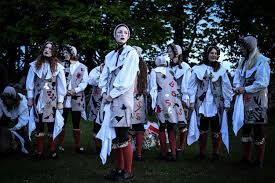
With their snappy, pop-informed takes on drum’n’bass, garage and EDM, Grace, PinkPantheress and Becky Hill are all chart mainstays; Ireland’s Jazzyreached No 3 and spent 31 weeks in the chart with Giving Me, a euphoric but steely house track she co-wrote; Scotland’s Hannah Laingis getting tens of millions of streams for her self-produced, old-school-leaning rave tracks. Pursuing dance music – and crucially, on their own terms – is now a viable career path.
Venbee;

Women and British dance music
“Us girlies are taking over!” says Venbee, who claims to have written a song a day since she was 10 – one of them, Messy in Heaven, became a Top 10 hit last year, prompting collaborations with chart regulars Rudimental and Chase & Status. “Women are putting their foot down,” she says. “They’re able to film themselves and [show] what they can do.”
As representation grows on stage and on the airwaves, Piri is also pushing for more diversity behind the scenes, hiring a crew made up exclusively of women, non-binary and LGBTQ+ people, and urging other artists to do the same. “It’s a boys club. The reason more men get these jobs is because a man has the opportunity to hire people and then will just automatically pick their friends. So we’ve gotta push outwards. You are the artist, you [have] the power to choose who’s on your team – make the most of that.”
Still on that;
Women and British dance music
Aside from visibility, the changing demographics in dance music are down to the wider availability of resources democratising production, from YouTube and TikTok tutorials to cheaper software, and grants such as the PRS Foundation Women Make Music fund. Collectives such as Loud LDN use group chats and events to build support networks for early-career women and gender-nonconforming artists. Among its members are Piri, Venbee and fellow pop-dance rising stars Issey Cross and Charlotte Plank.
Summary
From unrecognized vocalists to formidable DJs and producers, women have changed the DNA of British dance music. Although female creators have historically been marginalized by the business, a new generation is taking control of radio waves, festivals, and charts on their own terms.
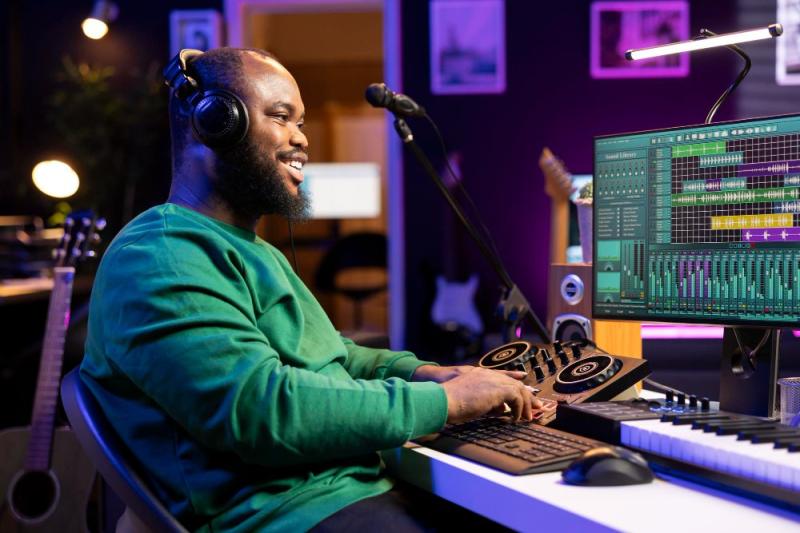
Music promotion in Nigeria. In order to become famous, Nigerian music promotion is a complex, fast-paced industry that combines social media trends, digital streaming, radio airplay, and street-level marketing. Influencer marketing on TikTok and Instagram, pitching playlists on Spotify, Audiomack, and Apple Music, and blog placements on sites like Naijaloaded or Tooxclusive are important tactics.
MUSIC PROMOTION IN NIGERIA
In order to become famous, Nigerian music promotion is a complex, fast-paced industry that combines social media trends, digital streaming, radio airplay, and street-level marketing. Influencer marketing on TikTok and Instagram, pitching playlists on Spotify, Audiomack, and Apple Music, and blog placements on sites like Naijaloaded or Tooxclusive are important tactics.
Also, making Music is only half the battle in the music industry, particularly on Nigeria where it can be difficult to gain recognition from major record labels

Additionally, there are a plethora of methods that the internet may help you promote your music, so feel free to explore and use your imagination.
Let’s talk about the greatest free music promotion strategies you may use to support your music in Nigeria as a solo artist or a rising musician
Social Media Promotion;
However, one of your top objective as an artist should be active on social media. To begin, register for an account on websites like facebook, instagram, Youtube, twitter Which allow you to interact with your followers and promote your music online make sure you regularly add captivating images and recordings of yourself from studio sessions to your profile. Images from events you participated in and attended, photos of you in studio and much more
Branding;

Music promotion in Nigeria
Your distinct approach to music, style, and appearance should inform both your web marketing strategy and your plan for promoting your music. Provide specifics in your strategy around how you intend to remind individuals of your brand. Consider whether to have a posters printed using the same picture as your CD cover for instance. Decide whether you want to pay an artist to create a logo for you
Identify Your Audience;
Trying to promote to everyone can lead you to financial ruin. You need to figure who your internet music listener are, who makes up your “clan”, and who most likely to enjoy the music you are pushing. Visit place where your genre of music is performed, and take note of the people in your audience. Look for websites that play comparable music and try to figure out who is the target audience for thier ads
Niche Promotions

Music promotion in Nigeria
Meanwhile, think about whether your music can be easily associated with people who have interest in specific genres and the top artist in that category,to name a few niche interests. You can promote to the target audience by passing out flyers at events or by posting articles about your music where these specific people go to participate in their niche community (Nigeria). Your plan should not limit but try all possibilities for promoting to such
Attend Shows Regularly;
Promoting music is akin to promoting a tangible commodity, thus as an artist, you must be conscious that you have a product. Participating in a range of events, such as wedding, radio shows, university performances, and birthday celebration, can improve your music coverage and establish your band. When going to performance on a regular basis, strive to make sure you perform every time and make an effort to play the appropriate track for each performance.
Summary
The arranging of sounds to produce a combination of form, harmony, melody, rhythm, or other expressive content is known as music. It is widely acknowledged that music is a cultural universal found in all human communities. The content and methodology of definitions of music differ greatly.

Exercise and listening to music. Exercise with music is a scientifically established way to maximize your fitness outcomes and improve your workout experience, so it’s not just a matter of taste. Whether you’re working out at home, going for a run, or heading to the gym. To go along with your sessions, think about creating a playlist of upbeat and inspiring music. You can advance your fitness journey and get better results than ever by utilizing music’s ability to increase motivation, endurance, focus, and mood. So turn up the volume, let the music inspire you, and see how your exercise objectives become attainable.
EXERCISE AND LISTENING TO MUSIC
For many people, music is more than just background noise – it’s a powerful motivator, mood enhancer, and source of energy. When it comes to exercise, incorporating music into your workout routine can have significant benefits beyond simply making the experience more enjoyable. From increasing motivation and endurance to improving performance and focus. Working out with music has been shown to enhance fitness results in numerous ways. In this article, we’ll explore the science behind the synergy of music and exercise and how it can help you achieve better results in your fitness journey.
1. Boosts Motivation and Performance;

One of the most notable benefits of working out with music is its ability to boost motivation and performance during exercise. Music has the power to evoke emotions, trigger memories, and stimulate the release of feel-good neurotransmitters like dopamine, which can enhance your mood and drive to push harder during workouts. Upbeat and energetic songs with a fast tempo are particularly effective at increasing motivation and encouraging higher intensity exercise, leading to improved performance and better results over time.
2. Enhances Endurance and Stamina;
Research has shown that listening to music while exercising can increase endurance and stamina by distracting the mind from feelings of fatigue and exertion. By focusing on the rhythm, melody, and lyrics of the music, individuals can maintain a steady pace and push through challenging moments without feeling as much physical discomfort. Additionally, music with a strong beat can help synchronize movements, such as running or cycling, making them feel more effortless and rhythmic, ultimately extending endurance and allowing for longer, more effective workouts.
3. Improves Focus and Coordination;

Exercise and listening to music
Music has the ability to enhance focus and coordination during exercise by acting as a cognitive stimulus that engages the brain and improves concentration. When paired with rhythmic movements, such as lifting weights or performing bodyweight exercises, music can help individuals synchronize their movements with the beat, resulting in smoother, more controlled execution of exercises. This increased focus and coordination not only optimize muscle engagement but also reduce the risk of injury and ensure proper form, leading to better overall results from your workout.
4. Elevates Mood and Reduces Stress;

Exercise and listening to music
Exercise itself is known to have mood-boosting and stress-reducing effects, and when combined with music, these benefits are amplified. Listening to uplifting and inspirational music during workouts can elevate mood, reduce feelings of stress and anxiety, and promote a sense of well-being and positivity. This positive mindset can enhance the overall exercise experience, making it more enjoyable and sustainable in the long run, which is essential for achieving consistent results and maintaining a healthy lifestyle.
Summary
Because it stimulates dopamine and serotonin, listening to music is a popular activity that has many health benefits, such as lowering stress, elevating mood, and managing pain. It serves as a flexible pastime that can be used for active participation, background ambience, or leisure.
Foods Rich in Zinc

Appetite Enhancement Tips

Nutritional Value of Rolled Oats

A Step-by-Step Guide to Deleting Reels on Instagram

A Comprehensive Guide to Setting Up a YouTube Premiere

How to Create a WhatsApp Group
-
 Health4 weeks ago
Harmful side effects of earphones
-
 Self esteem4 weeks ago
Tips for self esteem improvement
-

 Exercise4 weeks ago
Regular physical activities importance
-

 Business3 weeks ago
Local business promotion
-

 Health4 weeks ago
Headphones safety tips
-

 Entertainment3 weeks ago
Women and British dance music