Home decoration
Spider Plant: The Classic Houseplant for Every Home

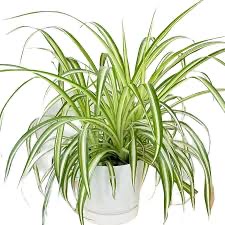
The spider plant (Chlorophytum comosum) is one of the most beloved houseplants, known for its easy care, air-purifying qualities, and striking appearance. Native to South Africa, this plant has become a staple in homes and offices worldwide, thanks to its resilience and adaptability. Its cascading foliage and ability to produce baby plants (called spiderettes) make it a charming addition to any indoor space.
Features of the Spider Plant
1. Attractive Foliage
Spider plants are characterized by their long, arching leaves, which are often striped with green and white. Their flowing, grass-like appearance adds elegance to any room.
2. Spiderettes
The plant’s most distinctive feature is its spiderettes—small plantlets that dangle from the mother plant, resembling spiders on a web. These can be propagated into new plants.
3. Air-Purifying Qualities
According to NASA’s Clean Air Study, spider plants are effective at removing harmful toxins such as formaldehyde, carbon monoxide, and xylene, improving indoor air quality.
4. Adaptability
Spider plants thrive in a wide range of conditions, making them ideal for both beginners and seasoned plant lovers.
Types of Spider Plants
1.Variegated Spider Plant (Chlorophytum comosum ‘Variegatum’)
Features green leaves with white edges.
2.Reverse Variegated Spider Plant (Chlorophytum comosum ‘Vittatum’)
Has white leaves with green edges.
3.Solid Green Spider Plant (Chlorophytum comosum)
Boasts solid green leaves without any variegation, offering a more classic look.
How to Care for a Spider Plant
1. Light Requirements
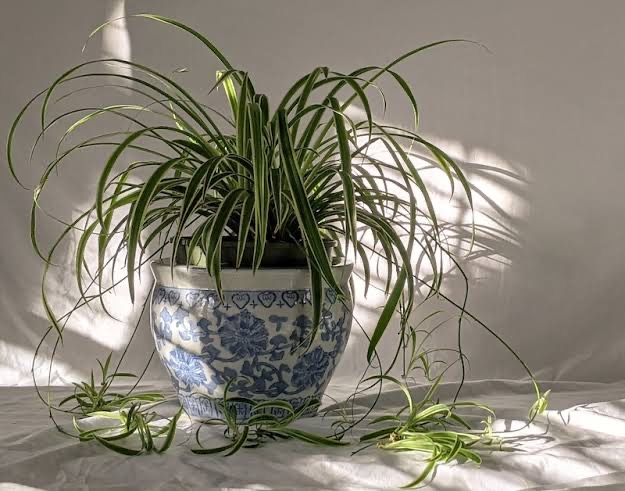
•Spider plants prefer bright, indirect light but can tolerate low-light conditions.
•Avoid prolonged exposure to direct sunlight, as it may scorch the leaves.
2. Watering
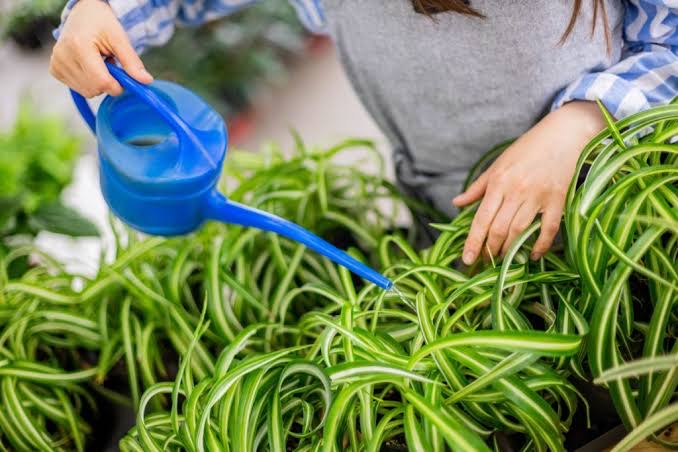
•Water when the top inch of soil feels dry. Overwatering can lead to root rot, so ensure the pot has proper drainage.
•They are forgiving if you forget to water occasionally.
3. Soil
Use a well-draining, general-purpose potting mix to keep the plant healthy.
4. Temperature and Humidity
•Spider plants thrive in temperatures between 65–75°F (18–24°C).
•They adapt well to average indoor humidity levels but appreciate occasional misting.
5. Years Fertilization
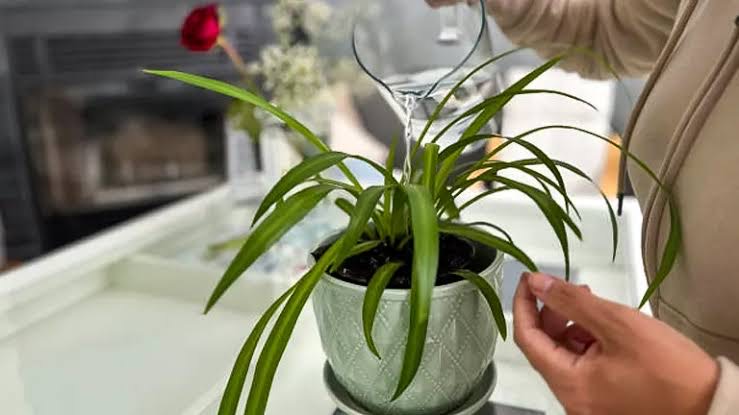
Feed with a balanced, water-soluble fertilizer once a month during the growing season (spring and summer).
6. Pruning
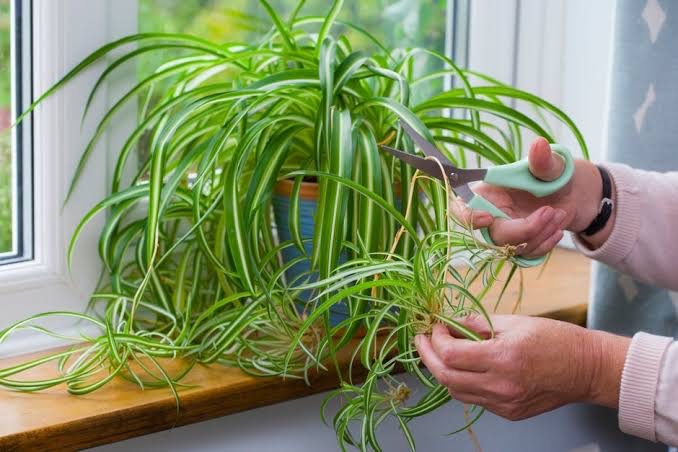
Trim off yellowing or browning leaves to maintain the plant’s appearance. Remove spiderettes if they crowd the plant.
Benefits of Spider Plant
1. Improves Air Quality
Spider plants absorb toxins from the air, making them a great choice for bedrooms, offices, and living rooms.
2. Pet-Friendly
Unlike many houseplants, spider plants are non-toxic to pets, making them safe for homes with cats and dogs.
3. Low Maintenance
Their adaptability and forgiving nature make spider plants perfect for those new to plant care.
4. Propagates Easily
Spider plants are one of the easiest houseplants to propagate, thanks to their spiderettes.
Common Problems and Solutions
1. Brown Leaf Tips
•Cause: Overwatering, underwatering, or fluoride in tap water.
•Solution: Use distilled or filtered water, and adjust your watering schedule.
2. Yellow Leaves
•Cause: Overwatering or lack of light.
•Solution: Allow the soil to dry out between waterings and move the plant to a brighter spot.
3. Pests
•Cause: Spider mites or aphids.
•Solution: Wipe leaves with a damp cloth and treat infestations with insecticidal soap or neem oil.
How to Propagate Spider Plant
1. Identify a healthy spiderette with visible roots.
2. Cut the spiderette from the mother plant.
3. Place it in water or directly into soil.
4. If using water, wait for the roots to grow before transplanting it into soil.
Decorating with Spider Plant
Spider plants are versatile and can be used in a variety of ways:
– Hang them in baskets to showcase their cascading leaves.
– Place them on shelves to let their spiderettes trail down.
– Use them as a centerpiece in brightly lit rooms.
Conclusion
Spider plants are more than just houseplants—they’re natural air purifiers and charming companions that bring life to any space. With minimal care and the ability to propagate easily, they’re perfect for both plant beginners and seasoned enthusiasts. Whether you place them in a hanging basket or let them thrive on a windowsill, spider plants will reward you with their vibrant, graceful presence.






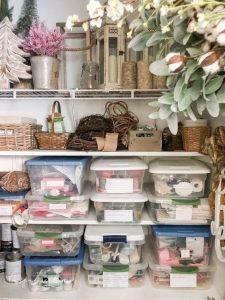
Home decor and storage hacks. Use multipurpose furniture (coffee tables, storage ottomans), make use of vertical space with tall units and floating shelves, and use transparent, labeled bins and strategic baskets for visual organization to maximize home décor and storage. Use door-mounted organizers for concealed storage, keep commonly used goods close to their intended locations, and conceal clutter in ornamental boxes on shelves.
HOME DECOR AND STORAGE HACKS
In today’s world, a living room must serve a wide range of purposes. It should be a place where you can work for a few hours, host a few visitors, and relax on the couch with your favorite TV show in addition to being a place where you can spend time with your family. All in one day, most of the time. Given their numerous needs, living rooms naturally require as many storage options as they have purposes for. Learn how to create a calm space in your room where you and your possessions may live together by reading on.
Storage Ideas;
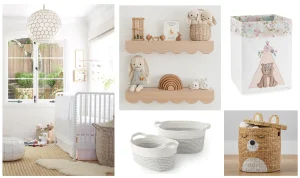
1. Utilize Your Furnishings Double Time Inbuilt furnishings are an excellent method to tuck away storage, such as a built-in sofa or window seat. Feeling uninspired to go custom? To get as much surface area as possible, look for coffee tables with lower shelves or drawers. Additionally a fantastic choice for additional sitting and a place to store extra blankets are storage ottomans.
2. Choose Personalized With Built-ins Use full-height bookshelves to offer yourself plenty of rows for your collection if your room is more akin to a disorganized library than a living room. Using bespoke wall-to-wall shelving lets you maximize your linear feet and customize every square inch to suit your demands.

HOME DECOR AND STORAGE HACKS
3. Use Bookshelves to Keep Things Simple Use standard bookcases to create a semi-custom design if the custom library style is out of your price range. Sew them together to make a storage wall that flows smoothly or on either side of your fireplace.

HOME DECOR AND STORAGE HACKS
4. Change the Heights of Your Authentic Items Make sure you utilize your storage zones to the most by customizing your shelves to meet your demands. Perhaps instead of being a bookworm, you’re a collector of exquisite pottery, old albums, or quirky trinkets.
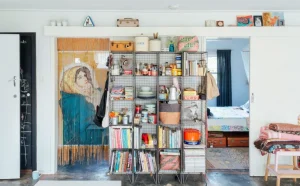
HOME DECOR AND STORAGE HACKS
5. Take It Modular to Customize It A wonderful method to obtain all the personalization you need now and the flexibility to change things up later is using modular shelving systems. Select a system that complements your style, then go wild with your creativity. versatile storage ideas
Summary
Essentials like wall art, rugs, lighting, plants, throw pillows, and mirrors, as well as specialized items like vases, candles, sculptures, and furniture accents, are examples of decorative and functional items that improve the aesthetics of a living space. Popular styles range from modern minimalist to eclectic, frequently guided by principles like grouping items in threes for visual appeal.

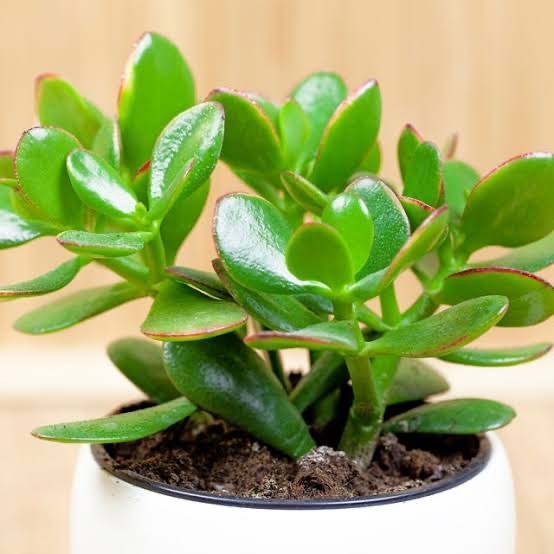
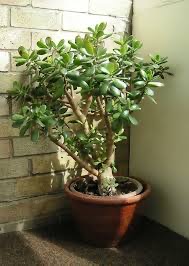
The Jade Plant, scientifically known as Crassula ovata, is a beloved succulent prized for its striking appearance and easy maintenance. Often called the “money plant” or “friendship tree,” it is said to bring good fortune and prosperity, making it a popular choice for homes and offices.
Characteristics of the Jade Plant
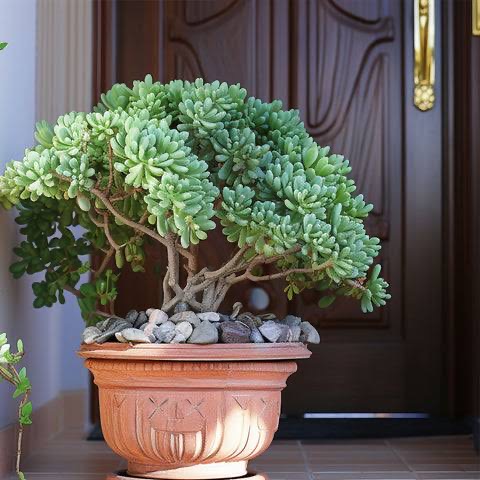
– Appearance: The Jade Plant features thick, glossy, oval-shaped leaves that range from deep green to yellow-green, often with red edges when exposed to sunlight. Its sturdy branches give it a miniature tree-like look.
– Size: It grows slowly but can reach up to 3-6 feet in height over several years.
– Flowers: Under the right conditions, the Jade Plant blooms with clusters of small, star-shaped white or pink flowers during late winter or early spring.
Benefits of the Jade Plant

1. Aesthetic Appeal: Its unique tree-like structure makes it a beautiful addition to any space.
2. Air Purification: Like many houseplants, it helps improve indoor air quality.
3. Low Maintenance: The Jade Plant thrives with minimal care, making it perfect for busy individuals.
4. Symbolism: Often associated with luck and wealth, it’s a meaningful gift for new homes or businesses.
Caring for Your Jade Plant
1. Light Requirements
•The Jade Plant thrives in bright, indirect sunlight. Place it near a sunny window where it receives 4-6 hours of light daily. Too little light can cause it to become leggy.
2. Watering
• Water sparingly, allowing the soil to dry completely between waterings. Overwatering is the most common cause of root rot. Reduce watering in winter when the plant’s growth slows.
3. Soil and Potting
•Use well-draining soil, such as a cactus or succulent mix. Pots with drainage holes are essential to prevent waterlogging.
4. Temperature and Humidity
•Ideal temperatures range from 65–75°F. While it tolerates dry conditions, it’s sensitive to frost and should be kept indoors in colder climates.
5. Pruning and Maintenance
•Prune dead or leggy branches to maintain its shape. Regular pruning encourages a fuller, bushier plant.
Propagation
Jade Plants are easy to propagate, making them an excellent plant to share with friends:
1.Take a healthy leaf or stem cutting.
2.Let it dry for a few days to callus.
3.Plant it in well-draining soil and water sparingly until roots develop.
Common Problems and Solutions
– Yellowing Leaves: Often a sign of overwatering; adjust your watering schedule.
– Leaf Drop: Caused by sudden temperature changes or underwatering.
– Pests: Watch for mealybugs or spider mites and treat with neem oil or insecticidal soap.
Conclusion
The Jade Plant (Crassula ovata) is a timeless favorite among plant enthusiasts for its beauty, resilience, and cultural significance. Whether you’re a seasoned gardener or a beginner, this low-maintenance succulent is a rewarding addition to your home or office. With proper care, it can thrive for decades, becoming a cherished symbol of good luck and prosperity.

Water Contaminants

Rain Water Relevance

Amethyst Importance

A Step-by-Step Guide to Deleting Reels on Instagram

How to Create a WhatsApp Group