Eyes health
Tips for Decreasing Risks of AMD

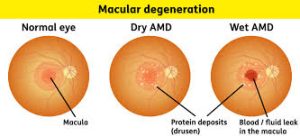
Tips for decreasing risks of AMD. The macula, the part of the retina that provides crisp, detailed central vision, is harmed by age-related macular degeneration (AMD), a degenerative eye disease. It usually affects persons over 60 and causes blind spots, wavy straight lines, or blurry vision. Although it seldom results in complete blindness, it has a significant negative influence on everyday tasks like reading and driving.
TIPS FOR DECREASING RISKS OF AMD
A healthy lifestyle, preventing eye damage, and treating systemic health issues are the main ways to reduce the risk of Age-Related Macular Degeneration (AMD), since poor diet and smoking are among the most modifiable risk factors. The following advice can greatly lower the chance of getting or worsening AMD, even though age and genetics cannot be changed.
How can I lower my risk for AMD?
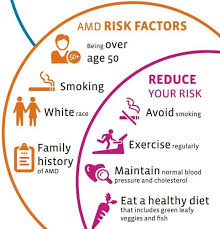

As you age, your chance of AMD rises.AMD is more common in people 55 years of age and older.Additionally, there is an increased risk of AMD in those who: possess a family background of AMD Are People of Caucasian Descent It’s critical to have routine eye exams if you have a family history of AMD, are older, or are otherwise at risk for the disease. Find out from your doctor how often you should have eye exams. Because early AMD has no symptoms, don’t wait for your eyesight to become worse!
How can I reduce AMD risk?


TIPS FOR DECREASING RISKS OF AMD
According to research, following these healthy recommendations may help you reduce your risk of AMD or delay the onset of AMD-related vision loss: Give up smoking, or don’t even start Engage in regular exercise. Keep your cholesterol and blood pressure at safe levels.
What AMD symptoms are present?

TIPS FOR DECREASING RISKS OF AMD
The AMD stages affect the symptoms. There are three stages of dry AMD: early, middle, and late.Since AMD is a progressive illness, symptoms typically worsen with time. AMD that is early and dry has no symptoms. Some persons with intermediate dry AMD still show no symptoms.
Some people may experience modest symptoms, such as mild central vision blurriness or difficulty seeing in dimly lit areas. In late AMD (wet or dry type), many people notice that straight lines start to look wavy or crooked. You may also notice a blurry area near the center of your vision. Over time, this blurry area may get bigger or you may see blank spots. Colors may also seem less bright than before, and you may have more trouble seeing in low lighting.
Summary
Healthy lifestyle choices and routine eye care are key components of preventing Age-Related Macular Degeneration (AMD). Quitting smoking, eating a diet high in fish and green leafy vegetables, keeping a healthy weight, exercising frequently, and donning sunglasses to block UV rays are all important preventive steps. For early detection, routine, thorough eye exams are crucial.