
Sports
Understanding the Offside Rule in Football

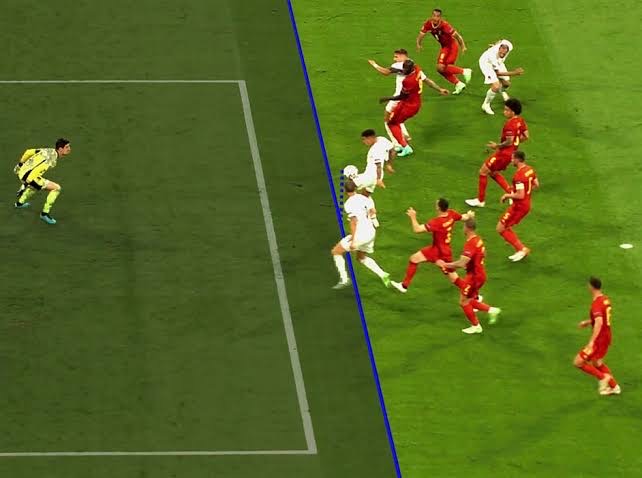
In the realm of football, the offside rule stands as one of the most debated, misunderstood. And crucial regulations governing the beautiful game. To the uninitiated spectator, it might seem like an arbitrary restriction. But in reality, it serves a fundamental purpose in maintaining fairness and strategic play on the pitch.
What is Offside?
In its simplest form, the offside rule is designed to prevent attacking players from gaining an unfair advantage by positioning themselves closer to the opponent’s goal line than both the ball and the second-last opponent (usually the last defender) when the ball is played to them. In essence, a player is in an offside position if they are in the opposing team’s half and nearer to the opponent’s goal line than both the ball and the second-last opponent when the ball is passed to them.

Key Components of the Offside Rule:
1. Positioning: A player must be in an offside position at the moment the ball is played to them by a teammate.
2. Active Play: Being in the position alone is not an offense. The player must also be involved in active play, which includes receiving the ball or interfering with an opponent.
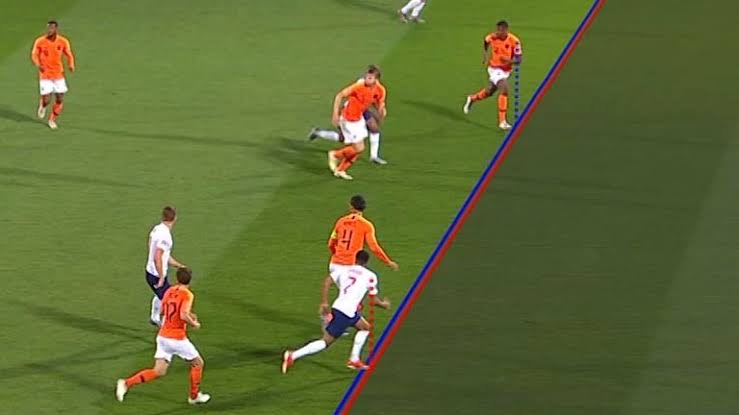
3. The Second-Last Opponent: The position is judged concerning the second-last opponent, usually the last defender. This means that if there is only one defender between the attacking player and the goal line, they are not considered offside.
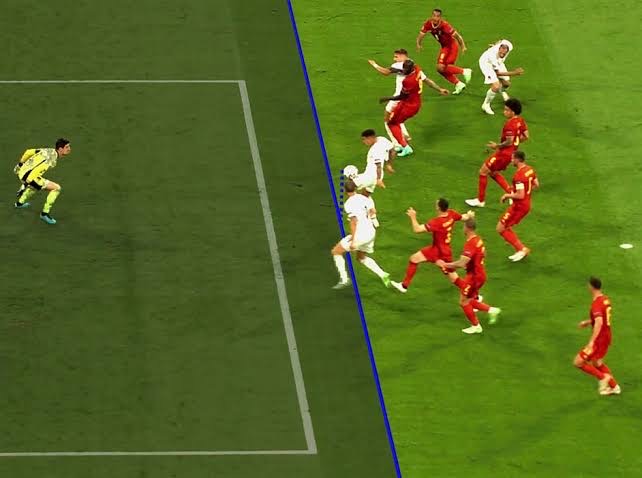
4. Timing: Timing is crucial. The player must time their movement to receive the ball precisely when it is played to them, not before.
The Role of Assistant Referees (Linesmen):
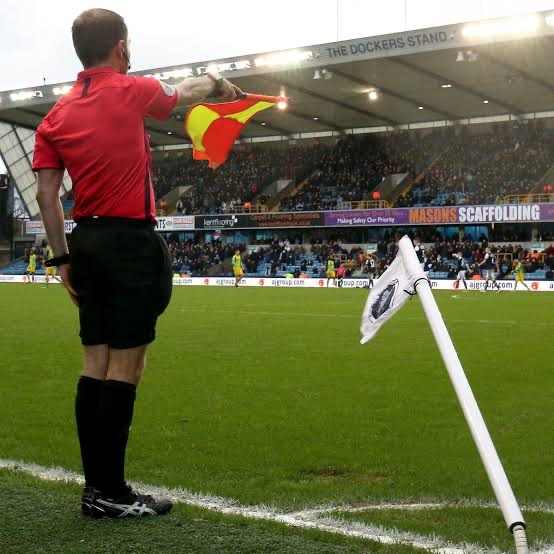
Assistant referees play a vital role in enforcing the offside rule. Positioned along the sidelines, they continuously monitor the positioning of attacking players in relation to the last line of defense. They signal an offside offense by raising their flag when they judge a player to be in an offside position and actively involved in play.
Impact on Gameplay:
The rule adds a layer of complexity and strategy to the game. Teams must carefully coordinate their movements to avoid falling foul of the trap set by the opposing defense. For attackers, timing their runs to perfection can be the difference between a goal-scoring opportunity and having the play called back for offside.
Controversy and Debate:
Despite its clear guidelines, the offside rule often sparks controversy and debate among players, coaches, and fans. Close offside calls can be the subject of intense scrutiny and heated discussion, especially in high-stakes matches. Video Assistant Referee (VAR) technology has been introduced in many leagues to help reduce errors in offside decisions, but even with VAR, there remains room for interpretation and disagreement.

In the intricate tapestry of football’s rules and regulations. The rule stands out as a cornerstone of fair play and tactical maneuvering. While its application can be contentious at times. There is no denying its importance in shaping the dynamics of the game. Understanding the nuances of the rule adds depth to one’s appreciation of football and serves as a testament to the sport’s rich complexity.



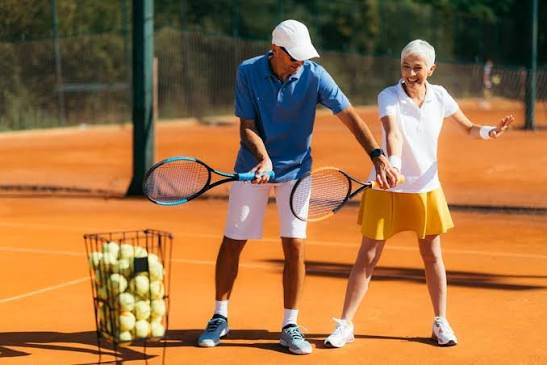
Importance of Adults Sports. Adults worry about and struggle with these issues; young athletes just want to enjoy themselves while playing a game they love with their buddies. Even when they quit playing sports, teammates frequently stay in touch with one another. You practice with other team members throughout the entire year. Together, you go through both good and bad moments, and it’s hard to end that kind of connection.
IMPORTANCE OF ADULTS SPORTS
Participating in adult sports promotes physical well-being, reduces stress, and fosters close friendships.You can always rely on your teammates, who become your second family.
1. Teaches Important Lessons

Children gain from sports by learning important life lessons. Sports participation instills in players the value of perseverance and the idea that everyone should strive to be their best self, regardless of identity. It also teaches you to be accepting and respectful of other people, which includes all the people in the sport—officials, coaches, opponents, and teammates.
2. Social Benefits
Youngsters who participate in sports also gain socially. They can socialize, form new connections, and meet other children while playing sports, especially when they’re on a team. while these encounters, they can improve their social skills.
3. Mental Benefits

Playing sports with kids has additional health benefits, such as mental health advantages. Engaging in physical activities, particularly team sports, has been demonstrated to enhance mental well-being by reducing stress, anxiety, and depression and boosting self-confidence.
4. Physical Benefits
Children who do sports can benefit physically, which is one of the key advantages. Children who play in shorts have numerous health advantages, such as fostering healthy growth and development, enhancing the immune system, fortifying bones and muscles, and lowering the risk of contracting certain illnesses and diseases like obesity, hypertension, and cardiovascular disease.
5. Confidence

Importance of Adults Sports
Sporting activities provide kids with more self-worth and confidence. Kids get a sense of achievement when they succeed in athletics, whether it’s overcoming a difficult practice, winning a close game with their teammates, or doing well on their own. improved self-esteem
Summary
Adult recreational activities and sports leagues offer fantastic opportunities for individuals to meet new people, maintain an active lifestyle, and improve their fitness.

Schools Curriculum and Sports. Combining required physical education (PE) classes with extracurricular athletic programs in the school curriculum is crucial for students’ overall development. It enhances mental clarity, fosters physical well-being, and develops important character attributes like discipline and teamwork.
SCHOOLS CURRICULUM AND SPORTS
School sports develop strong social skills, increase mental capacity, and enhance physical health. Frequent exercise keeps children in shape, improves their concentration in class, fosters friendships, and teaches them leadership and collaboration.
1. Health Improvement

Outdoor sports can improve your fitness and are fantastic for kids. Frequent exercise can strengthen your heart, bones, and lungs. It also aids in the prevention of chronic illnesses. Blood circulation, stress reduction, weight loss, and diabetes management can all be aided by sports. Sports can help build and tone bones and muscles because of the confluence of cerebral and physical growth.
2. A boost to confidence
Winning isn’t everything in sports. Instead, it’s about reaching objectives and cooperating with others. In most sports, the goal is friendly competition. PE teachers must capitalize on the inherent excitement and competitiveness of sports to assist kids develop their confidence and enjoy and learn how to play peacefully.
3. Leadership Ability

Schools Curriculum and Sports
Whether playing with the national team or a small group of pals, every team requires a leader. As students grow, they are given the chance to assume leadership roles. They gain confidence and are more equipped to make wise decisions as a result. Sports can help you develop these skills because they demand you to make judgments and share them with your teammates often for the sake of the team as a whole.
4. Collaboration
Although, People who can work effectively together make up effective teams. For many kids, physical education is their first introduction to teamwork. Individuals are not as essential as the team as a whole, according to several clubs. Your youngster will be able to work as a team and observe directly.
5. Sport’s discipline

Schools Curriculum and Sports
However, This component, which incorporates failure, is underappreciated. You need to be persistent and disciplined to achieve in life. Athletes are one example of this. Naturally occurring highs are caused by the sport’s basic nature, which clearly defines winners and losers. Young athletes need to be prepared for this in adulthood.
6. Performance in the classroom
Also, Participating in athletic activities instills discipline, which is advantageous in many facets of life. Students gain physical, mental, and tactical skills through athletics. Pupils can concentrate more effectively and see more clearly.
Summary
Beyond their physical benefits, sports have several educational benefits. This blog will examine how student athletes enhance their academic achievement, health, and way of life.

Tips for counting handball scores. In the fast-paced Olympic team sport of handball, two teams of seven players each—six court players and one goalie—try to score by tossing the ball into the opposing team’s goal. Played over two 30-minute halves on a 40-by-20-meter indoor court, the rules permit passing, dribbling, and a limited number of steps while holding the ball. The game is physically demanding.
TIPS FOR COUNTING HANDBALL SCORES
When the entire ball crosses the goal line between the posts, one point is awarded for each goal in handball. Verifying the referee’s signal (no whistles for fouls or violations), making sure the shooter remains outside the 6-meter area, and keeping track of two 30-minute halves (or 20/25 minutes for youngsters) are important pointers.
1. Goal Scoring:
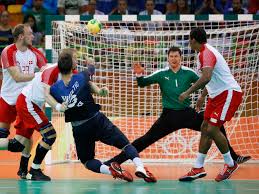
A team scores a point each time they successfully toss the ball into the goal of the opposition. When the entire ball travels across the goal line between the goalposts and under the crossbar, the goal is scored.
2. Recording Goals: The scorekeeper or referee keeps track of the goals scored by each team on a designated score sheet or electronic scoreboard.
3. Scoring System:
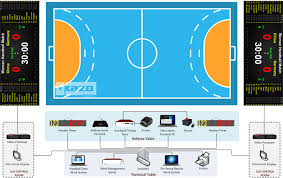
In handball, each goal counts as one point. Unlike some sports, there are no variations in the value of goals based on factors such as distance or manner of scoring.
4. Halftime and Fulltime Score:
The score is added up at the conclusion of each half, which lasts 30 minutes in professional matches, to get the halftime score. when the game is finished. The total goals scored by each team during the entire game is the final score.
5. Overtime (if applicable):

TIPS FOR COUNTING HANDBALL SCORES
In the event of a tie at the end of regulation time, some handball competitions may employ overtime periods to determine a winner. Overtime rules vary, but typically, the team with the most goals at the end of the overtime period(s) wins.
6. Penalty Shootouts (if applicable): In knockout competitions where a winner must be determined, such as tournaments or playoffs, penalty shootouts may be used to break ties. Each team takes turns attempting penalty throws, and the team with the most goals after a predetermined number of attempts wins.
7. Official Confirmation:
TIPS FOR COUNTING HANDBALL SCORES
At the conclusion of the game, the referee(s) formally confirm the final score. The score is final once verified and cannot be altered.
Summary
In handball, the process of counting the score is simple but essential. to precisely monitor each team’s development during the game. Scorekeepers and officials can guarantee accurate and equitable scoring in handball matches by adhering to these rules. enabling both players and spectators to efficiently monitor the game’s progress.

The Causes of Political Apathy

Child Neglect and Causes

Environment Care Tips

A Step-by-Step Guide to Deleting Reels on Instagram

A Comprehensive Guide to Setting Up a YouTube Premiere

How to Create a WhatsApp Group
-

 Business3 weeks ago
How to Promote your Business
-

 Fashion3 weeks ago
Fashion Guide for Beginners
-

 Business2 weeks ago
Business Name Selection Tips
-

 Business3 weeks ago
Tips for Running Online Business
-

 TECHNOLOGY3 weeks ago
Artificial Intelligence and the Future
-

 Business1 week ago
Customers Satisfaction
Pingback: How to count scores in handball - SimplExplainer