Economy
What are Global Economy Issues?

What are global economy issues. The global economic system, which encompasses all economic activities carried out both within and between countries, such as production, consumption, economic management, general labor, financial transactions, and the exchange of goods and services, is known as the world economy or global economy. The “international” or “global economy” is measured independently and apart from national economies in certain situations, but the “world economy” is only the sum of the measurements of the various nations.
WHAT ARE GLOBAL ECONOMY ISSUES?
Inflation and cost of living, high public and private debt, trade tensions and geopolitical conflicts, slowing growth, rising inequality, economic management, and challenges from climate change and technology (such as artificial intelligence) are some of the major global economic issues that affect stability and development goals and call for coordinated policy responses.
Rise in the global GDP;
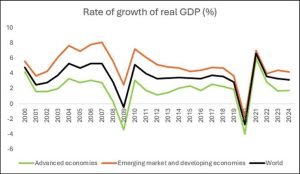
According to the analysis, the predicted 2.7% increase in global GDP in 2023 will slow down to 2.4% growth in 2024, indicating that the current slow growth trends will continue.
Regional inequalities;

It is anticipated that the GDP growth of the greatest economy in the world, the United States, will slow from 2.5% in 2023 to 1.4% in 2024. Its economy’s main engine, consumer spending, is probably going to slow down because of several issues, including rising interest rates and a contracting labor market.
Employment market;

What are global economy issues?.
Following the pandemic, the global labor market has shown different patterns in developed and poor nations. Developed nations saw a strong recovery marked by declining pay disparity, growing nominal salaries, and low unemployment rates of 3.7%.
Inflation rate;
Over the last two years, global inflation has been a major worry, but it appears to be abating. From 8.1% in 2022 to an estimated 5.7% in 2023, headline inflation worldwide is expected to drop to 3.9% in 2024.
Investment;

What are global economy issues?.
Along with highlighting the difficulties with global investment trends, the research also notes a slowdown in investment growth in both developed and emerging nations. But whereas rich nations have persisted in allocating capital to technologically advanced and sustainable industries like digital infrastructure and renewable energy.
Commerce;

What are global economy issues?.
Also, The growth of global commerce is predicted to slow to 0.6% in 2023 and pick up to 2.4% in 2024, indicating that trade is becoming less of a growth engine. Global trade is hindered, according to the research, by reasons like supply chain disruptions.
Summary
The definitions, representations, models, and valuations of the global economy differ greatly beyond the minimal norm pertaining to value in production, use, and exchange. It is inextricably linked to Earth’s environment and geography.
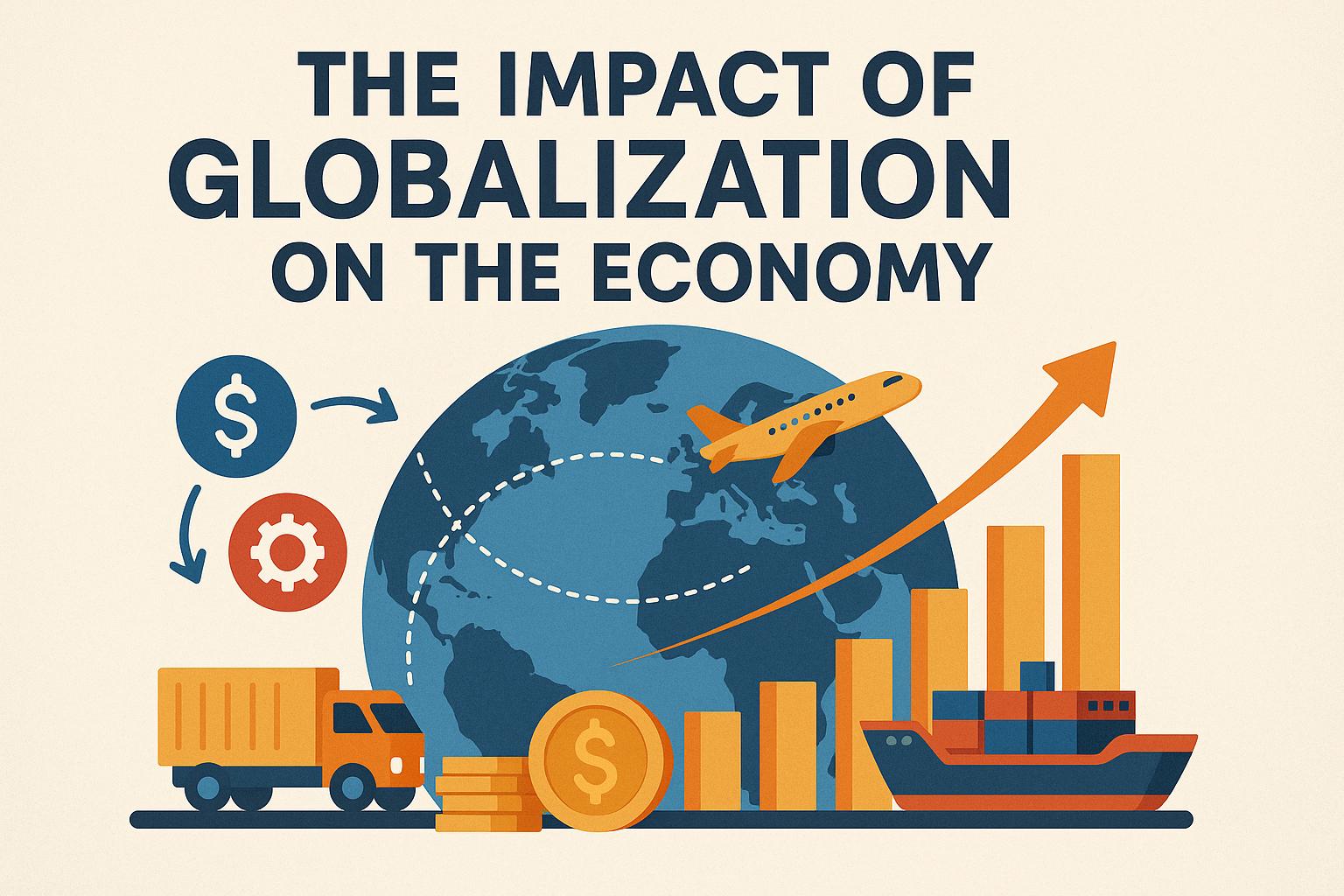
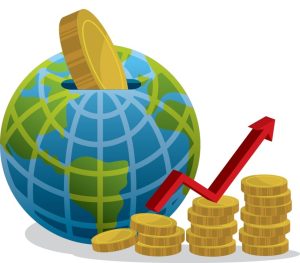
Globalization and economic growth. Through increased trade, investment, technology transfer, and efficiency, globalization stimulates economic growth, resulting in more goods, jobs, and innovation. However, it also poses challenges, such as increased competition, wage pressure for unskilled labor, income inequality, and potential cultural shifts. The benefits of globalization are frequently unevenly distributed, favoring high-income countries while straining developing economies that lack infrastructure or regulations.
GLOBALIZATION AND ECONOMIC GROWTH
Another way to think of globalization is as a phenomena brought about by the movement of products, services, technology, and ideas across international borders. There have been contentious debates and disagreements among experts over the implications. Theoretically, some see it as an inevitable and vital process that is beneficial to the economy and fundamental to the creation of vast wealth.
What is Globalization?
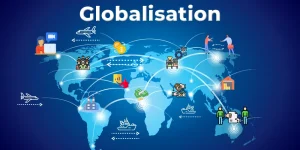
For some, globalization represents a terrifying force from the future, while for others, it is the primary driver of human progress. Nevertheless, even though global expansion is well underway, there is widespread inequality over access to the resources and opportunities of the global economy. For these and other depressing reasons, many people despise the term globalization.
Positive impacts;
more prospects for commerce A notable effect of globalization on economic expansion is the rise in trade prospects. Businesses can sell their products abroad thanks to the removal or decrease of import/export quotas as well as the removal of safeguards for regional industries.
Getting into international markets;

Furthermore, lower import costs as a result of tariff elimination have raised competition. Due to this, local businesses have been compelled to increase productivity, which has decreased the cost and raised the quality of goods and services.
developments in technology;
The foundation of economic expansion is knowledge, capital, and technology; the spread of technology has been the primary force behind globalization. The global sharing of information is now simpler, quicker, and less expensive because of advancements in communication technology.
Negative Effects;
Displacement of jobs;

globalization and economic growth
The primary detrimental effects include the loss of jobs and the rise in income inequality among national residents. Because globalization causes job displacement, it has an impact on employment prospects across nations. Due to rising competition from other nations, movements of production activity across national borders have resulted in job losses for people worldwide.
Cultural identity loss;

globalization and economic growth
One of the most notable adverse consequences of economic globalization is the gradual loss of a nation’s cultural identity. Biodiversity suffers if cultural identities are gone. Particularly in smaller, less developed nations, indigenous species of plants, animals, and other natural resources start to disappear.
Summary
Globalization promotes economic growth by boosting trade, investment, technology transfer, and competition, which increases efficiency, productivity, and job creation. However, it also poses problems, such as growing income inequality, job displacement in certain industries, and increased competition that can hurt less developed economies, making its effects complex and varied across countries.
IMPACT OF GLOBALIZATION ON ECONOMIC GROWTH
Impact of globalization on economic growth. An alternative way to conceptualize globalization is as a phenomenon that has resulted from the flow of ideas, technology, and goods and services around the world. Experts have disagreed regarding the consequences and engaged in heated discussions about them. In theory, some believe it to be an unavoidable and essential process that is good for the economy and crucial to the development of enormous wealth.

IMPACT OF GLOBALIZATION ON ECONOMIC GROWTH
What is Globalization?
For some, globalization represents a terrifying force from the future, while for others, it is the primary driver of human progress. Nevertheless, even though global expansion is well underway, there is widespread inequality over access to the resources and opportunities of the global economy. For these and other depressing reasons, many people despise the term globalization.
Positive impacts of globalization on Economic Growth
more prospects for commerce A notable effect of globalization on economic expansion is the rise in trade prospects. Businesses can sell their products abroad thanks to the removal or decrease of import/export quotas as well as the removal of safeguards for regional industries.
Getting into international markets
Furthermore, lower import costs as a result of tariff elimination have raised competition. Due to this, local businesses have been compelled to increase productivity, which has decreased the cost and raised the quality of goods and services.
developments in technology
The foundation of economic expansion is knowledge, capital, and technology; the spread of technology has been the primary force behind globalization. The global sharing of information is now simpler, quicker, and less expensive because of advancements in communication technology.
Negative Effects
Displacement of jobs
The primary detrimental effects include the loss of jobs and the rise in income inequality among national residents. Because globalization causes job displacement, it has an impact on employment prospects across nations. Due to rising competition from other nations, movements of production activity across national borders have resulted in job losses for people worldwide.
Cultural identity loss
One of the most notable adverse consequences of economic globalization is the gradual loss of a nation’s cultural identity. Biodiversity suffers if cultural identities are gone. Particularly in smaller, less developed nations, indigenous species of plants, animals, and other natural resources start to disappear.
GLOBAL ECONOMIC ISSUES
Global economic issues. The current World Economic Situation and Prospects report for 2024 presents a dismal view of the state of the world economy. The ongoing global economic crises threaten the advancement of the Sustainable Development Goals. Simmering geopolitical tensions and the increasing intensity and frequency of catastrophic weather events have exacerbated underlying risks and vulnerabilities, even if global economic growth exceeded expectations in 2023 and several large economies showed exceptional resilience.

GLOBAL ECONOMIC ISSUES
Rise in the global GDP
According to the analysis, the predicted 2.7% increase in global GDP in 2023 will slow down to 2.4% growth in 2024, indicating that the current slow growth trends will continue.
Regional inequalities
It is anticipated that the GDP growth of the greatest economy in the world, the United States, will slow from 2.5% in 2023 to 1.4% in 2024. Its economy’s main engine, consumer spending, is probably going to slow down because of several issues, including rising interest rates and a contracting labor market.
Employment market
Following the pandemic, the global labor market has shown different patterns in developed and poor nations. Developed nations saw a strong recovery marked by declining pay disparity, growing nominal salaries, and low unemployment rates of 3.7%.
Inflation rate
Over the last two years, global inflation has been a major worry, but it appears to be abating. From 8.1% in 2022 to an estimated 5.7% in 2023, headline inflation worldwide is expected to drop to 3.9% in 2024.
Investment
Along with highlighting the difficulties with global investment trends, the research also notes a slowdown in investment growth in both developed and emerging nations. But whereas rich nations have persisted in allocating capital to technologically advanced and sustainable industries like digital infrastructure and renewable energy.
Commerce
Also, The growth of global commerce is predicted to slow to 0.6% in 2023 and pick up to 2.4% in 2024, indicating that trade is becoming less of a growth engine. Global trade is hindered, according to the research, by reasons like supply chain disruptions.

Compact cameras disadvantages

Mirrorless cameras disadvantages

Top bridge cameras

A Step-by-Step Guide to Deleting Reels on Instagram

A Comprehensive Guide to Setting Up a YouTube Premiere