Health
Addison’s Disease


ADDISON’S DISEASE
Addison’s disease. A rare chronic disorder known as Addison’s disease occurs when your adrenal glands are unable to produce enough cortisol and aldosterone. Most typically, an autoimmune attack is the cause. Medication can be used to treat it. A chronic disorder that occurs when your adrenal glands are unable to produce enough cortisol and aldosterone.
ADDISON’S DISEASE
The tiny, triangular glands that sit atop each of your two kidneys are called suprarenal glands or adrenal glands. Your endocrine system includes them. hormones called cortisol aids in your body’s reaction to stress, including that caused by disease, trauma, or surgery. Additionally, it supports the maintenance of your immune system, blood pressure, heart, and blood glucose (sugar) levels. Life depends on cortisol.
Signs


The symptoms normally appear gradually since the damage to your adrenal glands usually occurs gradually over time. Each person experiences symptoms differently.
These symptoms include:
weariness that is steadily getting worse (most prevalent symptom).
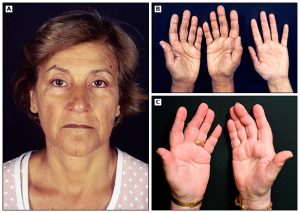
dark patches of skin (hyperpigmentation), particularly on your gums, around scars, and in skin wrinkles.
abdominal discomfort.
vomiting and nausea.
Diarrhea.
appetite loss and inadvertent weight loss.
joint discomfort, muscle soreness, or muscle spasms.
Causes


when, for no apparent reason, your immune system targets healthy tissues. the immune system targets the adrenal cortex, the outer part of the adrenal glands that produces cortisol and aldosterone, when you have Addison’s disease. Usually, it takes months to years for symptoms to appear once 90% of the adrenal cortex has been destroyed.
The following are additional, less frequent causes of Addison’s disease:
recurring infections, such as fungal and HIV/AIDS-related illnesses.
when your adrenal glands are invaded by cancer cells from another area of your body.
hemorrhaging, or bleeding, into your adrenal glands.
Your adrenal glands will be surgically removed.
Amyloidosis is a disorder where amyloid proteins accumulate and harm important organs.
Treatment

In order to treat Addison’s disease, synthetic cortisol and aldosterone are used to replace the missing hormones.
The medication hydrocortisone replaces cortisol, while fludrocortisone replaces aldosterone. Since Addison’s disease is a chronic illness, you will require lifelong medication.
Each person has a different dosage for these drugs, and in order to prevent an acute adrenal crisis after stressful events like surgery, trauma, infections, and other medical emergencies, your doctor may raise the amount.
Your doctor may advise you to consume more salt if you’re taking fludrocortisone, particularly after intense exercise and in hot, muggy conditions.
Summary
Being told you have a chronic illness can be very upsetting and stressful. Fortunately, there are medications that can be used to treat Addison’s disease. See your doctor on a frequent basis to ensure that your dosages are appropriate and to avoid an acute adrenal failure episode. Ask your healthcare practitioner any questions you may have about managing Addison’s disease. They are there to assist you at all times.