Animals
Albatross

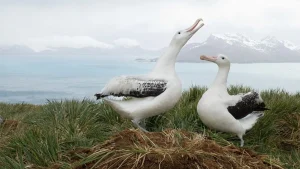

Albatross. Large seabirds belonging to the biological family Diomedeidae, albatrosses are related to storm petrels, diving petrels, and procellariids of the order Procellariiformes (the tubenoses). They are found in the North Pacific and Southern Oceans. Although short-tailed albatross fossils indicate that they were present in the North Atlantic up until the Pleistocene, and vagrants are occasionally discovered, they are not found there. With wingspans of up to 2.5–3.5 meters (8.2–11.5 feet) and bodies longer than one meter (3.3 feet), great albatrosses are among the biggest flying birds. Although there is dispute on the number of species, albatrosses are generally thought to belong to four genera.
ALBATROSS
They are extremely effective in the air, utilizing slope and dynamic soaring to travel long distances with minimal effort. They scavenge, surface seize, or dive to eat squid, fish, and krill. Albatrosses are colonial birds that often build their nests on isolated maritime islands, frequently with many species breeding together. Through the use of “ritualized dances,” pair ties between males and females develop over a number of years and endure for the pair’s lifetime. A single egg is laid in each mating attempt, and a breeding season can last more than a year from laying to fledging.
Flight and Migration;
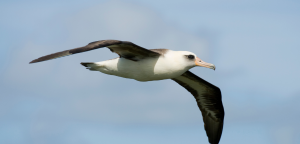

Albatrosses are superb gliders. Using a technique called “dynamic soaring,” they can travel thousands of miles with minimal effort. Riding ocean winds for days or even weeks without flapping their wings. This makes them highly efficient hunters, able to cover vast distances over the open ocean to catch squid, fish, and krill.
Life and Mating Habits;

Albatross
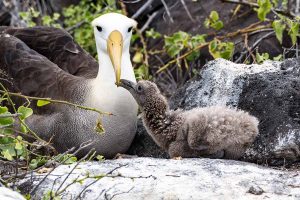
Albatrosses are monogamous birds, often mating for life. They have complex courtship dances and elaborate rituals to bond with their chosen partner. These seabirds have one of the longest lifespans in the avian world, with some living up to 60 years or more. Albatrosses reproduce slowly, usually laying one egg every one or two years and investing significant care in raising their young.
Conservation Challenges Sadly;

Albatross
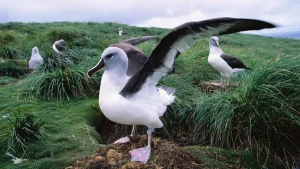
Albatrosses face numerous threats, primarily due to human activity. Bycatch from longline fishing is one of the leading causes of their decline, as birds get caught on hooks intended for fish. Plastic pollution is also dangerous, as albatrosses often mistake floating plastic for food. As a result, many species are now endangered or vulnerable, sparking global conservation efforts to protect them.
Cultural Significance;


Albatross
The albatross has long held symbolic significance in human culture. In literature, it often represents burden or guilt, inspired by Samuel Taylor Coleridge’s poem. The Rime of the Ancient Mariner, where a sailor’s killing of an albatross brings a curse upon his ship. Albatrosses are both majestic and vulnerable, epitomizing the beauty and challenges of life in the open ocean. Protecting these incredible birds has become a conservation priority. Ensuring future generations can continue to marvel at their grace and endurance.
Summary
One of the most famous seabirds in the world, the albatross is renowned for its extraordinary wingspan, amazing flying skills, and distinct life cycle. mostly found in the North Pacific and Southern Oceans. Albatrosses are members of the Diomedeidae family and are distinguished by their massive wings, which may grow up to 11 feet in length, giving them some of the biggest wingspans of any bird species.