communication
Body Language: Understanding Nonverbal Communication


Body language is a powerful form of nonverbal communication that reveals emotions, intentions, and attitudes. From facial expressions to posture and gestures, your body speaks volumes, often conveying more than your words. Mastering body language can improve relationships, enhance communication, and boost personal and professional interactions.
Why Body Languages Matters
1. Enhances Communication
Studies show that up to 55% of communication is nonverbal. Understanding body language helps you interpret what others feel or think, even when they don’t say it explicitly.
2. Builds Trust
Positive body languages, like maintaining eye contact and open gestures, fosters trust and connection, whether in a personal or professional setting.
3. Reveals Emotions
Body languages often reflects emotions more accurately than words. Subtle cues like crossed arms, fidgeting, or a tilted head can provide deeper insight into someone’s feelings.
4. Influences Perception
Your body languages affects how others perceive you. Confident posture and gestures can make you appear approachable, competent, and trustworthy.
Key Elements of Body Language
1. Facial Expressions

– Smiling indicates warmth and friendliness.
– Furrowed brows can signal confusion or concern.
– Eye contact shows attentiveness but can be intimidating if excessive.
2. Posture

– An upright posture conveys confidence and self-assurance.
– Slouching suggests disinterest or insecurity.
– Leaning slightly forward signals interest and engagement.
3. Gestures

– Open-handed gestures suggest honesty and openness.
– Pointing may come across as aggressive or commanding.
– Nodding encourages conversation and shows agreement.
4. Personal Space
– Respecting personal space builds comfort and trust.
– Standing too close may feel invasive, while too much distance can seem disengaged.
5. Movement
– Purposeful movements, such as hand gestures while speaking, can emphasize points.
– Fidgeting may indicate nervousness or impatience.
How to Use Body Language Effectively
1. Be Aware of Your Body Languages
Pay attention to how you stand, move, and express yourself. Adjust to project confidence and openness.
2. Observe Others
Read the body language of others to better understand their emotions and reactions. This can guide your response and improve interactions.
3. Practice Mirroring
Subtly mirroring someone’s body language can create rapport and show empathy.
4. Maintain Open Gestures
Avoid crossing arms or turning away. Open gestures foster trust and invite conversation.
5. Control Nervous Habits
Be mindful of fidgeting or excessive movement, which can distract or convey insecurity.
Common Body Language Mistakes to Avoid
1. Lack of Eye Contact: Can appear disinterested or untrustworthy.
2. Crossed Arms: Often interpreted as defensive or closed-off.
3. Overuse of Gestures: Too many gestures can be distracting or overwhelming.
4. Avoiding Smiles: A lack of smiling can seem cold or unapproachable.
Conclusion
Body language is a silent yet powerful tool that shapes interactions and perceptions. By understanding and consciously using body language, you can communicate more effectively, build stronger connections, and present yourself confidently in any situation. Practice observing and refining your nonverbal cues to unlock the full potential of this universal language.

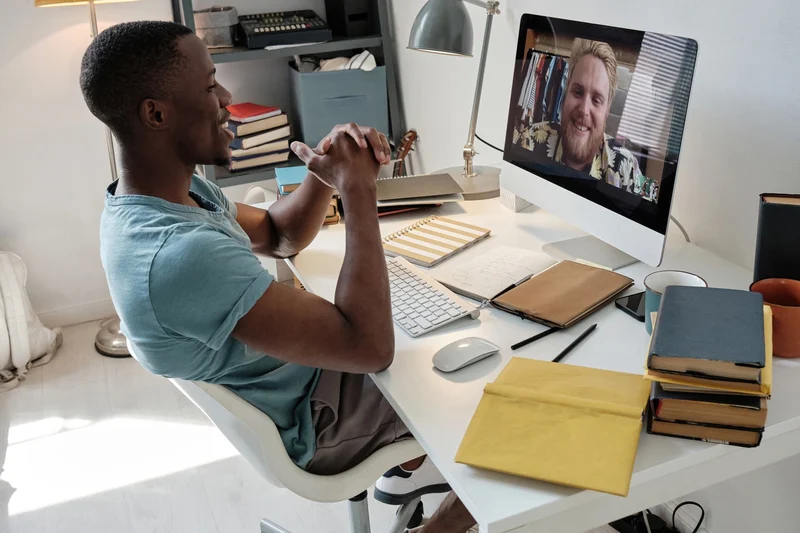
Tips for online conversations. Real-time text, phone, or video exchanges over the internet that simulate face-to-face communication are called online conversations. Open-ended inquiries, attentive listening, and the use of multimedia, such as memes, to compensate for the absence of non-verbal cues are all necessary for productive online conversation. Personalizing communications, identifying common ground on social media (like LinkedIn and Twitter), and interacting through video apps are important tactics.
TIPS FOR ONLINE CONVERSATIONS
Active listening, open-ended inquiries, and succinct messaging are necessary for successful online conversations in order to establish rapport without the use of nonverbal clues. Important tactics include emphasizing engagement over lengthy paragraphs, employing conversational threading to present several subjects, and conveying tone with emojis or GIFs. We could all use some principles for improved digital communication in the online world of today.
1. Use the technology at your disposal;

Utilize the technology at your disposal. Use emojis and gifs in your emails or alter the background of your messages.
These will inject some personality into your online discussions and make you stand out from the crowd of people who use the preset options.
2. Ensure there are no distractions;
When communicating online, you should pay attention in the same way that you would in a face-to-face conversation.
Pay attention to what you’re saying. Avoid multitasking by avoiding talking on the phone and typing at the same time, as the recipient will see that you are distracted. You are also more prone to communicate incorrectly when there are outside distractions.
3. Don’t waste people’s time;

Tips for online conversations
Verify that you have a good cause for communicating. Make a quick phone call to handle the issue or query if that is the most convenient option.
It could take some experience to know when to call and when to email. However, the benefits to the caliber and efficiency of your professional connections will be immeasurable.
4. Take notes;
Making notes during especially significant in the moment online conversations guarantees that you won’t overlook any critical information later
Taking notes will also mean that you won’t waste additional time by having to re-contact the people involved in the online meeting to get information that was presented.
5. Do an activity together online;

Since many of us work from home, we frequently experience feelings of loneliness and disconnection. We can participate in online activities to assist reduce this.
Taking a virtual tour or engaging in online gaming with friends or coworkers can also foster connection development.
6. Know when to end the conversation;
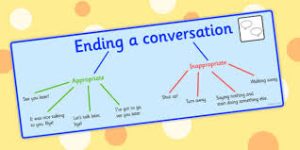
Tips for online conversations
Another aspect of the art of effective communication is knowing when and how to cut a conversation short. It is applicable to every discussion we have, whether it be online or in person. But sometimes it can be a little more difficult to conclude an online conversation.
Try to read the other person’s body language when you are having a video conversation. Look for nonverbal clues that indicate it’s time to conclude the conversation. For instance, you both might be beginning to repeat yourself or they might be seeming bored.
Summary
A vital tool for human connection, socialization, and relationship building, conversations are dynamic, frequently informal exchanges of ideas, emotions, or information between two or more people. In order to establish deep relationships, effective talks frequently incorporate open-ended inquiries, attentive listening, and shared vulnerability.

Conversational tips. Real-time text, phone, or video exchanges over the internet that simulate face-to-face communication are called online conversations. Open-ended inquiries, attentive listening, and the use of multimedia, such as memes, to compensate for the absence of non-verbal cues are all necessary for productive online conversation. Personalizing communications, identifying common ground on social media (like LinkedIn and Twitter), and interacting through video apps are important tactics.
CONVERSATIONAL TIPS
A vital tool for human connection, socialization, and relationship building, conversations are dynamic, frequently informal exchanges of ideas, emotions, or information between two or more people. In order to establish deep relationships, effective talks frequently incorporate open-ended inquiries, attentive listening, and shared vulnerability.
What makes a good conversation?
Many components come together to make a great conversation. These are a few of the factors that help avoid those uncomfortable silences.
1. Active listening

When listening actively, the emphasis is on paying close attention to what the other person is saying. Occasionally, people listen to reply instead of hearing what their conversation partner has to say.
2. Asking and answering questions
Asking follow up questions about other person’s remarks can lead to a longer conversation. Alternatively, you can ask them about anything you’re curious to learn more about or that you didn’t dully comprehend
3. Finding mutual interests and similarities

Listen for experiences that you both share in common during the chat. Having similar interests might help you stay on topic and maintain a smooth flow of discussion.
4. Having an intention for the conversation
It’s usually a good idea to prepare a plan for the conversation, whether you’re at a networking event or you ran into a coworker in the shop.
It’s usually a good idea to prepare a plan for the conversation, whether you’re at a networking event or you ran into a coworker in the shop.
1. Ask lots of questions

Conversational tips
Posing questions demonstrates your curiosity and attentiveness. Just remember to let the other person speak and take the initiative. You don’t want kids to experience questioning.
2. Avoid controversial topics
Always pay attention to the context and the person you are speaking with. Steer clear of subjects that can be interpreted as offensive or contentious. This could be anything from the most recent PTA meeting’s agenda to politics or religion.
3. Make eye contact
Maintaining eye contact with them demonstrates your interest in and participation in the discussion.
You convey to the other person that you are either preoccupied or uninterested in what they are saying if you are constantly gazing around
4. Smile

Conversational tips
It’s very crucial to smile while striking up a discussion.
Before you both speak, give your potential discussion partner a smile. This will demonstrate your friendliness and approachability.
5. Give compliments
A complement is a kind gesture that is always appreciated. Your conversation partner will feel better about themselves if you compliment them. Plus, it will make your conversation richer.
6. Ask for advice or recommendations
Seek guidance or suggestions if you’re unsure of how to maintain a discussion. This demonstrates your active listening skills and your appreciation for their opinions.
7. Maintain a positive attitude;

Conversational tips
We demonstrate our self-control when we conduct a conversation with a pleasant attitude.
Additionally, happy people are more likely to be preferred for chats than negative or frequently complaining individuals.
Summary
Active listening, open-ended inquiries, and succinct messaging are necessary for successful online conversations in order to establish rapport without the use of nonverbal clues. Important tactics include emphasizing engagement over lengthy paragraphs, employing conversational threading to present several subjects, and conveying tone with emojis or GIFs.
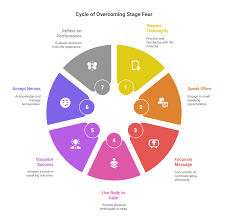
Stage fright overcoming tips. Use deep belly breathing, practice aloud to prepare completely, and reframe worry as excitement to get over stage fright. Visualizing success, smiling at the audience to establish rapport, and concentrating on the message rather than yourself are important tactics. The Genard Method states that you should concentrate on the requirements of the audience and employ physical methods, including progressive muscle relaxation, to relieve tension.
STAGE FRIGHT OVERCOMING TIPS
A widespread dread of being judged, stage fright, also known as performance anxiety, causes a fight-or-flight reaction that manifests as trembling, nausea, and racing hearts. It affects everyone and is brought on by perfectionism or fear of being judged. Preparation, breathing techniques, and focusing on the audience instead than oneself can all help handle it.
1. Do Breathing Exercises;

Spend some time practicing deep breathing techniques before going on stage. Breathe slowly through your nose, in for four counts and out for four counts. Try to remain calm and in control of your breathing each time so that you can take more breaths overall.
“Equal Breathing”, or Sama vritti, is the name of this breathing technique. In addition to helping you unwind, practicing breathing awareness while counting will distract you from performing
2. Avoid Caffeine;

It’s possible that you feel like you need a buzz to get going for your performance. However, drinking anything with caffeine will simply quicken your heartbeat and heighten your feelings of agitation and anxiety. Other item to stay away from are suger salt, and fast food.
3. Be Prepared;
Not knowing your songs well might cause a lot of anxiety. Prior to your live performance, having practiced and prepared thoroughly will make you feel more confident. But keep in mind that errors do occur. you wouldn’t believe how forgiving audiences can be. simply put, give it your all at the moment
4. Be Positive;

Stage fright overcoming tips
Being confident in yourself is a terrific technique to learn how to overcome stage anxiety. Raise your voice to “you.” Remind yourself that you will perform brilliantly and that the crowd will adore you. Congratulate yourself on your accomplishments and acknowledge the hard effort you have put in to get here.
5. Find A Friendly Face;
Find a friendly face in the crowd or send friend to assist you. Make it your mission to perform for them as if they were the only person present. Of course, you shouldn’t stare them down because that would make everyone in the room uncomfortable. Keep your distance, take a quick glance around, and don’t forget to turn to this familiar face in case you start to feel anxious.
6. Stand with Confidence;

Stage fright overcoming tips
Our mental processes can be altered by the way we carry ourselves. Not only will your vocals suffer from bad posture and slouching on stage, but your confidence will also suffer. With a straight back and a raised head, you convey to the world that you are self-assured and prepared to shine.
Summary
A stage is a location set aside for performances or a particular stage of a procedure. As a noun, it can refer to a raised platform (theater), a stage of development (phase), or a set of positions or a scaffold, according to Merriam-Webster. Organizing, producing, or presenting a concert or event is what it means as a verb.

How to turn off iphone

Techniques for stress management

Fingernails common diseases

A Step-by-Step Guide to Deleting Reels on Instagram

A Comprehensive Guide to Setting Up a YouTube Premiere