communication
Tips for online conversations


Tips for online conversations. Real-time text, phone, or video exchanges over the internet that simulate face-to-face communication are called online conversations. Open-ended inquiries, attentive listening, and the use of multimedia, such as memes, to compensate for the absence of non-verbal cues are all necessary for productive online conversation. Personalizing communications, identifying common ground on social media (like LinkedIn and Twitter), and interacting through video apps are important tactics.
TIPS FOR ONLINE CONVERSATIONS
Active listening, open-ended inquiries, and succinct messaging are necessary for successful online conversations in order to establish rapport without the use of nonverbal clues. Important tactics include emphasizing engagement over lengthy paragraphs, employing conversational threading to present several subjects, and conveying tone with emojis or GIFs. We could all use some principles for improved digital communication in the online world of today.
1. Use the technology at your disposal;

Utilize the technology at your disposal. Use emojis and gifs in your emails or alter the background of your messages.
These will inject some personality into your online discussions and make you stand out from the crowd of people who use the preset options.
2. Ensure there are no distractions;
When communicating online, you should pay attention in the same way that you would in a face-to-face conversation.
Pay attention to what you’re saying. Avoid multitasking by avoiding talking on the phone and typing at the same time, as the recipient will see that you are distracted. You are also more prone to communicate incorrectly when there are outside distractions.
3. Don’t waste people’s time;

Tips for online conversations
Verify that you have a good cause for communicating. Make a quick phone call to handle the issue or query if that is the most convenient option.
It could take some experience to know when to call and when to email. However, the benefits to the caliber and efficiency of your professional connections will be immeasurable.
4. Take notes;
Making notes during especially significant in the moment online conversations guarantees that you won’t overlook any critical information later
Taking notes will also mean that you won’t waste additional time by having to re-contact the people involved in the online meeting to get information that was presented.
5. Do an activity together online;

Since many of us work from home, we frequently experience feelings of loneliness and disconnection. We can participate in online activities to assist reduce this.
Taking a virtual tour or engaging in online gaming with friends or coworkers can also foster connection development.
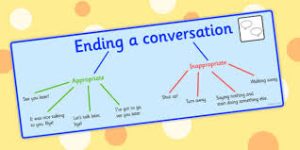
6. Know when to end the conversation;
Tips for online conversations
Another aspect of the art of effective communication is knowing when and how to cut a conversation short. It is applicable to every discussion we have, whether it be online or in person. But sometimes it can be a little more difficult to conclude an online conversation.
Try to read the other person’s body language when you are having a video conversation. Look for nonverbal clues that indicate it’s time to conclude the conversation. For instance, you both might be beginning to repeat yourself or they might be seeming bored.
Summary
A vital tool for human connection, socialization, and relationship building, conversations are dynamic, frequently informal exchanges of ideas, emotions, or information between two or more people. In order to establish deep relationships, effective talks frequently incorporate open-ended inquiries, attentive listening, and shared vulnerability.

Barriers to Communication. Anything that makes it challenging for communicators to reach the right audience at the right time or for a recipient to get the right information at the right time can fall under this category. Three main categories of communication barriers might hinder effective communication. Social isolation, working remotely, not requiring a desk, having closed office doors,
BARRIERS TO COMMUNICATION
Barriers are impediments that prevent people from accurately sharing and comprehending messages. examples of physical impediments to communication. emotional aspect, such as fear and distrust. obstacles to verbal and nonverbal language-based communication.

1. Styles and abilities of communication People communicate in different ways and with varied talents. Communication barriers frequently arise between the sender and the recipient of the message as a result of these disparities in communication abilities. 2. Physical impediments and social distance As was previously said, social alienation and distant work practices have made many businesses reliant on virtual communication.
3. Turning away Engaging both sides in the conversation is essential to effective communication. Effective communication is rendered useless when there is no participation from either side.
More barriers;

Barriers to Communication
4. Structure of organizations One of the most prevalent communication hurdles is complex and rigid organizational structures, which can be the primary cause of ineffective communication.
5. Meanwhile, Overwhelming information Not only is too little information harmful, but too much information might be much more detrimental. Overwhelming information, however, has always been a major obstacle to communication. Furthermore, research has shown that an abundance of information can adversely affect an employee’s success at work, productivity, and general well-being.
6. Lack of trust Effective communication is impossible when there is a lack of trust. Put another way, communication breaks down when workers don’t trust their bosses, leaders, or employers.

Barriers to Communication
7. Consistency, periodicity, and clarity The significance of regular, clear, and consistent communication must be understood by those in the communications field. Trust is harmed when communications are inconsistent across many channels. effective communication challenging.
Summary
The exchange of messages between individuals or organizations in order to exchange information and produce meaning is called communication.
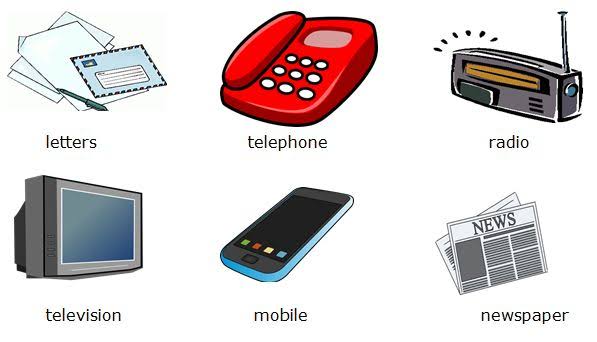
Various Means of Communications. Effective communication is essential to human survival and existence as well as the operation of an organization. It entails the production and transmission of ideas, information, opinions, facts, and feelings from one place, individual, or group to another. Communication is a key component of management’s directing function. Without excellent communication skills, a manager’s abilities are useless, regardless of their level of training and experience.
VARIOUS MEANS OF COMMUNICATIONS
Verbal (spoken words), written (typed or printed text), non-verbal (body language and cues), and visual (charts and images) are the four primary ways that people communicate. Every day, people utilize these technologies to communicate information, express emotions, and exchange ideas. A manager must properly communicate his instructions to subordinates in order for them to complete the work.
Process;
1. Sender

The communication is created by the sender, also known as the communicator, and sent to the recipient. He initiates the conversation.
2. Message
It is an idea, fact, view and knowledge. that originates with the sender and is meant to be further shared.
3. Encoding
Prior to being communicated, the sender encodes the message symbolically using words, images and gestures.
4. Media

Meanwhile, It is the transmission method used to send the encoded message. The communication might be sent by written or verbal means. The phone, internet, mail, fax, e-mail, and other means of communication are among them. It is up to the sender to select the media.
5.Receiver
The sender intended the message to be forwarded to him because he is the last member in the chain. The goal of communication is only achieved when the message is received, properly understood, and acted upon.
6. Feedback

Various Means of Communications
However, the communication process ends when the recipient notifies the sender that he has received and comprehended the message.
7. Noise
It describes any impediment to communication that is brought about by the sender or the recipient.
8. Decoding
Also, it is the process of decoding the sender’s encoded symbols. The recipient receives the message when it has been decoded.
Importance;

Various Means of Communications
Hence, the Coordinating Foundation The management communicates to the staff the objectives of the company, how they will be attained, and the dynamics between them. Fluid Operation To keep an organization running smoothly and effectively, managers coordinate both the physical and human components of the business.
Summary
Sending and receiving ideas, information, or messages between individuals and groups is referred to as communications. It also refers to the technological networks, systems, and channels—like radio, phones, and the internet—that are utilized to send that data.

Process of Communication in Families. Building connections, defining responsibilities, and managing day-to-day activities are all accomplished through the ongoing, two-way flow of verbal messages, nonverbal clues, and emotions among family members. It depends on a message being encoded by the sender, decoded by the recipient, and feedback influencing subsequent exchanges.
PROCESS OF COMMUNICATION IN FAMILIES
The process of communication is a cycle in which a sender crafts a message, sends it via a channel to a recipient, who then evaluates it and provides feedback. This methodical communication guaranties that thoughts and emotions are communicated and comprehended between individuals.
Dialogue Frameworks;

Include family meeting times on your calendar and establish ground rules for the sessions. Everyone should be encouraged to join; do not coerce them. Every family member will have a chance to be heard if they speak in turns. Family members’ self-esteem will rise when a structured listening atmosphere is established.
Avoid interruptions and turn off distracting things;
Family members need to be able to concentrate on the supplied information. Turning off devices like TVs, laptops, phones, gaming consoles, and other items that can disrupt the discourse is necessary. Select the ideal moment. There are moments when bringing up particular topics is appropriate. it is not a good idea to discuss your child’s academic difficulties. If you want your message to be heard, timing is crucial.
Be mindful and engage in active listening;

Process of Communication in Families
Pay attention to what the other person is saying instead of planning your reply. If the answer is being prepared before hearing the complete message, information may be overlooked. Be succinct and have a plan. Consider the message you wish to convey. When communicating, use words and body language to be direct and unambiguous. When a request is made, decide what you want and make a straight request for it. You will usually end up disappointed if you wish or hope that the other person would understand what you desire.
Listen with empathy as you consider the speaker’s perspective;

Process of Communication in Families
However, for the individual who is feeling them, emotions are real. Respecting and acknowledging others’ feelings, even if they differ from your own, is crucial. You can resolve the issue by coming to an agreement to disagree. Dismissing emotions has the potential to stifle dialogue and foster mistrust. Adhere to the facts and speak the truth. Discussions frequently include emotions, and people usually take great care to avoid offending others. In fact, telling the truth will improve family relations and foster trust. Effective communication
Summary
In communication, sending and receiving messages is a two-way process. The two messages are identical. although they’re not always.

Torchlight Selection

Best Practices for Face Exfoliation

Chemical Face Exfoliation

A Step-by-Step Guide to Deleting Reels on Instagram

A Comprehensive Guide to Setting Up a YouTube Premiere