Money
Guidelines for Opening Bank Account


Guidelines for opening bank account. An account with a bank or other financial organization that keeps track of your deposits, withdrawals, and transfers with the bank is called a bank account. Money is stored safely in accounts, which come in several varieties. Savings accounts are used to save and generate interest, while current (or checking) accounts are used for everyday activities like bill payment. Other varieties with distinct functions include corporate accounts, domiciliary accounts, and fixed deposit accounts.
GUIDELINES FOR OPENING BANK ACCOUNT
A valid ID (such as a driver’s license, national ID, or foreign passport), proof of address (such as a utility bill), and the account opening form must be filled out in order to open a bank account in Nigeria. Two passport photos, two reference forms, and a Bank Verification Number (BVN) are also required. An initial deposit or other particular paperwork may be required by certain institutions. To open a business bank account, you will need:
1. Business registration documents;
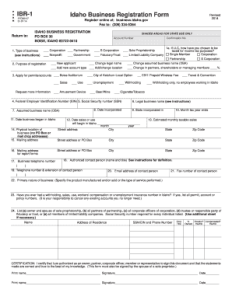
If the bank request it, you must produce documentation proving the company’s business registration, such as a certificate of incorporation, a business name registration certificate, or any other pertinent paperwork.
2. Tax identification number;
In Nigeria, a Tax identification Number is required for all businesses in order to open a bank account. For tax purposes, the federal inland revenue service issues this number.
3. Business address:

GUIDELINES FOR OPENING BANK ACCOUNT
The business’s address, including its physical location, mailing address, and phone number, must be given to the bank.
4. Directors or shareholders information:
You could be required to submit information on the company’s directors, shareholders, or partners, depending on the kind of business structure. This can include a valid international passport of drivers license, the shareholders passport photos, the bank holding company, the waste management authority Lawma bill, and so on.
5. Initial deposit;

GUIDELINES FOR OPENING BANK ACCOUNT
To open a business bank account, the majority of banks need an initial deposit. Depending on the bank and kind of account you’re opening, this sum may change
Why Do You Need A Business Account for your business?
1. To show professionalism:
Customers can see how committed you are to running your business by looking at your business bank account. You convey to everyone that you mean business when, during a transaction, your business name appears instead of your personal name.
2. To build trust with your customers;

GUIDELINES FOR OPENING BANK ACCOUNT
A corporate bank account boosts credibility with clients. Transferring funds to a company account is considered more secure than to a personal one.
3. To build credit and access loans: Every business would require a loan at some point.
Because of this, one of the prerequisites for getting a big loan is having a business account with a track record of promptly repaying earlier, smaller loans. You can obtain the loan you require to grow and expand your firm swiftly if it has a solid track record.
4. To get more control over your money;

GUIDELINES FOR OPENING BANK ACCOUNT
You can keep your personal and professional finances apart with a business account. You can monitor Your cash flow and make better financial decisions with this specialized account.
Summary
You typically require your Social Security number (or equivalent identity number), evidence of residence address, and a government-issued photo ID in order to create a bank account. A completed application, an initial deposit, and a passport photo might also be required by certain institutions.
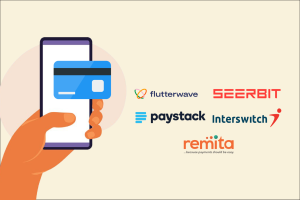
Online payment gateways in Africa. Flutterwave, Paystack, Interswitch, DPO Group, and SeerBit are important online payment gateways in Africa that provide businesses with the ability to accept a range of domestic and international payment methods, including bank transfers, mobile money, and cards. Other noteworthy suppliers of integrated platforms for digital services and e-commerce include VoguePay, Tingg, and Opay. Global firms like PayPal and new Pan-African infrastructure like PAPSS also contribute to the expansion of digital transactions.
ONLINE PAYMENT GATEWAYS IN AFRICA
This play a pivotal role in facilitating secure and convenient transactions in the world of e-commerce. These platforms act as intermediaries between merchants and customers, enabling the seamless transfer of funds from buyers to sellers while ensuring data security and fraud prevention. In West Africa, several gateways have emerged to meet the growing demand for digital payment solutions.
Here are some notable examples;
1. Flutterwave

ONLINE PAYMENT GATEWAYS IN AFRICA
Flutterwave is a leading online payment gateway that enables businesses to accept payments from customers across Africa and around the world. The platform supports various payment methods, including cards, mobile money, and bank transfers, making it accessible to a wide range of users. Flutterwave also offers features such as fraud detection, recurring billing, and seamless checkout experiences to enhance the payment process for both merchants and customers.
2. Paystack
ONLINE PAYMENT GATEWAYS IN AFRICA
Paystack is another popular online payment gateway in West Africa, known for its user-friendly interface and robust security features. With Paystack, businesses can accept payments via cards, bank transfers, and mobile money, providing customers with multiple payment options. The platform also offers tools for subscription billing, invoicing, and real-time transaction monitoring, empowering merchants to manage their payments efficiently.
3. Paga

ONLINE PAYMENT GATEWAYS IN AFRICA
Paga is a mobile payment platform that allows users to send and receive money, pay bills, and make purchases using their mobile phones. In addition to person-to-person transactions, Paga also offers online payment solutions for businesses, including payment processing, invoicing, and integration with e-commerce platforms. With its widespread adoption and extensive network of agents, Paga has become a trusted payment gateway in West Africa.
4. Interswitch
Interswitch is a leading payment processing company in Nigeria, offering a range of payment solutions for businesses and consumers. The company’s online payment gateway enables merchants to accept payments via cards, bank transfers, and mobile wallets, with features such as tokenization, 3D Secure authentication, and transaction reporting. Interswitch’s extensive network and robust infrastructure make it a preferred choice for many businesses in West Africa.
5. Remita
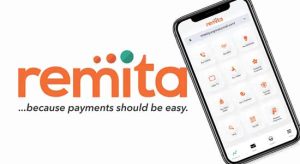
Remita is a payment platform developed by SystemSpecs, offering a wide range of payment solutions for individuals, businesses, and government institutions. The platform allows users to make payments for bills, taxes, salaries, and other transactions online or through mobile channels. Remita’s comprehensive features, including multi-channel payments, reconciliation, and financial reporting, make it a versatile payment gateway for businesses operating in West Africa.
Summary
By leveraging these online payment gateways, businesses in West Africa can streamline their payment processes. Expand their customer base, and drive growth in the rapidly evolving e-commerce landscape. With secure, convenient, and reliable payment solutions. Merchants can provide a seamless payment experience that enhances customer satisfaction and loyalty.
Multiple System Atrophy

Key Relevance of Monounsaturated Fats

Best Proteinous Fruits

A Step-by-Step Guide to Deleting Reels on Instagram

How to Create a WhatsApp Group