
Business
Online Payment Gateways in Africa

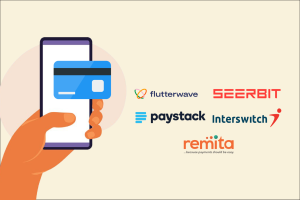
Online payment gateways in Africa. Flutterwave, Paystack, Interswitch, DPO Group, and SeerBit are important online payment gateways in Africa that provide businesses with the ability to accept a range of domestic and international payment methods, including bank transfers, mobile money, and cards. Other noteworthy suppliers of integrated platforms for digital services and e-commerce include VoguePay, Tingg, and Opay. Global firms like PayPal and new Pan-African infrastructure like PAPSS also contribute to the expansion of digital transactions.
ONLINE PAYMENT GATEWAYS IN AFRICA
This play a pivotal role in facilitating secure and convenient transactions in the world of e-commerce. These platforms act as intermediaries between merchants and customers, enabling the seamless transfer of funds from buyers to sellers while ensuring data security and fraud prevention. In West Africa, several gateways have emerged to meet the growing demand for digital payment solutions.
Here are some notable examples;
1. Flutterwave

ONLINE PAYMENT GATEWAYS IN AFRICA
Flutterwave is a leading online payment gateway that enables businesses to accept payments from customers across Africa and around the world. The platform supports various payment methods, including cards, mobile money, and bank transfers, making it accessible to a wide range of users. Flutterwave also offers features such as fraud detection, recurring billing, and seamless checkout experiences to enhance the payment process for both merchants and customers.
2. Paystack

ONLINE PAYMENT GATEWAYS IN AFRICA
Paystack is another popular online payment gateway in West Africa, known for its user-friendly interface and robust security features. With Paystack, businesses can accept payments via cards, bank transfers, and mobile money, providing customers with multiple payment options. The platform also offers tools for subscription billing, invoicing, and real-time transaction monitoring, empowering merchants to manage their payments efficiently.
3. Paga

ONLINE PAYMENT GATEWAYS IN AFRICA
Paga is a mobile payment platform that allows users to send and receive money, pay bills, and make purchases using their mobile phones. In addition to person-to-person transactions, Paga also offers online payment solutions for businesses, including payment processing, invoicing, and integration with e-commerce platforms. With its widespread adoption and extensive network of agents, Paga has become a trusted payment gateway in West Africa.
4. Interswitch
Interswitch is a leading payment processing company in Nigeria, offering a range of payment solutions for businesses and consumers. The company’s online payment gateway enables merchants to accept payments via cards, bank transfers, and mobile wallets, with features such as tokenization, 3D Secure authentication, and transaction reporting. Interswitch’s extensive network and robust infrastructure make it a preferred choice for many businesses in West Africa.
5. Remita

Remita is a payment platform developed by SystemSpecs, offering a wide range of payment solutions for individuals, businesses, and government institutions. The platform allows users to make payments for bills, taxes, salaries, and other transactions online or through mobile channels. Remita’s comprehensive features, including multi-channel payments, reconciliation, and financial reporting, make it a versatile payment gateway for businesses operating in West Africa.
Summary
By leveraging these online payment gateways, businesses in West Africa can streamline their payment processes. Expand their customer base, and drive growth in the rapidly evolving e-commerce landscape. With secure, convenient, and reliable payment solutions. Merchants can provide a seamless payment experience that enhances customer satisfaction and loyalty.

Tips for Advertising small enterprise. A localized business with less than 100 to 250 people and modest yearly revenues is commonly referred to as a small enterprise. These companies constitute the foundation of regional economies, fostering innovation and employment.
TIPS FOR ADVERTISING SMALL ENTERPRISE
Strong digital assets, community trust, and localized targeting are all necessary for small business advertising to be successful. Prioritize claiming free local listings, collaborating with complimentary companies, and developing highly targeted, economical sponsored ads to increase reach on a tight budget.
1. Paid Search Marketing;

Google AdWords and Bing Ads have the potential to increase website traffic and position your company prominently when users search for relevant terms. Concentrating on industry-specific long-tail keywords is crucial. By doing this, you may maximize click-through rate and conversions for your campaign.
The fact that PPC campaigns don’t require large sums of money to generate visitors is their strongest feature. As an alternative, a focused campaign with a $20–30 daily expenditure can bring in customers and qualified leads for your company.
2. Social Media Advertising;

Social networking sites like Facebook and LinkedIn let you advertise to people who aren’t following you and let you target particular demographics. This stops users from making impulsive clicks when browsing or looking for information. You can target particular clients based on their age, gender, level of education, and hobbies related to your service or product categories on a modest budget.
Even if they decide not to buy right away, they can wind up enjoying and recommending your company. This aids in compiling a database of possible clients.
3. Local Listings;
Provide free business listings on Yahoo Listing and Google My Business. You can benefit from people looking for local businesses on Google by including your business name, website, hours, and photographs. While the majority of these internet directories are free, some might charge for more exposure.
4. Website;

Tips for Advertising small enterprise
A well-crafted website with up-to-date content and eye-catching images may double as both a lead generation resource and a source of information for your clients. If you don’t have the money to employ a designer, you may make a simple website using the templates and resources offered by Squarespace, Wix, and WordPress. Just keep in mind that WordPress is a better option if SEO is a concern because Wix and Squarespace have problems with it.
5. Referral Promotion;
Brand-loyal customers will recommend you to their friends. On the other hand, you may incentivize the brand advocate to make several referrals by offering referral promos like a sign-up bonus or points system. Consequently, there are increased opportunities to acquire new clients.
Points, vouchers, and discounts are excellent ways for small businesses with tight budgets to thank their clients.
6. Flyers and Brochures;

Tips for Advertising small enterprise
Brochures and flyers are an easy, affordable, and effective way to generate talk about your company. You can not only attract customers by providing incentives or discounts to those who bring in your flyer, but you can also track the number of individuals who come in merely as a result of seeing it.
7. Email Marketing;

Tips for Advertising small enterprise
A cheap marketing technique for keeping in touch with your existing clientele and reaching out to new ones on a regular basis is an email newsletter. Make use of your newsletter to give your clients insightful and timely information. When they’re ready to make a purchase, they will remember your company because of this. You could occasionally offer them a promotion, like an online voucher they could use to receive a discount.
Summary
To promote your small business and get the most of your marketing budget, you must utilize astute advertising and marketing strategies to reach customers.

Local business promotion. Building community trust and achieving high local search exposure are key components of local company promotion. Participate in local groups, run highly targeted, location-based social media advertisements, and claim and optimize your Google Business Profile.
LOCAL BUSINESS PROMOTION
Small businesses are corporations, partnerships, or sole proprietorships with fewer employees and/or lower yearly revenue than corporations or regular-sized firms. Businesses are classified as “small” in order to be eligible for preferential tax treatment and government assistance.
1. Join local groups;

Putting the community first is essential when it comes to local small business promotion. Being a part of that group can provide you a competitive advantage against foreign or even domestic enterprises because people like to feel like they belong to something.
A few of these neighborhood organizations may host local events, host online get-togethers, and have Facebook accounts. Additionally, you can become a member of your community’s Chamber of Commerce, which provides special advantages including company health insurance, improved financing possibilities, and even roadside help.
2. Run competitions and contests;

Organizing tournaments and contests is a terrific method to strengthen your social media marketing, build brand awareness, and connect the online and offline worlds. Using social media to promote a competition and increase word-of-mouth is the greatest strategy. Request that your local clients share their photos on social media using relevant (and local!) hashtags. Reward the consumers that generate the most recommendations with rewards.
To let people know where to go for more information about your products, make sure to include a link to your shop in your bio. Offering competitions and requesting prospective new customers to enter by providing their name, phone number, and email address is another way to generate lists for email marketing.
3. Offer local discounts and rewards;

Local business promotion
Discounts and incentives are another excellent marketing strategy since people love to save money on goods and services. Offering discounts to customers who do online orders is a fantastic method to get people to buy and place orders. Offering large discounts and coupons is a terrific strategy to draw in clients. To ensure that customers know it’s from their area, include your city name in the hashtags and discounts.
4. Partner with local businesses and influencers;
To be considered an influencer, one need not own a million followers. Studies have indicated that micro-influencers with fewer than tens of thousands of followers had lower engagement rates and better conversion rates.
Look for well-known, popular individuals in your town or sector who are considered local influencers and form alliances with them. Since they are micro-influencers, they might not view it as their full-time job and hence have no expectation of compensation. They might be open to collaborating with you in exchange for free goods or experiences, which will enable you to save expenses.
5. Add your logo to vehicles;

Local business promotion
Why not also include your logo and website address if you’ve already made the investment on business cars in your city? A little branding goes a long way toward serving as inexpensive local advertising. You’ll be promoting your business to locals each time you go for a drive.
Summary
An organization or enterprising entity that conducts commercial, industrial, or professional operations is referred to as a business. Its main objective is to create and market products or render services in return for money, usually with the intention of making a profit.

Local business tactics. The short-term, doable actions a business takes to accomplish its broad, long-term objectives are known as business tactics. While tactics specify how day-to-day operations will get you there (e.g., targeted social media campaigns or local outreach), strategy specifies where the company is heading (e.g., market expansion).
LOCAL BUSINESS TACTICS
Establishing community roots, dominating local search results, and fostering trust are the main components of successful local business strategies. The most effective tactics, such as community outreach and local SEO, concentrate on turning locals into devoted, recurring clients.
Add your business to local online platforms;

You can submit your company profile and contact information to your local Chamber of Commerce or to industry-specific local listings, which are typically maintained by professional associations. Review sites and local business directories such as Yelp help local customers find your business and provide prospective customers the opportunity to learn more about it before committing to a purchase.
Get involved in the community;
Searching for a natural approach to advertise your company in the area? With potential clients, demonstrating your genuine concern and involvement in the community may make a big impression. Seek out chances for your company to give back to the community while discreetly raising brand recognition, such as fundraisers, volunteer work, or local events. You may even organize a fundraising event at your company in collaboration with a nearby charity. Proceeds can be given to a worthy cause while
Partner with local influencers;

Local business tactics
An individual with an active online following who has the ability to sway other customers’ purchasing decisions is known as a social media influencer. Think of collaborating with regional micro-influencers, who typically have a fan base of a thousand to ten thousand. Since their reach isn’t as broad, they can be comparatively cheap, but because of their high rates of participation in your neighborhood, they’ll probably have an impact and be economical. To get them to post about your company on their social media networks, you can either charge them a fee or give them free merchandise.
Use the power of a local marketing strategy;

Local business tactics
Try implementing some of the promotion techniques in this tutorial if you’ve been considering local company promotion. Many of the concepts are inexpensive and simple to implement. First, focus on the more straightforward recommendations, such as establishing a referral program, volunteering in your community, and claiming your Yelp company page. The more time-consuming suggestions, like starting a blog, collaborating with influencers, or executing digital advertisements, can subsequently be tackled. You’ll soon be reaching out to more people in your community and gaining more clients.
Summary
To draw in local customers, no single marketing tactic will be adequate. To reach potential business clients, a mix of online and offline marketing techniques is required.
Foods Rich in Zinc

Appetite Enhancement Tips

Nutritional Value of Rolled Oats

A Step-by-Step Guide to Deleting Reels on Instagram

A Comprehensive Guide to Setting Up a YouTube Premiere

How to Create a WhatsApp Group
-

 Health4 weeks ago
Harmful side effects of earphones
-

 Self esteem4 weeks ago
Tips for self esteem improvement
-

 Exercise4 weeks ago
Regular physical activities importance
-

 Business3 weeks ago
Local business promotion
-

 Health4 weeks ago
Headphones safety tips
-

 Entertainment3 weeks ago
Women and British dance music