Life
How to Cope with Life Challenges


How to cope with life challenges. Personal health problems, marital difficulties, financial stress, work changes, and bereavement are just a few examples of the unavoidable, universal experiences that come with life. Even while these challenges are frequently upsetting and emotionally taxing, they present chances for development, resiliency, and gaining fresh insight. Proactive time management, creating solid support systems, and cultivating an optimistic, flexible mindset are all effective coping mechanisms.
HOW TO COPE WITH LIFE CHALLENGES
Personal health problems, marital difficulties, financial stress, work changes, and bereavement are just a few examples of the unavoidable, universal experiences that come with life. Even while these challenges are frequently upsetting and emotionally taxing, they present chances for development, resiliency, and gaining fresh insight. Proactive time management, creating solid support systems, and cultivating an optimistic, flexible mindset are all effective coping mechanisms.
Tips on How to Cope with Life Challenges;

How to cope with life chalenges
1. daily Rush:
Trying to get through your daily ritual quickly can make for a bad start to the day. The solution is to get up a little earlier so you have more time. Assemble your clothes and make breakfast the night before, if possible. To maintain organization, make a checklist.
2. Issue:

How to cope with life chalenges
Addiction to Smartphones: Prolonged use of screens might result in worse social and productivity levels. One possible solution could be to set screen time limits, track your usage with applications, and set aside particular periods for screen-free activities.
3. The third issue is procrastination;

How to cope with life chalenges
Delaying work can cause anxiety and missed deadlines. Solution: Divide work into more manageable, smaller steps. Try working in 25-minute blocks of concentrated work followed by a 5-minute break using the Pomodoro technique, and establish your deadlines.
More Tips;
4. Issue:
Unhealthy Eating Habits • Weariness and health problems can be caused by poor dietary decisions. The answer is to plan your meals ahead of time, eat more fruits and vegetables, and consume fewer processed and sugar-filled foods.
5. The Fifth Issue: A Disorganized Living Space:

An untidy home can lead to stress and lower productivity. Solution: Create spaces for things, constantly declutter your living area, and think about taking a minimalist stance on belongings.
6. The sixth issue is traffic jams.
These can be a significant cause of stress daily. Approach: Examine substitute modes of transportation like bicycling, public transportation, and carpooling. Get the best routes and times to travel by using navigation applications.
7. Issue: Overcommitting.

Accepting an excessive number of commitments can result in exhaustion. One way to deal with overload is to practice saying “no.” Make time for self-care and set priorities for your responsibilities.
8. Issue:
Insufficient Exercise. Health issues can arise from a sedentary lifestyle.
Solution:
Choose an exercise regimen you love, make realistic fitness objectives, and include physical activity into your daily schedule.
Summary
The path of life is intricate and fraught with daily challenges. Everybody faces challenges on a daily basis, some of which may seem insurmountable. However, most of these issues can be resolved with practical solutions. In this blog, we’ll examine common problems that arise in everyday life and provide practical solutions.


How to Live a Happy Life. Everybody defines joy differently, and it can be found in everyday situations. Some people like taking care of others, being in nature, and learning new things. Other activities, relationships with others, or self-determination might bring enjoyment to some people.
HOW TO LIVE A HAPPY LIFE
Strong social ties, wholesome daily routines, and inner serenity are the foundations of a happy existence. To create a better daily routine, you can read professional wellness advice and ideas on Healthline.
Focus on what you can control

There are a lot of potential pressures in life that you cannot control. The elements of your existence that exist without your contribution are the weather, other people’s behavior toward you, your past, natural disasters, your relatives, and others. Spend time and energy on things under your control as you cultivate joy. Said to be easier said than done, perhaps. Outline the parts of a stressful circumstance that are under your control and write them down.
Show your appreciation
Having gratitude means appreciating and being appreciative for the people and things in your life. Sending happy vibes to a special someone, texting a buddy, or making a list of your three daily blessings.
Pretend to have excellent intentions

In times of stress, each further annoyance or miscommunication may seem unfair and deliberate obstructions to your happiness. Most of the time, people are just trying to make the most of the knowledge and abilities they have; they are not acting in a vindictive manner.
Focus on developing connections
All individuals require social interactions with others to varying degrees. Helping others succeed gives many people a sense of fulfillment. You can find joy and happiness in life if your main focus is on creating healthy relationships.
Maintain your viewpoint

How to Live a Happy Life
Certain choices or circumstances have profound, life-long consequences. However, things that seem significant now might not matter at all or very little in five or ten years. Years later, people frequently remember the stress or worry they had, but not the exact situation that led to it. While pursuing happiness, keep in mind which choices are significant and which are not such as little irritations. practicing gratitude
Summary
Developing daily routines that promote inner serenity, thankfulness, and deep relationships is essential to living a happy life.
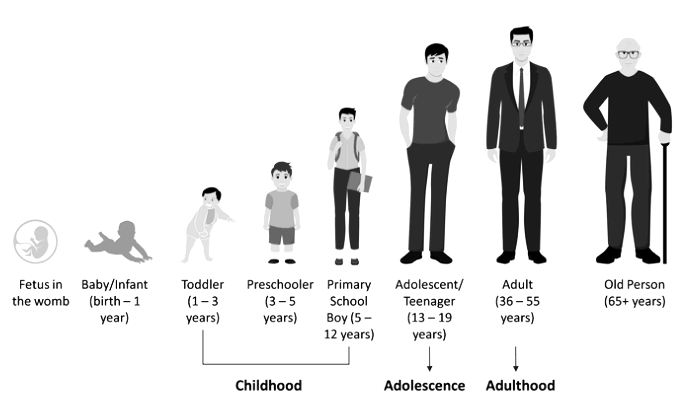
Life Stages. When talking about the concept of life, three distinct phases instantly come to mind: youth, adulthood, and old age. The life cycle of a human, however, is more intricate. We all feel, think, and experience things differently as we get older because we are all different.
LIFE STAGES
The ability to metabolize, grow, respond to stimuli, and reproduce is what sets living things apart from inorganic stuff.
1. Infancy

A person’s infancy starts the moment they are born and lasts until they are eighteen months old. This phase is predominantly defined by the infant’s bond with their caregiver and the tension between suspicion and trust.
2. Toddlerhood
The early childhood phase lasts from the age of eighteen months to 3years. Toddlers start learning independently at this age.
3. Preschool years
Preschool spans the years three through five. The main struggle at this age is between initiative and guilt. This is a sign of their attempts to learn on their own and develop into more fully realized human beings.
4. Early school years

Life Stages
Children are five to twelve years old during the early school years. They struggle with a sense of inadequacy and industry. A youngster at this age develops a growing sense of self-awareness. The process of achieving self-actualization entails emotional and social growth.
5. Adolescence
The most basic desire of any teenager is to fit in with their peers. An adolescent will investigate the various grownup roles that are available to them. It’s a time of intense self-discovery, and the path can be somewhat perplexing.
6. Young adulthood
Between the ages of eighteen and forty is known as young adulthood. At this point in their lives, most people are laying the financial and social foundations they will need for the remainder of their lives.
7. Middle adulthood

Life Stages
Erikson claimed that middle age begins at forty and concludes at sixty-five. The main struggle at this middle-age stage is between generativity and stagnation. Kindness
8. Late adulthood
In life, late adulthood is the eighth and last stage. Everybody over the age of 65 is considered to be in this stage. It’s common to contemplate and introspectively ponder deeply in late adulthood. Feeling content with your life is a sign that you are proud of it. theories of human development
Summary
From birth to old age, humans go through a number of predictable developmental stages.

Takeaways of Real-Life Events. Even if these tales aren’t unique, they have the power to transform lives if they are followed. They serve as a reminder that even small adjustments can have a big effect on our lives. There are times when we are totally taken aback, but most of the time we are able to understand why things happen to us. Some people have made the decision to share their horrific experiences with the world, which have left a lasting impression on them, because of the internet. The stories in this collection may sound like they are from a scary movie.
TAKEAWAYS OF REAL-LIFE EVENTS
We learn important lessons from real-life experiences and events that strengthen our social ties, emotional fortitude, and personal development. By thinking back on these experiences, we can better manage obstacles in the future, develop empathy for others, and discover the profound significance of everyday life.
Meaning of Real-Life Events and Takeaways;

Happening in the real world rather than in a story, a person’s genuine life. A woman once decided to take her little son, who had grown addicted to sugar, to Gandhiji for help. After a long and exhausting journey, she arrived at Gandhiji’s ashram and urged him to warn her kid to stop consuming sugar because it was bad for his health. Gandhiji declined to assist at the time and urged the woman to return the child to him after two weeks. The mother, perplexed and upset, took the boy home. Two weeks later, she returned. This time, Gandhiji addressed the youngster directly, saying, “You should stop eating sugar.” It is not healthy for your health. The youngster nodded and vowed he wouldn’t. The boy’s mother was puzzled. She inquired, “Why?”
Events and Takeaways;
1. Leaders must exemplify the behavior they expect from their subordinates.
2. A leader must live an exemplary life.
3. A leader should be honest.
A leader should not be self-centered.

Takeaways of Real-Life Events
4. Leaders are to be trustworthy.
5. Leaders are supposed to be honest.
6. A leader must have self-confidence.
7. A leader must be God-fearing. Physical Activity
Summary
We learn important lessons about human resilience, adaptability, and community from real-life occurrences. Significant events, such as natural disasters, medical emergencies, or individual victories, demonstrate that life may change quickly and that our reaction is crucial.

Torchlight Selection

Best Practices for Face Exfoliation

Chemical Face Exfoliation

A Step-by-Step Guide to Deleting Reels on Instagram

A Comprehensive Guide to Setting Up a YouTube Premiere