Career Guide
Important Things to include in your cover letter

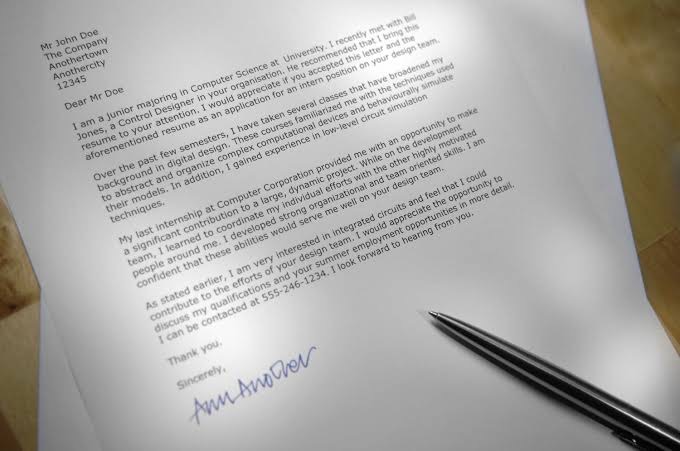
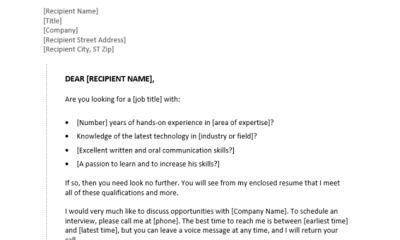
To improve your chances of getting the job, consider including the following key elements in your cover letter:
1. Personalized Greeting:
Address the cover letter to the hiring manager or recruiter by name, if possible, to add a personal touch and demonstrate your attention to detail. 
2. Introduction:
Begin with a brief introduction, stating the position you are applying for and how you learned about it. Express enthusiasm for the opportunity and briefly mention why you are interested in the role and the company.
3. Highlight Relevant Experience:
Elaborate on your relevant work experience, skills, and qualifications that make you a strong candidate for the position. Provide specific examples of how your past experiences align with the job requirements and demonstrate your ability to excel in the role.
4. Demonstrate Fit:
Explain why you are well-suited for the role and how your skills and experiences align with the company’s mission, values, and culture. Showcase your understanding of the company and its industry, and articulate how you can contribute to its success.
5. Showcase Achievements:
Highlight any notable achievements or successes from your previous roles that demonstrate your capabilities and contributions. Use metrics or tangible results whenever possible to quantify your accomplishments and make them more impactful.
6. Express Enthusiasm:
Convey your genuine interest in the position and the company, emphasizing why you are excited about the opportunity and how you can make a meaningful impact if selected.
7. Closing Statement:
Conclude your cover letter with a polite closing statement, expressing gratitude for the opportunity to apply and reiterating your enthusiasm for the position. Indicate your willingness to discuss your qualifications further in an interview.
8. Professional Tone and Formatting:
Maintain a professional tone throughout the cover letter, using clear and concise language. Ensure that the formatting is clean and easy to read, with proper spacing, margins, and font size.
9. Customization:
Tailor your cover letter to the specific job you’re applying for, highlighting the most relevant skills and experiences that match the job description and company needs. Avoid generic templates and make each cover letter unique to the position and company.
10. Proofreading:
Thoroughly proofread your cover letter for spelling, grammar, and punctuation errors. A well-written and error-free cover letter demonstrates your attention to detail and professionalism.
By including these key elements and crafting a compelling cover letter that showcases your qualifications and enthusiasm for the position, you can significantly improve your chances of making a positive impression on potential employers and securing the job you desire.




Selection Tips for Career. Aligning your decisions with your inner calm, natural strengths, and basic values is essential to finding the appropriate path in life, work, or personal development. Instead than looking for a single, ideal path, concentrate on introspection, taking tiny, steady steps, and developing the fortitude to overcome any obstacles that may arise.
SELECTION TIPS FOR CAREER
Advice for selecting a profession. One of the most important choices you will ever make is choosing the right career path. Your future, your personal growth, and your long-term happiness are all greatly impacted. But with so many career options, it could be challenging to make an informed decision and get your dream job.
Definition of Career;

Typically, the term “career” has two meanings or definitions. “Career” is frequently used to denote a trade, career, profession, or occupation.
How to Choose a Career;
1. Passions and interests Think about what makes you happy and what you naturally enjoy doing first. Consider the following inquiries:
2. Which subjects or pursuits are you most naturally drawn to?
3. What subjects do you like to learn about
4. What pursuits make you the happiest and most satisfied?

Selection Tips for Career
5. Capabilities and advantages Next, consider your abilities and advantages. Find out what you’re good at and what jobs and activities you find easy. You can use the following questions to get a better understanding of your strengths:
5. What kind of work or hobbies do you find pleasurable and effortless?
6. What specific topics do you have expertise in?
7. Principles and convictions While you explore professional options, values and beliefs should also be taken into consideration. It’s critical to consider your priorities and work toward a career that supports your values. What causes or issues are the ones that you care about the most?

Selection Tips for Career
8. Job market job sector analysis and prospects It is imperative that you research the market trends and demand in the industry of your choice. Think about the following before investing in a career that could not be in demand in the future:
9. Which industries are growing? which is deteriorating?
10. Stability of finances and earning capacity Finally, when deciding on a career, we cannot overlook the importance of financial security and earning potential. All of us want to be able to support ourselves financially while pursuing our passions.
Summary
Doing a self-evaluation of your abilities, values, and financial requirements is the first step toward choosing the correct career. To guaranty long-term contentment and stability, investigate possible sectors thru study, networking, and little experiments like volunteering or freelancing.

Babysitting guidelines. It is a fulfilling profession that calls for commitment, planning, and a proactive attitude to guarantee children’s safety and wellbeing. You may give exceptional care and establish a solid reputation as a dependable and trustworthy babysitter by adhering to these best practices and advice. Your care and attention can have a big impact on the lives of infants, toddlers, and older kids as well as the trust you develop with their families.
BABYSITTING GUIDELINES
Being a babysitter is a big job that calls for tolerance, dependability, and a sincere affection for kids. Knowing the best practices and crucial advice may help guarantee a fun and safe experience for both you and the kids you look after, regardless of your level of experience. Here’s a comprehensive guide to babysitting.
Getting Started;

1. Obtain Necessary Training:
– First Aid and CPR Certification: Enroll in a certified first aid and CPR course. These skills are crucial in handling emergencies and ensuring the safety of the children.
– Babysitting Classes: Many organizations, such as the Red Cross, offer babysitting courses that cover the basics of child care, safety, and emergency protocols.
2. Know the Family and the Children:
– Meet in Advance: Arrange a meeting with the family before your first babysitting job. This allows you to get to know the parents and children, understand their routines, and address any special needs or concerns.
– Learn About Preferences: Ask about the children’s favorite activities, allergies, bedtime routines, and any household rules.
Preparing for the Babysitting Job;

1. Create a Checklist:
– Emergency Contacts: Have a list of emergency contacts, including parents’ phone numbers, neighbors, and local emergency services.
– Medical Information: Know any medical conditions, allergies, and the location of first aid supplies.
– House Rules: Be aware of any specific household rules regarding screen time, snacks, and bedtime.
2. Bring a Babysitting Kit:
– Entertainment: Pack books, games, and activities that are appropriate for the children’s ages.
– Essentials: Include basic supplies like wipes, tissues, a flashlight, and any personal items you may need.
During the Babysitting Job

1. Keep Children Engaged:
– Interactive Activities: Engage the children in activities such as reading, arts and crafts, and outdoor play. This not only keeps them entertained but also helps build a positive relationship.
– Limit Screen Time: Encourage creative play over screen time. Use electronics sparingly and according to the parents’ guidelines.
2. Ensure Safety at All Times:
– Supervision: Always keep a close eye on the children, especially during playtime and meals. Avoid distractions such as phone calls or social media.
3. Follow the Routine:

Babysitting guidelines
– Meals and Snacks: Provide healthy meals and snacks according to the parents’ instructions. Be mindful of any allergies or dietary restrictions.
Handling Emergencies;
1. Stay Calm and Collected:
– Assess the Situation: Quickly evaluate the situation to determine the severity of the emergency.
2. Know When to Seek Help:
– Non-Emergency Issues: For non-emergency issues, contact the parents or designated emergency contact for advice and assistance.
– Behavioral Problems: If a child exhibits behavioral problems, stay calm and use positive reinforcement and redirection techniques. Avoid physical punishment or harsh language.
Building a Good Reputation;

Babysitting guidelines
1. Communicate Effectively:
– Feedback: Provide detailed feedback to the parents about the day’s activities, meals, and any incidents. This helps build trust and ensures transparency.
2. Be Reliable and Punctual:
– Arrive on Time: Punctuality is crucial in building a positive relationship with the family.
Summary
The main tenets of babysitting standards are active monitoring, safety, and open communication. Securing emergency contacts, adhering to the family’s strict house rules, and never leaving kids alone are important duties.

Requirements to become a Nurse. A nurse is a certified healthcare practitioner committed to promoting health, avoiding disease, and providing care for the ill, injured, or frail. They serve as the cornerstone of the medical system, providing evidence-based treatment and comprehensive care in hospitals, clinics, schools, and private homes either on their own or in conjunction with doctors and surgeons.
.REQUIREMENTS TO BECOME A NURSE
Starting a nursing career is an honorable and fulfilling path, but it has prerequisites to guarantee skill and higg quality patient care. This in depth blog post will walk you through all of the prerequisites for becoming a nurse, including training, certification, and personal qualities that are essential for success in this fast-paced field of healthcare.
Educational Requirements;

1. High school Diploma or Equivalent: Getting a high school diploma or its equivalent, such as a general Educational Development (GED) certificate, is the first requirement for becoming a nurse. It can help to have solid background in biology, chemistry and mathematics.
2. Prerequisite College Courses: Completing prerequisite course in anatomy, physiology, microbiology, and psychology is mandatory for many nursing programs. The fundamental knowledge required for nursing education is covered in these courses.
Nursing Degree Programs:

To become a nurse, one can follow one of several different educational pathways, each with specific requirements:
Nursing diploma: A few hopital provide two to three year nursing diploma programs. These days, though this path is less typical.
Bachelor of Science in Nursing (BSN): University based BSN programs normally last four years. BSN holders are more in demand in the nursing field and frequently have wider job options.
Clinical Experience And Training;

Requirements to become a Nurse
Clinical Rotations: As part of the nursing curriculum, students participate in practical clinical rotations that enable them to apply their theoretical knowledge in actual healthcare settings. These rotations include a wide range of disciplines, including pediatrics, obstetrics, and medical-surgical nursing.
Simulation Labs: A lot of nursing programs include simulation labs where students can hone their abilities in a safe setting. This offers a secure environment for honing clinical skills prior to working with real patients.
Professional Attributes And Skills;

Requirements to become a Nurse
Effective Communication: Being able to communicate well is essential for nurses. To guarantee coordinated and thorough care, nurses must communicate openly and effectively with patients, families, and other medical professionals.
Empathy & Compassion: As a compassionate vocation, nursing requires the capacity to sympathize with patients during difficult situations. In addition to fostering trust, compassion improves patient outcomes.
Critical Thinking: In order to evaluate situations, make wise judgments, and efficiently prioritize treatment, nurses need to be very proficient in critical thinking. Rapid thinking is frequently needed in fast-paced healthcare settings.
Summary
A state or regional practice license, a recognized nursing degree (such as an ADN or BSN), and passing the necessary national licensing exam (such as the NCLEX or Nursing and Midwifery Council of Nigeria examinations) are normally prerequisites for becoming a nurse.

Earth Frozen Frontiers

Natural Majestic Wonders

Daily Life Hacks

A Step-by-Step Guide to Deleting Reels on Instagram

A Comprehensive Guide to Setting Up a YouTube Premiere