Health
Infection vs Disease: What’s the Difference?

Many people use the words infection and disease as if they mean the same thing. While they are closely related, they’re not exactly the same. Understanding the difference helps you better understand how illnesses work and how your body responds to them.
What is an Infection?
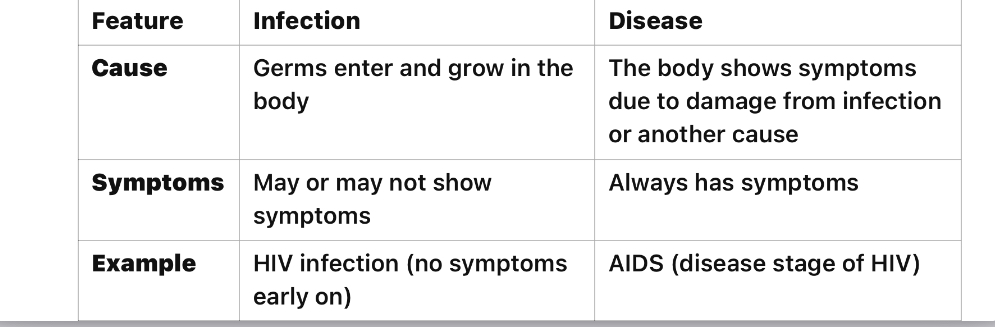
An infection happens when harmful microorganisms—like bacteria, viruses, fungi, or parasites—enter your body and begin to grow or multiply. The infection might not cause any symptoms at first. In fact, your immune system might fight it off before you even feel sick.
📌 Example: If you inhale the flu virus, the virus starts to grow in your body. That’s an infection—even if you don’t feel sick yet.
What is a Disease?
A disease occurs when an infection (or another health issue) causes damage to your body and produces symptoms. This is when you actually feel sick.
📌 Example: When the flu virus makes you feel feverish, tired, and achy, you now have the disease called influenza.
Key Differences

Final Thoughts
– All diseases caused by microbes begin with an infection, but not all infections lead to disease.
– You can carry an infection and not feel sick—but still spread it to others.
– Proper hygiene, vaccines, and early treatment help stop infections before they turn into diseases.
Pingback: Pain during sex
Pingback: Smooth Tongue: Causes, Symptoms, and What It Means - SimplExplainer