WRITING
Key Elements Cover Letters


Key elements for cover letters. In a cover letter, you should include your contact information, a professional greeting, an opening paragraph that introduces you and the job, a middle section that provides specific examples of your relevant experience and skills, a closing paragraph that expresses your enthusiasm and includes a call to action, a professional closing, and your signature. Along with highlighting your special skills, a compelling cover letter should also explain why you are a perfect fit for the position and the corporate culture.
KEY ELEMENTS FOR COVER LETTERS
To improve your chances of getting the job, consider including the following key elements in your cover letter:
1. Personalized Greeting
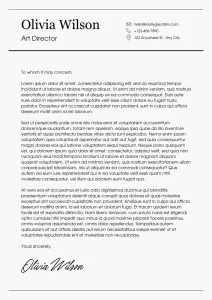
Address the cover letter to the hiring manager or recruiter by name, if possible, to add a personal touch and demonstrate your attention to detail.
2. Introduction
Begin with a brief introduction, stating the position you are applying for and how you learned about it. Express enthusiasm for the opportunity and briefly mention why you are interested in the role and the company.
3. Highlight Relevant Experience
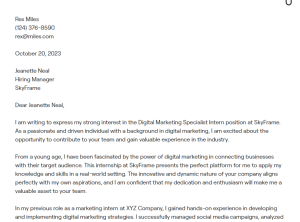
Elaborate on your relevant work experience, skills, and qualifications that make you a strong candidate for the position. Provide specific examples of how your past experiences align with the job requirements and demonstrate your ability to excel in the role.
4. Demonstrate Fit
Explain why you are well-suited for the role and how your skills and experiences align with the company’s mission, values, and culture. Showcase your understanding of the company and its industry, and articulate how you can contribute to its success.
5. Showcase Achievements
KEY ELEMENTS FOR COVER LETTERS
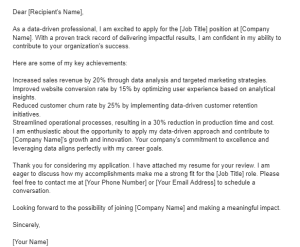
Highlight any notable achievements or successes from your previous roles that demonstrate your capabilities and contributions. Use metrics or tangible results whenever possible to quantify your accomplishments and make them more impactful.
6. Express Enthusiasm
Convey your genuine interest in the position and the company, emphasizing why you are excited about the opportunity and how you can make a meaningful impact if selected.
7. Closing Statement
Conclude your cover letter with a polite closing statement, expressing gratitude for the opportunity to apply and reiterating your enthusiasm for the position. Indicate your willingness to discuss your qualifications further in an interview.
8. Professional Tone and Formatting
KEY ELEMENTS FOR COVER LETTERS
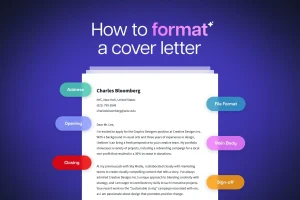
Maintain a professional tone throughout the cover letter, using clear and concise language. Ensure that the formatting is clean and easy to read, with proper spacing, margins, and font size.
9. Customization
Tailor your cover letter to the specific job you’re applying for, highlighting the most relevant skills and experiences that match the job description and company needs. Avoid generic templates and make each cover letter unique to the position and company.
10. Proofreading

KEY ELEMENTS FOR COVER LETTERS
Thoroughly proofread your cover letter for spelling, grammar, and punctuation errors. A well-written and error-free cover letter demonstrates your attention to detail and professionalism.
Summary
By including these key elements and crafting a compelling cover letter that showcases your qualifications and enthusiasm for the position, you can significantly improve your chances of making a positive impression on potential employers and securing the job you desire.
Good Writing Tips. Drafting and editing should be kept apart if you want to enhance your work right away. To get your ideas down on paper, swiftly write your initial draft without self-correction. After that, read your work aloud to identify any problematic wording and tighten your sentences by eliminating superfluous words.
GOOD WRITING TIPS
Tips for good writing. Whether you’re writing in your private journal or for your website, the suggestions below can help you enhance your ability to create content and elevate your writing from excellent to exceptional.
What is Good Writing?

Good writing is well organized and flows smoothly, having a consistent style or voice from start to finish. Good writing is also free of typos and faults in spelling, punctuation, and grammar.
Steps for Good Writing;
1. Write every day. Writing daily will help you improve your skills and sharpen your ability to construct grammatically accurate and appealing sentences
2. Use Active Voice: It’s more engaging than passive voice. Consider how “My mother baked the cake” is superior to “The cake was baked by my mother.”
3. Be a voracious reader Read widely to expand your vocabulary and improve your understanding of diverse writing styles. Explore various genres and authors.
4. Be clear and concise. For efficient communication, use clear and precise language. Avoid using unnecessary or flowery jargon that obscures your meaning.

5. Vary sentence structure. Change the structure of your sentences. This will make your writing more engaging for the reader.
6. Avoid overused words. Avoid using clichés and overused phrases. Strive to come up with innovative ways to express what you’re saying.
7. Be descriptive. Use descriptive language to assist your reader in envisioning your words. This will make what you wrote more memorable for the reader.
8. Use similes. Use similes and metaphors in your writing whenever it makes sense. This makes your writing more relatable to the reader.

Good Writing Tips
9. Use strong action words. Try to utilize powerful verbs rather than weak verbs. For example, instead of “walk,” use “saunter.” Instead of “get,” use “obtain.”
10. Avoid jargon. employing terms that are only familiar to a small set of readers.
Summary
Effective writing conveys a clear message to a target audience. It is error-free and use economical, dynamic language. Strong prose ultimately eliminates superfluous words to guarantee that the reader comprehends your precise meaning.

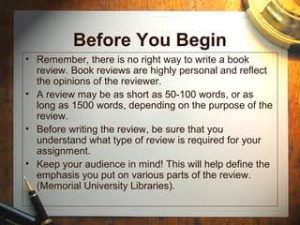
How to Write Book Review. An argument is made in a review. The fact that a review is a commentary rather than just a summary is its most crucial component. It enables you to engage in conversation and debate with the author of the piece as well as with other viewers. You can express agreement or disagreement and point out areas in which you think the work’s organization, expertise, or conclusions are excellent or lacking. With a thesis statement, supporting body paragraphs, and a conclusion, your opinion on the work in question should be expressed clearly. This statement will likely mirror other forms of academic writing.
HOW TO WRITE BOOK REVIEW
This handout will concentrate on book reviews; for a similar assignment, see our handout on literature reviews. A review is a critical assessment of a text, event, object, or phenomenon. Reviews can take into account books, articles, entire genres or fields of literature, architecture, art, fashion, restaurants, policies, exhibitions, performances, and many other forms.
What’s The Definition?
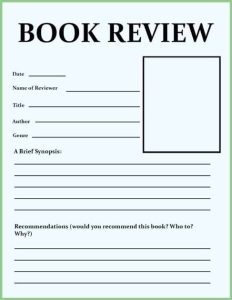
A book review is a critical assessment of a literature. A synopsis of the book’s key ideas and the reviewer’s thoughts.
Tips:
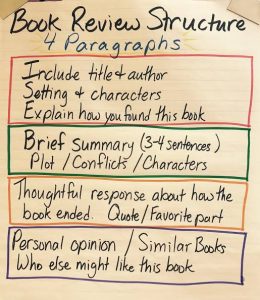
1.Introduce the book in a few phrases by summarizing its plot and mentioning if it is a part of a series or if reading previous novels in the series is necessary in order to enjoy this one.
2.Also, Talk about what you found most appealing about the book. Pay attention to your feelings and ideas regarding the narrative and the manner it was presented.
3.Meanwhile, Describe anything about the book that you didn’t enjoy. Explain why you believe it didn’t work out for you. To illustrate, would you have preferred a different conclusion to the one that left you feeling frustrated?
More Tips;
How to Write Book Review
4.However, to Condense your evaluation, Provide a brief summary of your feelings on the book and the kind of reader you would suggest it for. For instance, younger and older readers, as well as those who enjoy comedy, mystery, and romantic drama. Would you like to compare it to any particular novels or series?
5.If you would like, you may rate the book with a score of five or 10.
How to Write Book Review
6.What kind of data does the writer present to support their claims? Does the evidence hold up? If not, why not? Is the author’s argument sufficiently supported? literary elements
Summary
composing book reviews. By serving as guiding lights, book reviews help readers navigate the wide variety of stories present in the field of literature. But it’s not enough to simply summarize a book; you also need to make a connection between your thoughts and the reader. Whether you’re a writer, critic, or book lover, writing a book review can help the literary community as well as enhance your reading experience.

Earth Frozen Frontiers

Natural Majestic Wonders

Daily Life Hacks

A Step-by-Step Guide to Deleting Reels on Instagram

A Comprehensive Guide to Setting Up a YouTube Premiere