WRITING
Writing a Professional CV

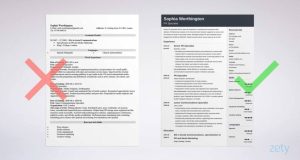
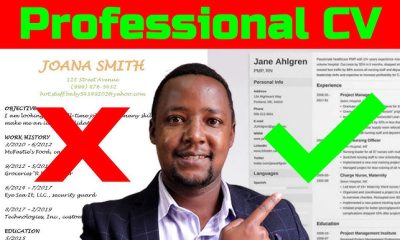
Writing a professional CV. Many people struggle to write a résumé that will get them an interview. Human resource managers and recruiters receive a large volume of resumes from job applicants.How can one that stands out be drafted? The most crucial piece of advice for creating a CV is to emphasize your selling point and stand out. It’s crucial to keep in mind that there isn’t just one right technique to construct a CV. However, one thing to remember is that your resume should highlight your qualifications for the position you are looking for.This will assist the recruiter or HR manager in determining whether to set up an interview with you.
WRITING A PROFESSIONAL CV
You might need to write a CV for prospective employers if you want to work in academia or research. You can highlight your academic achievements and educational background on a CV to demonstrate your suitability for the position. Knowing how to style a resume will enable you to produce an engaging document that appeals to the hiring committee.
What is a CV?
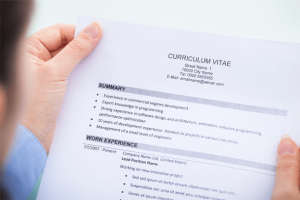
Let’s start with your CV. This is usually the first document any hiring manager will see before you will be called for an interview and when applying online, your first priority is that your CV gets you that interview.
A curriculum vitae popularly known as CV is brief synopsis or account of your educational, professional experience, skills and more typically used for job applications.
How to write a good CV;
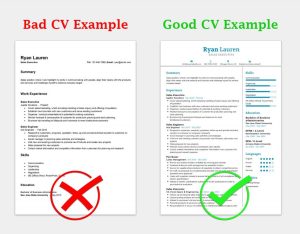
Verify that your resume is appropriate for the role and the employer by looking at the job advertisement, the company website, and the local newspaper.
Use active verbs whenever possible. Using words like “made,” “analyzed,” and “devised,” for example, can help you come across as proactive.
Your resume should be free of spelling and grammar mistakes. Look it over with a spell checker and another pair of eyes..
The CV Writing Format;
1. Personal Details;
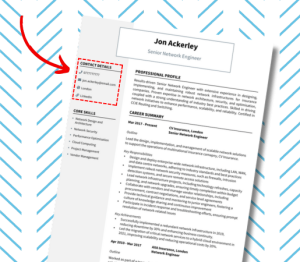
WRITING A PROFESSIONAL CV
Your name, address, phone number, email, and age (if applicable) are all included in this area. Place these in a prominent spot with readable fonts so the recruiter or HR manager can see them easily. Make sure the data is accurate and up to date.
2. Education;
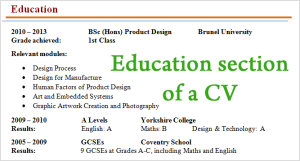
WRITING A PROFESSIONAL CV
Always start with the most recent educational qualification. Professional certification that is relevant to the job should also be added to this section.
E.g. University of Abuja– 2023
Qualification: B.A. Banking and finace.
- Excellent diplomatic skills and versed in three foreign languages – French, Portuguese and Chinese
- Graduated with a second class upper grade of 3.55.
3. Work Experience;
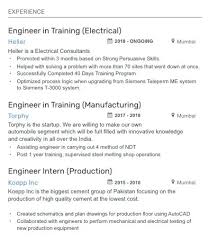
WRITING A PROFESSIONAL CV
Start with your most recent job role. For each job role, it’s important to state your role and achievements. An example would be:
Infinty Trust Mortage Bank 2016 – (Present)
Job Title: Marketing Executive
Achievement:
- Individually increased the monthly revenue from N10 million to N20 million in 8 months.
- Worked with the marketing team to spread our products from Lagos to all the 6 states of the Western Nigeria within a year.
- Won the ‘Best Marketer of the Year” award consecutively for November and December 2018.
Summary
Your resume is your first opportunity to advance in your career. A strong resume could lead to an interview.
A resume is typically required when applying for a job or when presenting your resume to a potential employer.



Good Writing Tips. Drafting and editing should be kept apart if you want to enhance your work right away. To get your ideas down on paper, swiftly write your initial draft without self-correction. After that, read your work aloud to identify any problematic wording and tighten your sentences by eliminating superfluous words.
GOOD WRITING TIPS
Tips for good writing. Whether you’re writing in your private journal or for your website, the suggestions below can help you enhance your ability to create content and elevate your writing from excellent to exceptional.
What is Good Writing?

Good writing is well organized and flows smoothly, having a consistent style or voice from start to finish. Good writing is also free of typos and faults in spelling, punctuation, and grammar.
Steps for Good Writing;
1. Write every day. Writing daily will help you improve your skills and sharpen your ability to construct grammatically accurate and appealing sentences
2. Use Active Voice: It’s more engaging than passive voice. Consider how “My mother baked the cake” is superior to “The cake was baked by my mother.”
3. Be a voracious reader Read widely to expand your vocabulary and improve your understanding of diverse writing styles. Explore various genres and authors.
4. Be clear and concise. For efficient communication, use clear and precise language. Avoid using unnecessary or flowery jargon that obscures your meaning.

5. Vary sentence structure. Change the structure of your sentences. This will make your writing more engaging for the reader.
6. Avoid overused words. Avoid using clichés and overused phrases. Strive to come up with innovative ways to express what you’re saying.
7. Be descriptive. Use descriptive language to assist your reader in envisioning your words. This will make what you wrote more memorable for the reader.
8. Use similes. Use similes and metaphors in your writing whenever it makes sense. This makes your writing more relatable to the reader.

Good Writing Tips
9. Use strong action words. Try to utilize powerful verbs rather than weak verbs. For example, instead of “walk,” use “saunter.” Instead of “get,” use “obtain.”
10. Avoid jargon. employing terms that are only familiar to a small set of readers.
Summary
Effective writing conveys a clear message to a target audience. It is error-free and use economical, dynamic language. Strong prose ultimately eliminates superfluous words to guarantee that the reader comprehends your precise meaning.

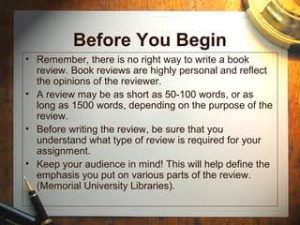
How to Write Book Review. An argument is made in a review. The fact that a review is a commentary rather than just a summary is its most crucial component. It enables you to engage in conversation and debate with the author of the piece as well as with other viewers. You can express agreement or disagreement and point out areas in which you think the work’s organization, expertise, or conclusions are excellent or lacking. With a thesis statement, supporting body paragraphs, and a conclusion, your opinion on the work in question should be expressed clearly. This statement will likely mirror other forms of academic writing.
HOW TO WRITE BOOK REVIEW
This handout will concentrate on book reviews; for a similar assignment, see our handout on literature reviews. A review is a critical assessment of a text, event, object, or phenomenon. Reviews can take into account books, articles, entire genres or fields of literature, architecture, art, fashion, restaurants, policies, exhibitions, performances, and many other forms.
What’s The Definition?
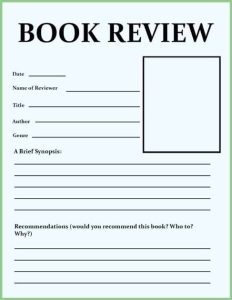
A book review is a critical assessment of a literature. A synopsis of the book’s key ideas and the reviewer’s thoughts.
Tips:
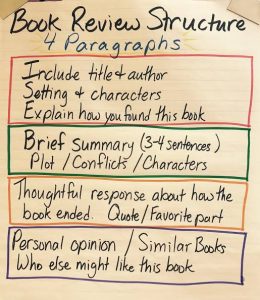
1.Introduce the book in a few phrases by summarizing its plot and mentioning if it is a part of a series or if reading previous novels in the series is necessary in order to enjoy this one.
2.Also, Talk about what you found most appealing about the book. Pay attention to your feelings and ideas regarding the narrative and the manner it was presented.
3.Meanwhile, Describe anything about the book that you didn’t enjoy. Explain why you believe it didn’t work out for you. To illustrate, would you have preferred a different conclusion to the one that left you feeling frustrated?
More Tips;
How to Write Book Review
4.However, to Condense your evaluation, Provide a brief summary of your feelings on the book and the kind of reader you would suggest it for. For instance, younger and older readers, as well as those who enjoy comedy, mystery, and romantic drama. Would you like to compare it to any particular novels or series?
5.If you would like, you may rate the book with a score of five or 10.
How to Write Book Review
6.What kind of data does the writer present to support their claims? Does the evidence hold up? If not, why not? Is the author’s argument sufficiently supported? literary elements
Summary
composing book reviews. By serving as guiding lights, book reviews help readers navigate the wide variety of stories present in the field of literature. But it’s not enough to simply summarize a book; you also need to make a connection between your thoughts and the reader. Whether you’re a writer, critic, or book lover, writing a book review can help the literary community as well as enhance your reading experience.

Torchlight Selection

Best Practices for Face Exfoliation

Chemical Face Exfoliation

A Step-by-Step Guide to Deleting Reels on Instagram

A Comprehensive Guide to Setting Up a YouTube Premiere