Health
Nasal and Paranasal Cancer


NASAL AND PARANASAL CANCER
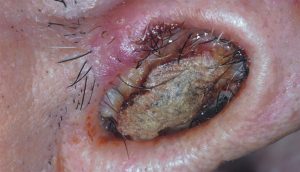
Nasal and paranasal cancer. Both paranasal and nasal tumors start in the paranasal sinuses or nasal cavity. Cancerous or noncancerous tumors are also possible. Surgery to remove the tumor is frequently part of the treatment, albeit it depends on the circumstances. Chemotherapy and radiation therapy are further therapies. Inside your nasal cavity or paranasal sinuses, an abnormal development is called a nose tumor. Both benign (noncancerous) and malignant (cancerous) tumors are possible.
NASAL AND PARANASAL CANCER
Cancers of the nasal cavity and sinuses are conditions where cells in and around the nose develop and multiply uncontrollably to create a tumor. Headaches and nasal congestion are possible symptoms. The tumor might be found by your doctor when treating a sinus infection.
Stages

Stage I: Your nasal cavity or paranasal sinus still contains the tumor.
Stage II: The tumor has extended into the paranasal sinus or other areas of your nasal cavity.
Stage III: Your nasal bones or eye socket have been invaded by the tumor. It might have also reached a lymph node in the area.
Stage IV: The tumor has progressed to more distant locations inside the surrounding structures, including your brain and other areas of your skull and neck. Additionally, it can have reached far-off parts of your body, including your lymph nodes.
Signs


sinus blockage or persistent nasal congestion, especially on one side.
Anosmia is the loss of smell.
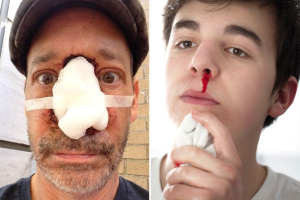
Nosebleeds.
Headaches.
leak after the nose.
Your nose is dripping pus.
eyes that are watery.
Your voice changes.
discomfort in the area of your forehead, cheeks, eyes, ears, or nose.
a growth on the roof of your mouth, nose, face, or neck.
Causes
Nose cancers arise from abnormalities or damage to the genes that regulate cell growth. Scientists are still unsure of the precise cause of these gene alterations.
Nonetheless, a number of risk factors can raise your chance of getting nasal tumors, such as exposure to:
both primary and secondary tobacco smoke.
Dust from leather or wood.
smells of glue, radium, solvents, formaldehyde, and other chemicals and substances.
Treatment

Surgery
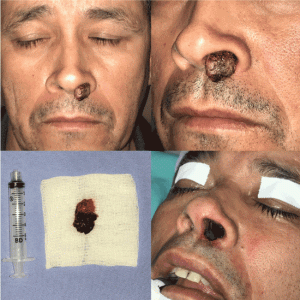
Removing as much of the nose tumor as feasible is the primary objective of surgery. A surgeon will also remove any surrounding lymph nodes if the cancer has spread there. Oral surgeons, neurosurgeons, and ENTs (ear, nose, and throat specialists) may be on your medical team, depending on your circumstances.
Radiation treatment
Radiation therapy may be suggested by your physician either alone or in conjunction with surgery. Radiation therapy may be used prior to surgery in order to reduce the size of the tumor. After surgery, you may also receive radiation therapy to eradicate any cancer cells that may still be present. Radiation therapy can be administered without surgery to those who are unable or unwilling to have surgery.
Chemotherapy
Drugs used in chemotherapy destroy cancer cells. It can be administered intravenously (into a vein) or orally (as a pill). Chemotherapy is less frequently used to treat nose tumors than radiation therapy or surgery. However, your doctor might occasionally suggest chemotherapy or chemoradiation, which combines chemotherapy and radiation treatment.
Prevention
It is impossible to completely avoid nasal tumors. However, you can lower your risk by abstaining from risk factors including smoking and breathing in dangerous pollutants. Make sure you take the right precautions and use the right protective gear if you work in an area where there are dangerous chemicals or substances.
Summary
Rare, aberrant growths called nose tumors start inside the paranasal sinus or nasal cavity. These tumors could be malignant or noncancerous. It can be frightening to learn that you have a tumor. Discuss treatment choices and available services with your healthcare professional if you or a loved one has been diagnosed with cancer.