Eyes health
Reviewing Long Sightedness



Reviewing long sightedness. Medically referred to as hyperopia (or hypermetropia), long-sightedness is a frequent visual disease in which items in close proximity look blurry, whereas those farther away may remain distinct. Instead of being a sickness, it is an eye focusing problem that is easily remedied. The eye’s inherent focusing ability may compensate in mild cases, particularly in younger people, leading to few or no symptoms. Presbyopia, or more severe or age-related long-sightedness, can, however, result in a number of symptoms, especially after close work:
REVIEWING LONG SIGHTEDNESS
Genetics, the size and structure of the eyeball, age-related changes, developmental variables, and anomalies in the shape of the cornea are some of the factors that contribute to long-sightedness, or hyperopia. Effective management and treatment of hyperopia can be facilitated by an understanding of these reasons. To provide the best possible vision health, early detection and correction of this problem depend on routine eye exams. Here are possible reasons for the development of long-sightedness:
1. Genetic Factors;


REVIEWING LONG SIGHTEDNESS
Description:
Genetics play a significant role in the development of hyperopia. If one or both parents are longsighted, their children are more likely to inherit the condition.
Evidence:
Studies indicate that hyperopia tends to run in families, suggesting a hereditary component. Specific genes associated with eye growth and development may influence the likelihood of developing hyperopia .
2. Eyeball Shape and Size;

REVIEWING LONG SIGHTEDNESS
Description:
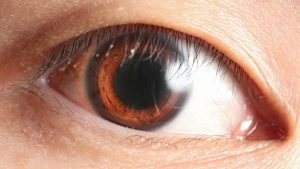
Hyperopia occurs when the eyeball is too short from front to back, or the cornea has too little curvature. This causes light entering the eye to focus behind the retina instead of directly on it.
Evidence:
The shape and size of the eyeball are critical in determining how light is refracted. A shorter axial length of the eye can lead to hyperopia because it affects the eye’s ability to focus light correctly .
3. Age-Related Changes
Description:
As people age, the lens of the eye can become less flexible, leading to presbyopia, a form of age-related hyperopia.
Evidence:
Presbyopia typically starts to affect individuals in their 40s and progresses with age. The loss of flexibility in the lens makes it harder to focus on close objects, contributing to farsightedness .
4. Developmental Factors;
Description:
Hyperopia can be present at birth due to developmental anomalies in the eye. Many children are born with slight hyperopia, which often corrects itself as the eye grows.
Evidence:
Infants and young children commonly have mild hyperopia that usually diminishes as they grow. However, if the eye does not develop properly, the condition can persist into adulthood .
5. Corneal Shape Abnormalities;


REVIEWING LONG SIGHTEDNESS
Description:
Abnormalities in the shape of the cornea can also cause hyperopia. If the cornea is flatter than normal, it can lead to improper focusing of light.
Evidence:
A flatter cornea has less refractive power, causing light rays to converge behind the retina. This corneal abnormality can be due to genetic factors or developmental issues .
Summary
Hyperopia, often known as long-sightedness, is a common visual impairment in which objects farther away appear sharper than those closer. This disorder is brought on by improper light refraction in the eye, which causes images to focus behind the retina.