Health
Vascular Dementia

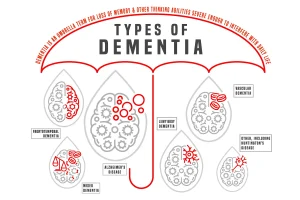
VASCULAR DEMENTIA
Vascular dementia. This is a general term used to describe issues with memory, judgment, planning, reasoning, and other cognitive functions brought on by brain damage from reduced blood flow to the brain. Although vascular dementia is not always the result of strokes, it can occur after a stroke blocks an artery in the brain.
VASCULAR DEMENTIA
Vascuar dementia is a prevalent type of dementia that arises when there’s diminished blood supply to parts of your brain. The ensuing lack of oxygen and nutrients destroys brain cells. As a result, mental (cognitive) abilities deteriorate to the point where they become incapacitating. Stroke is one of several conditions that can cause a lack of blood flow.
Signs
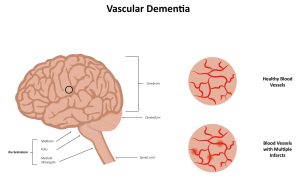
Vascular dementia symptoms might differ greatly. The level of the damage and the damaged area or areas of your brain determine them. Symptoms could consist of:
loss of memory.
issues with walking and/or balance.
Aphasia is the inability to understand or use language.
difficulty focusing, reasoning, organizing, planning, following directions, and finishing work.
mood swings, such as anger and despair.
Causes
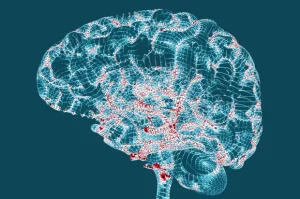
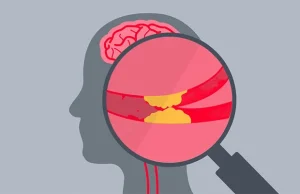
Vascular dementia is brought on by illnesses that harm the brain’s blood arteries or either completely or partially stop blood flow. A reduction in blood flow means that certain areas of your brain aren’t getting enough oxygen and nutrients. In the absence of these, brain cells start to die.
The brain’s capillaries or many blood vessels may narrow or get blocked, which are common causes of vascular dementia.
bleeding from a blood vessel rupture in your brain, such as a hemorrhagic stroke.
Your risk of developing vascular dementia and these blood vessel problems is increased by several variables.
Treatment

Another drug licensed for Alzheimer’s disease that may help with vascular dementia is memantine.
Other drugs may be recommended by your doctor to assist control stroke risk factors. These consist of drugs for diabetes, high blood pressure, and high cholesterol.
Rehabilitation and advance care planning To help manage the symptoms of vascular dementia, you may work with specialists. For instance, a speech-language pathologist can help you learn new ways to communicate, speak, and swallow, while physical and occupational therapists can help you improve your physical abilities and find new ways to perform daily tasks.
Prevention
Certain risk factors for the disorder, such as your age or genetic makeup, are unchangeable. However, you can try to prevent the disorder by managing a lot of other risk factors, primarily those that harm your blood vessels. You can take the following actions:
maintaining safe ranges for your blood pressure, cholesterol, and blood sugar (glucose). To accomplish this, you will need to collaborate closely with your healthcare practitioner.
the achievement and maintenance of a healthy weight.
engaging in regular exercise. On most days, try to aim for 30 minutes.
consuming foods that are good for the heart, such as those found in the DASH or Mediterranean diets.
Summary
You are not alone if you or a loved one suffers from vascular dementia. Nearly everyone has experienced dementia in one or more of its various manifestations. Being aware of the diagnosis allows you and your loved ones to make plans and get ready for the future. You can find out what kind of care you might require and where you want to get it. Your whole medical staff is prepared to assist you.


Benefits of yoga and mind healing. Maintaining mental health requires finding moments of peace and quiet among the daily bustle. The ancient Indian practice of yoga has gained popularity for its capacity to support both physical and mental well-being. This attentive approach helps build a bridge between the physical and mental realms, which leads to a calmer and clearer state of mind by enabling people to evaluate their thoughts without passing judgment. Regular yoga practice is associated with greater emotional resilience. When physical asanas, breathwork, and meditation are combined, people are better prepared to handle life’s challenges with poise and awareness.
BENEFITS OF YOGA AND MIND HEALING
By calming the nervous system, increasing mood-enhancing neurotransmitters (serotonin, dopamine), and enhancing emotional regulation through mindful movement, deep breathing, and meditation, yoga and mind healing work together to reduce stress, anxiety, and depression. This improves focus, resilience, and general cognitive function by strengthening brain regions related to memory and attention. This mind-body synergy is a potent tool for holistic well-being and trauma rehabilitation since it also improves physical health, including sleep, energy, strength, and flexibility.

BENEFITS OF YOGA AND MIND HEALING
A yoga therapist can collaborate with patients to create customized regimens that complement their surgical and medicinal treatments. In this sense, yoga can aid in the healing process and enable the sufferer to handle their symptoms with less distress and greater awareness.
Reducing stress is one of yoga’s main advantages for mental wellness. Yoga’s controlled breathing exercises, including pranayama, stimulate the parasympathetic nervous system, which promotes relaxation and lessens the negative consequences of long-term stress.
1. increases flexibility, strength, and balance.
2. Aids in the treatment of back discomfort.
3. Arthritis symptoms may be lessened.
4, Heart health benefits from yoga and the mind
5. healing.

BENEFITS OF YOGA AND MIND HEALING
6. Calms you down to promote better sleep.
7. It gives you more energy and happier vibes.
8. You can control stress by practicing yoga and mind healing.

BENEFITS OF YOGA AND MIND HEALING
9. establishes a connection with a helpful community
10. Yoga and mental healing encourage improved self-care the mental clarity only om-ing can bring journal Frontiers in Immunology, deep breathing and meditation Scientific Studies on the Health Benefits of Yoga
Summary
By combining mindful movement (asanas), controlled breathing (pranayama), and meditation to calm the nervous system, lower stress hormones (cortisol), increase mood-enhancing neurotransmitters (serotonin, GABA), and improve self-awareness, yoga creates a potent holistic approach for mental clarity, emotional resilience, and general well-being.


Health relevance of fruits salad. It is a meal made with a variety of fruits, occasionally served with a liquid, such as a syrup or juice. Fruit salad can be served as a side salad or as an appetizer in a variety of ways. Sometimes a fruit salad is referred to as a fruit cup (when served in a small container) or a fruit cocktail (which frequently refers to a canned product). Fruit salads come in a variety of forms, from simple (no marshmallows, nuts, or dressing) to moderately sweet (Waldorf salad) to sweet (ambrosia salad). Jello salad is another fruit-based “salad” that comes in a variety of forms. In the United States, a fruit cocktail is characterized as a well-distributed blend of small diced bits of grapes, peaches, pears, and pineapple.
HEALTH RELEVANCE OF FRUITS SALAD
Fruit salad is very important for health because it provides vital vitamins, minerals, fiber, and antioxidants that improve immunity, digestion, hydration, and heart health. It also provides a naturally sweet, low-calorie substitute for processed sugars, which helps control weight and lower the risk of chronic illness.
The Background;

Also, historians claim that fruit salads were a huge favorite of the ancient Greeks and Romans. Over time, salads have become more and more intricate, and today there are many different kinds of fruit salads. Compote is one of the oldest fruit salads, having originated in England in the 17th century.
Health benefits;
Meanwhile, health benefits of eating Fruit salad. it provides all the healthy components found in each fruit because it is made up of a variety of fruits. Because of this, fruit salads are healthier than those made with just one fruit. Fruit salad has several health advantages, including;
1. Encourages weight loss;

HEALTH RELEVANCE OF FRUITS SALAD
Although, fruits have no calories and are mostly made of water. Thus, this makes it a fantastic choice for those who wish to reduce weight.
2. Elevates fiber level;
Also, the majority of fruits are high in fiber, which is an essential component of our diet.
3. Increase the level of folic acid;

HEALTH RELEVANCE OF FRUITS SALAD
However, we need folic acids for healthy red blood cells.
4. Promotes a level of energy;
Meanwhile, people who exercise tend to consume more fruits because most of them have vitamins that can increase energy levels.
5. Supplies vitamins and minerals;

HEALTH RELEVANCE OF FRUITS SALAD
However, almost all of the vitamins and minerals your body needs daily may be found in a standard fruit salad.
Summary
This is advantageous to all of us and has grown in popularity. The tasty fruit salad would be anyone’s first choice for a healthy snack. There are many different types of this, and the sweetness varies based on the syrups and toppings that are added. Fruit salads are enhanced by the use of seasonal fruits.


Disease and ailments management. Diseases are detrimental departures from a healthy condition that impact an organism’s structure or function. They can be brought on by internal problems (such heredity or autoimmune disorders) or external sources (like germs: viruses, bacteria, fungus). They are broadly categorized as infectious (contagious) or non-infectious (chronic, genetic), and they exhibit particular signs and symptoms that range from mild (common cold) to severe (cancer, heart disease). The World Health Organization (WHO) uses systems like the ICD for worldwide tracking in order to investigate the causes (etiology) and mechanisms (pathogenesis) of disease.
DISEASE AND AILMENTS MANAGEMENT
In order to improve quality of life, lower costs, and prevent complications through education, self-care, evidence-based guidelines, and integrated care plans, disease and ailments management is a coordinated healthcare approach, particularly for chronic conditions, involving patients, families, and providers (doctors, nurses, dietitians). Prevention, early detection, ongoing monitoring, medication adherence, and equipping people with information and skills for improved self-management are important components. Coping with multiple health conditions can be a challenge, from taking different medications to managing symptoms. We share tips that people with heart conditions have found useful.
Steps on Managing Stress;

1. Seek support from others. If living with many health conditions limits your ability to perform things, seeking assistance from family or friends might help you feel better supported. This could be useful for household tasks or shopping if you find it tough to get out.
2. Master your medications. Taking multiple medications daily might be challenging. Remembering to take your medications can be easier if you schedule them into your day.
3. Many people find that using a pill organizer, chart, or phone alarm helps them organize and remember their prescriptions.

Disease and ailments management
4. Become an expert on your health Ask your doctor whether there is an Expert Patient program in your region, or look online (some courses accept people directly without a referral).
5. Prepare for appointments.
Preparing ahead of time and considering what questions to ask will help you get the most out of your appointments. This is important if you have a lot to discuss with your doctor, specialty nurse, or pharmacist.

Disease and ailments management
6. Request a coordinated strategy for your treatment. You may find that you have hospital appointments with various specialists.
7. If it’s becoming increasingly frequent for specialists to talk to one another in one meeting regarding a patient’s health If you don’t believe this is happening and you’re getting conflicting. Rehabilitation and Exercise
Summary
Diseases and ailments are abnormal conditions that affect an organism. They can be broadly classified as either non-infectious (caused by internal dysfunction, genetics, lifestyle, or environment) or infectious (caused by pathogens like viruses, bacteria). Illnesses are the subjective experience of these conditions, such as pain or discomfort, whereas diseases are the objective malfunction; common examples range from acute infections, such as COVID-19, diabetes, and cancer.

AI and the Future

Essence of Time Management

Personal Finances

A Step-by-Step Guide to Deleting Reels on Instagram

How to Create a WhatsApp Group