Uncategorized
What is High BP?



What is high BP?. The disease known as high blood pressure, or hypertension, occurs when the blood continuously presses too hard against the walls of the arteries. Blood pressure is the force that the blood exerts on the walls of the arteries as it passes through the body. When blood pressure is continuously at or above \(130/80\) mmHg, it is diagnosed. If addressed, this high blood pressure can result in major health issues including heart disease and stroke. It can be brought on by a number of causes, including aging, bad food, and inactivity.
WHAT IS HIGH BP?
As blood travels through the aorta to exit the heart, it reaches its greatest blood pressure and then progressively drops as it passes through arteries and capillaries. Via the veins that travel to the heart, blood returns with the help of muscular contraction and gravity. Blood is pumped into the arteries by the heart’s pumping motion, reaching every organ from the top of the head to the bottom of the feet.
What Causes Blood Pressure?
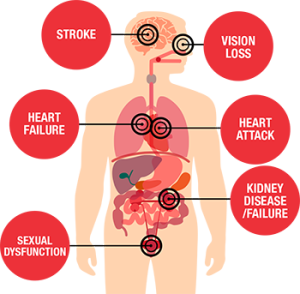
Primary or essential hypertension is the term used to describe the condition that affects 90% of people with high blood pressure but whose etiology is unknown. There are risk factors that can contribute to the development of high blood pressure, even though the exact reason is unknown.
Factors that cannot be changed
1. Age;
An individual’s risk of developing high blood pressure, particularly increased systolic readings, increases with age. The primary cause of this is arteriosclerosis, sometimes known as ” hardening of the arteries.”
2. Race;

Compared to Caucasians, African Americans experience high blood pressure more frequently. They experience more serious difficulties earlier in life and acquire high blood pressure at a younger age.
3. Age and Race:
The likelihood of having the condition later on life is 93% for African Americans, 92% for hispanics, 86% for caucasians, and 84% for chinese persons over 45 who do not have high blood pressure.
4. Gender;

In general, men are more likely than women to develop high blood pressure. This probability changes with age and across different ethnic groupings.
Factors that can be changed;
1. Alcohol use;
For people who are alcohol sensitive, consuming more than one or two drinks of alcohol each day usually results in elevated blood pressure.
2. Lack of exercise;

WHAT IS HIGH BP
Sedentary behavior is linked to the development of high blood pressure and obesity.
3. Medications;

WHAT IS HIGH BP
Blood pressure can be elevated by certain pharmaceuticals, including diet pills, amphetamines ( stimulants), and pseudoephedrine, which is used to treat cold and allergy symptoms.
What Are the Signs and Symptoms of High Blood Pressure?
i. Headache
ii. Lightheadedness
iii. Hazy vision
iv. Vomiting and nausea
High blood pressure and heart symptoms;

WHAT IS HIGH BP?
I. chest ache
II. Breathlessness
III.Deficiency vomiting and nausea
Summary
After years of poor blood pressure control, a number of symptoms gradually appear. People who experience stroke-like symptoms or complain of chest pain often learn about their hypertension for the first time.





The value of tiger eye. As a talisman for bravery, protection, and personal strength, tiger’s eye has been used historically by warriors to fend off evil, bring good fortune, and ground energy. It is also prized for improving focus, increasing confidence, and encouraging emotional balance and wealth. Its significance stems from its symbolic power, which mirrors the tiger’s eye and provides self-control, resiliency, and clarity in a variety of spheres of life, from financial choices to physical well-being.
THE VALUE OF TIGER EYE
Meanwhile, tiger’s Eye, known for its striking golden-brown bands, is a powerful stone revered for its ability to promote strength, focus, and protection. Its name is inspired by the watchful eye of a tiger, symbolizing courage, clarity, and vigilance.

The value of tiger eye
Although, historically, Tiger’s Eye has been used as a talisman for protection. Believed to ward off negative energies and provide a grounding influence. This stone is often sought by those facing challenges, as it is said to help sharpen focus and maintain a balanced, clear mind. People use it to boost confidence, remain steady during tough decisions, and stay determined in the face of adversity.
Tiger’s Eye importance;

The value of tiger eye
Also, named for the feline-like flash (chatoyancy) it exhibits, which resembles a tiger’s eye, Tiger’s Eye is an alluring quartz gemstone with golden to reddish-brown tones and a dazzling, silky gloss. It is a metamorphic rock that was created by replacing fibrous crocidolite (blue asbestos) with silica. It is linked to the Sacral and Solar Plexus chakras and represents courage, strength, protection, and clarity. Historically, warriors and pharaohs used it for vigor and attention.
More importance;

The value of tiger eye
However, in addition to its protective qualities, Tiger’s Eyes are also associated with enhancing personal power. Its energy encourages resilience, helping individuals overcome fear and take bold steps toward their goals. Whether used in meditation or worn as jewelry, Tiger’s Eyes offers a reminder of inner strength, protection, and unwavering focus. It’s the perfect stone for anyone seeking courage and clarity in life’s challenging moments.
Summary
Also, with prices ranging from low for tumbled stones to high for rare types like Marra Mamba, depending on color, clarity, size, and cut, Tiger’s Eye is an inexpensive yet highly valued gemstone that offers advantages like protection, confidence, and grounding due to its captivating chatoyancy (the “cat’s eye” effect) and rich golden-brown colors.


Merits and demerits of consumerism. This has drawbacks such as serious environmental harm (pollution, resource depletion, climate change), increased debt, social anxiety, promotion of inequality, and potential labor exploitation, creating a cycle of over consumption frequently associated with unhappiness. On the plus side, consumerism stimulates economic growth, job creation, innovation, and offers greater choices, improving living standards.
MERITS AND DEMERITS OF CONSUMERISM
Expanding one’s consumption of goods and services from the market is always a desirable goal, and consumerism holds that obtaining consumer goods and material possessions is an essential condition for one’s happiness and well-being. Consumerism is sometimes used to describe the propensity of people living in a capitalist economy to pursue an overly materialistic lifestyle focused on wasteful, flashy, or reflexive over consumption.
Advantages Of Consumerism;

Consumer spending has the power to propel an economy and boost output of goods and services, according to proponents of consumerism. The GDP may increase as a result of increased consumer expenditure. Consumer confidence metrics and personal consumption expenditures are all indicative of strong consumer demand. Sales of consumer goods can provide profits for company owners and owners of raw materials, either directly or through intermediaries.
Disadvantages;

Merits and demerits of consumerism
Although, Cultural arguments are frequently used to critique consumerism. Some perceive materialism as the result of consumerism, leading to a culture that disregards other values. There is a chance that the emphasis on consuming increasingly more expensive items in greater quantities.

Merits and demerits of consumerism
Because it encourages the manufacture and consumption of internationally traded goods and brands, which may not be compatible with regional cultures and economic activity patterns, consumerism is frequently linked to globalization. Incentives to take on unmanageable debt levels
Also, insofar as consumer products industries and the direct consequences of consumption generate unfavorable environmental externalities, environmental issues are often linked to consumerism.
Examples;

Merits and demerits of consumerism
Examples include going on shopping sprees, particularly ones that draw a big crowd, like the Black Friday deals the day after Thanksgiving. The yearly release of newer mobile phone models is another illustration of consumerism. Even though a few years old mobile device may still be functional and sufficient, consumerism forces consumers.
Summary
Driven by mass production, marketing, and capitalism, consumerism is a social and economic ideology that views the acquisition of goods and services—often beyond basic needs—as essential to individual well-being, happiness, and societal advancement. This leads to both economic growth and criticisms regarding materialism, environmental impact, and psychological effects.


Hacks for affiliate marketing. Promoting other people’s goods and receiving a commission on sales is known as affiliate marketing. It has grown in popularity as a means of earning more money online. But you need more than just the fundamentals to succeed. “Secret Affiliate Marketing Hacks” are useful in this situation. Innovative affiliate marketing techniques are crucial. These tactics assist you differentiate yourself from the competition and boost your sales prospects. They may include innovative approaches to product promotion, more effective audience outreach strategies, and more intelligent techniques to monitor your outcomes. We’ll look at a few of these covert affiliate marketing strategies in this blog post. You can improve your affiliate marketing efforts by using these pointers.
HACKS FOR AFFILIATE MARKETING
Affiliate marketing is a performance-based strategy in which people (affiliates) promote a business’s goods or services and increase sales or traffic by using special tracking links in exchange for commissions. Three key parties are involved: the customer (purchaser), the affiliate (promoter), and the merchant (product provider). Affiliates are a well-liked method for artists to monetize their audience without requiring their own products. They do this by sharing these links on websites like blogs, social media, or YouTube and get a portion of the purchases that result from their recommendations.
What is Affiliate Marketing?

Hacks for affiliate marketing
A third-party affiliate, such as a blogger, YouTuber, or influencer, promotes a company’s products or services on behalf of the latter to assist it reach sales or marketing objectives. it is a revenue-sharing marketing strategy. If an affiliate generates sales, they will receive commissions or prizes.
How to Start;
1. Decide on a specialty. Because affiliate marketers may reach niche groups made up of prospective buyers, they are an asset to retailers.
2. Choose a marketing channel appropriate for your expertise. Choose a marketing channel after you’ve determined the subject, target market, and products your affiliate marketing brand will offer.
3. Sign up for a network of affiliate marketers. Merchants and affiliates are connected via affiliate networks. Although it’s not always required, you’ll probably discover that joining an affiliate network will facilitate the development of relationships with merchants and, in turn, raise your earning potential.

Hacks for affiliate marketing
4. Increase the size of your network. Building a profitable affiliate marketing strategy requires commitment and time. However, it is beneficial to employ a variety of digital marketing strategies to grow your audience as a whole.
5. Be reliable and proficient in your abilities. Affiliate marketing requires a variety of talents in addition to time and attention.
Benefits;

Minimal startup expenses. Running a business requires you to keep a careful eye on your profit margin and make every effort to keep running expenses as low as feasible. a high rate of return on investment You can reduce your start-up costs and increase your overall revenue. marketing channel.
Summary
Third-party media can utilize it to promote a merchant’s goods or services in return for a portion of sales or website traffic. Most people consider it to be a crucial part of modern digital marketing.

Holidays and Vacations

Bilingual Education Impacts

Career Tips

A Step-by-Step Guide to Deleting Reels on Instagram

How to Create a WhatsApp Group