WORKPLACE
Workplace Emotional Intelligence Benefits

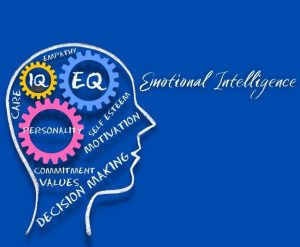
Workplace emotional intelligence benefits. Effectively comprehending and controlling emotions is a sign of emotional intelligence. In addition to improving connections and fostering a nice work atmosphere, emotional intelligence in the workplace can have a big impact on your career and offer many advantages.
WORKPLACE EMOTIONAL INTELLIGENCE BENEFITS
A more positive and productive work environment is the result of improved communication, teamwork, leadership, and successful conflict resolution, all of which are facilitated by Emotional intelligence.
1. Better Capabilities as a Leader

Emotionally intelligent leaders are excellent at motivating and leading their teams. They are able to successfully negotiate intricate interpersonal dynamics because they have a thorough understanding of both their own and others’ emotions. Stronger leadership, better decision-making, and the capacity to uplift and encourage others are the outcomes of this.
2. Better Cooperation Among Team Members
People with strong emotional intelligence are more adept at handling and settling disputes in groups. They can strengthen bonds between team members, promote open communication, and cultivate a great team culture. As a result, there is more cooperation, more output, and a more harmonious workplace.
3. Successful Interaction

People with emotional intelligence are excellent communicators, both in words and body language. They are able to listen intently to others and express their ideas and emotions in a clear and concise manner. In professional contexts, where successful collaboration and project execution depend heavily on excellent communication, this ability is priceless.
4. Flexibility and Sturdiness
A defining characteristic of emotional intelligence is the capacity to adjust to change and recover from failures. People with strong emotional intelligence are better able to manage stress, overcome ambiguity, and keep a positive attitude in the fast-paced, constantly-evolving workplace.
5. Greater Compassion

People with emotional intelligence are more empathetic, which enables them to relate to and comprehend the feelings of their coworkers. Better connections, a more encouraging work environment, and a stronger sense of team spirit are all facilitated by this sympathetic understanding.
6. Resolving Conflicts
Any workplace will inevitably experience conflicts, but people with emotional intelligence are better able to handle and settle disagreements. Emotionally intelligent experts can identify positive solutions that are advantageous to all parties by comprehending various viewpoints and resolving underlying emotions.
7. Handling Stress

People with emotional intelligence are skilled at controlling their stress levels. They maintain a good work-life balance, identify their pressures, and use useful coping strategies. In addition to improving their well-being, this has a good impact on the workplace and fosters a culture that appreciates the resilience and health of its employees.
8. A higher level of job satisfaction
Higher job satisfaction is typically experienced by those who possess strong emotional intelligence. Their capacity to successfully communicate, negotiate obstacles, and manage relationships all add to a satisfying work environment. Higher retention rates and a more motivated and engaged workforce may follow from this.
9. Interaction with Customers

Emotional intelligence is a useful skill in jobs involving interaction with customers. Professionals that are adept at comprehending and addressing the feelings of their clients can forge closer bonds with them, resolve grievances with compassion, and increase client loyalty and happiness in general.
Summary
A successful workplace is largely dependent on emotional intelligence, which is more than just a personal quality. Employers who place a high priority on helping their staff members build their emotional intelligence see improvements in teamwork, leadership, and general job happiness.









Bias Treatment in the Workplace. In order to identify and lessen implicit or unconscious prejudice, bias treatment techniques include perspective-taking, stereotype replacement, and structural decision-making processes. Public health and organizational specialists stress systemic prevention techniques for long-lasting change, while individual education increases awareness.
BIAS TREATMENT IN THE WORKPLACE
In order to address and lessen bias in the workplace, awareness must be raised, objective regulations must be established, and hiring, managing, and promoting employees must be altered. Establishing reasonable behavior standards, conducting systematic interviews, and offering frequent training are important steps.
Types;

Although, apart from gender prejudice, there exist several additional forms of implicit bias that have a disproportionate impact on women’s career advancement. These types of bias include:
Unconscious bias in performance support
However, when employers, managers, and coworkers provide one gender (usually men) more resources and opportunities than another, it’s known as performance support bias.
Unconscious bias in performance reviews
Also, even in cases when the evaluations are solely merit-based, performance review bias happens when supervisors, employers, and coworkers evaluate employees of one gender differently from those of another.
Unconscious bias in performance rewards

Bias Treatment in the Workplace
Meanwhile, when coworkers, supervisors, and employers treat a female employee differently from a male employee, this is known as performance reward bias. Promotions, pay increases, or other merit-based benefits are examples of rewards.
However, there are various ways to curb unconscious bias in the workplace. These are indicated below:
Ways to reduce unconscious bias
1. Acquire knowledge about unconscious biases.
Make sure that every employee in your company understands the existence of prejudices.
2. Determine which prejudices are most likely to have an impact on you.
3. Also, Ascertain the potential impact of prejudices on your organization.

Bias Treatment in the Workplace
4. Teach staff members to recognize and address bias.
5. However, Update the hiring procedure.
6. Meanwhile, Use statistics to guide your choices.
7. Also, Consider diversity when making employment selections.
8. Motivate group members to discuss their prejudices.
9. Make workers answerable.
10. Establish objectives for inclusion, equity, and diversity. women are unfairly assigned inferior accounts
Summary
Our brains are built to classify things in order to make sense of the complicated world we live in. However, biases can cause us to form preconceived notions about other individuals, which can result in glaring differences across different demographic groups.

How to avoid work mistakes. In every professional setting, it is imperative to refrain from making careless errors.The overallHow to avoid work mistakes. In every professional setting, it is imperative to refrain from making careless errors.The overall effectiveness of a team, individual productivity, reputation, and even long-term career advancement can all be significantly impacted by these mistakes. When we strive to minimize errors and uphold a high level of accuracy and attention to detail, we not only enhance our own professional standing but also contribute to the company’s overall success and improved functioning.
HOW TO AVOID WORK MISTAKES
Focus on slowing down, using checklists for repetitive activities, and reducing multitasking, especially on complicated projects, to prevent job errors. Set reasonable deadlines, take frequent pauses to stay focused, and carefully go over your work before submitting it in order to proactively manage your burden. The secret is to develop an organized, communicative, and structured approach.
The Importance of Avoiding Mistakes at Work;

It first guarantees the caliber of the output of work. We increase client happiness and confidence by delivering high-quality results that match or beyond expectations while minimizing errors. This may result in higher customer retention and fruitful recommendations, which will boost the company’s general performance and earnings. Secondly, keeping productivity at work requires avoiding mistakes. When mistakes are made, a lot of time and money are lost trying to fix them. These setbacks can impede target achievement, cause delays in project schedules, and disturb workflow.
Tips on How to Avoid Careless Mistakes at Work;
It’s crucial to pay attention to details and double-check your work before submitting it if you want to prevent thoughtless errors at work. The following useful advice can assist you in forming this habit:
Review your work carefully;

Examine your work carefully, taking note of spelling, grammar, formatting, and any special demands or instructions. Verify the computations, facts, and numbers one more time for accuracy.
Use proofreading tools;
Utilize technology to your advantage by using proofreading software or spell and grammar checkers. With the use of these tools, you can find and fix mistakes that might have escaped your first inspection.
Seek feedback;

HOW TO AVOID WORK MISTAKES
Never be afraid to seek criticism on your work from a supervisor or a reliable coworker. They might offer insightful commentary and point out errors you might have missed.
Take Breaks and Manage Stress Effectively
Careless errors at work might be attributed to stress and burnout. Here are some pointers to assist you in properly managing stress and taking breaks:
i) Schedule regular breaks
ii) Prioritize self-care
iii) Practice stress management techniques:
iv) Set boundaries
Prioritize Tasks and Manage Your Time Wisely;

HOW TO AVOID WORK MISTAKES
Determine the critical and urgent tasks: Ascertain which jobs are essential for your projects or deadlines and which ones need to be completed right now. Set them in order of importance to make sure you give them enough time and attention
Employ productivity strategies: Learn how to be more productive by using strategies like time blocking, the Pomodoro Technique, and the Eisenhower Matrix. You may efficiently manage your time and maintain concentration on the most crucial tasks by using these techniques.
Use Checklists and Task Management Tools;
i) Create checklists
ii) Review and update checklists regularly
iii) Collaborate using task management tools
Seek Clarification and Ask Questions When in Doubt;

HOW TO AVOID WORK MISTAKES
It’s critical to ask questions when you’re unclear and seek clarification in order to prevent blunders brought on by misconceptions or assumptions.
Summary
Errors in the workplace, such as typos, missed deadlines, and misallocated monies, are frequent. Taking quick, open accountability instead of creating excuses is the key to handling them. Making amends, resolving the problem, and putting a strategy in place to stop it from happening again fosters trust and demonstrates professional maturity.


Workplace and ethics. Imagine showing up for work every day to a company that encourages or tolerates misconduct and haughty workers as long as they finish their assignments. Although there can be immediate advantages, the company’s reputation might deteriorate over time as a result of higher staff turnover, lower productivity, negative effects on workers’ mental health, and increased public scrutiny. However, you can avoid a crisis similar to Wells Fargo if you and your company are committed to creating an ethical workplace culture.
WORKPLACE AND ETHICS
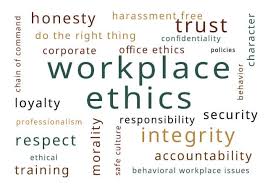
Workplace ethics, which go beyond merely abiding by the law to influence culture and long-term success, are the moral principles, values, and standards that direct behavior in a professional setting. They emphasize honesty, integrity, respect, responsibility, and fairness to create a trusted, productive, and positive environment. Transparency, responsibility, professionalism, treating coworkers and clients with respect, making sure decisions are in line with doing the right thing, even when it goes unnoticed, and cultivating solid employee-employer relationships are important components.
Workplace culture and ethics;

WORKPLACE AND ETHICS
Workplace regulations that establish social norms, organizational ethics, and values in the workplace make up workplace culture or other forms of ethical culture in business. It has an impact on all facets of the workforce, including productivity, hiring and firing practices, and the existence or absence of cohesive teams.
How to build ethics in the workplace;
Because it establishes the beliefs, attitudes, and behaviors of an organization, workplace culture is important.
1. Include fundamental principles in daily operations; It is very difficult to establish an ethical corporate culture without basic principles. Core values explain what matters most to the organization and inform staff, clients, and potential customers about the direction the company is taking.
2. It starts at the top; Your work is done now that you have established your key values. Not exactly. Executives and managers need to live the company’s fundamental principles and set an example for their teams to follow if they want to ensure that workers are inspired to do the same. Vigilance is required of leaders in their conduct.
3. Stress the point of the message; As an HR leader, it is your responsibility to keep people informed, even though it may take some time for executive influence to become apparent.

WORKPLACE AND ETHICS
4. Establish a public, secure area for dialogue;
An ethical workplace culture is transparent and safe. Employees should feel comfortable raising ethical violations. More than 1 in 5 employees who reported wrongdoing claimed they experienced retribution as a result, up from 12% in 2007, according to SHRM.
5. Give praise for appropriate conduct;
HR pays special attention to bad behavior because we want to try to correct it. How about well-behaved behavior? Recognizing and rewarding exemplary behavior is another technique to inspire and influence workers. Because it establishes the beliefs, attitudes, and behaviors of an organization, workplace culture is important. How to define workplace culture (its importance and tips)
Summary
The term also refers to the collaborative software “Workplace from Meta,” which is shutting down in 2026. A workplace is any physical or virtual location where people carry out job-related tasks for an employer, from traditional offices and factories to home offices and online environments. These locations form an important social space influencing well-being, engagement, and productivity.

Torchlight Selection

Best Practices for Face Exfoliation

Chemical Face Exfoliation

A Step-by-Step Guide to Deleting Reels on Instagram

A Comprehensive Guide to Setting Up a YouTube Premiere